Launch of the MobiliseSME pilot project, a mobility exchange programme between staff working in SMEs
The past October 5th, the kick of meeting of the MobiliseSME pilot project was held, a mobility exchange programme between staff working in SMEs, of which the Chamber is coordinator together with Fundación Equipo Humano.
The first meeting of the consortium took place electronically due to travel restrictions because of the Covid pandemic.
During this meeting, both coordinators of the programme, shared with the rest of the members of the consortium the main guidelines for managing the programme locally and promoting the participation of SMEs.
Furthermore, Fundación Equipo Humano presented its first experience of temporary cross-border secondment between a Spanish SME and an Italian SME. This secondment will be partially subsidized by the European Union. The host Italian company will enhance its business opportunities by establishing new contacts in the Spanish market, while the Spanish SME will develop the skills and abilities of its manager.
Companies interested in participating in this programme can contact one of the local organizations that manage this EU programme.
WHO CAN PARTICIPATE?
- Sending companies
Employers with more than three years of professional experience who have worked for at least one year for a registered SME, who wish to internationalize, improve their knowledge of a specific market or get access to it through temporary cross-border secondments in another EU country.
- Hosting companies
Owners or co-owners with more than three years of professional activity, who are active and present in the day-to-day business of the company, whether in an executive or non-executive position, and who seek the opportunity of expansion or consolidation in other European market.
For more information, visit here or contact the Chamber at mobilisesme@e-camara.com
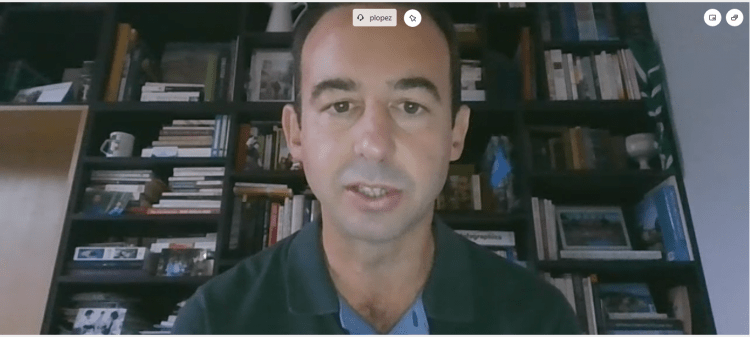 Afterwards, on behalf of the member company and sponsor of the event, Iberdrola, its Director of European Public Affairs, Eva Chamizo, took the floor and thanked the spekaer and the entire team of the European Commission’s Working Group for Recovery and Resilience, for their great work in contributing from the European institutions to economic recovery. Chamizo stressed the need to commit to a green and sustainable recovery linked to the objectives of the Green Deal and allows private investment in clean energy. She also highlighted Iberdrola’s long career in prioritising investment in green energy, which made Iberdrola stand out among the leading companies in the sector.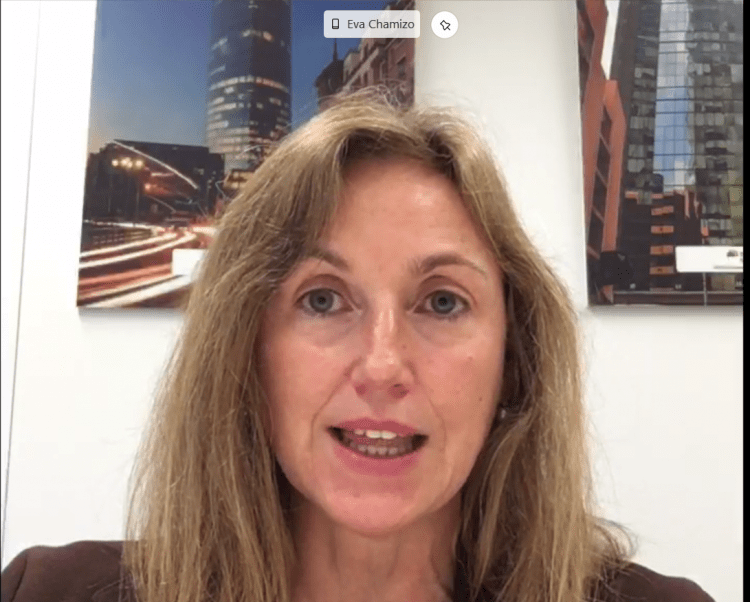
 This plan is aimed first and firstly at the ecological transition of the European Union towards a climate-neutral Europe by 2050 in line with the Green Deal. The speaker also highlighted as the second key of the economic recovery, the digital transition to adapt our economies and societies to new technologies. Fábregas went on explaining that it will be up to the Member States to present their national recovery plans to the European Commission from 15 October, which will ensure that they are properly implemented through the auditing and control mechanisms that are being applied to all European funds. The Director of the Working Group for Recovery and Resilience explained that the management of the mechanism’s funds will have to be done in accordance with the constitutional order of each country and in accordance with the distribution of competences in the case of decentralised Member States. However, national governments will have a certain margin to determine how they will manage them, either through transfers to sub-national entities (federated states, autonomous communities, etc.) or through central agencies.