Tailored events
The Chamber of Commerce offers its members the opportunity to sponsor and co-organize events.
The goal is to provide member companies with the opportunity to use the Chamber—an independent platform—to promote their business, develop new clients, and increase their visibility.
What does the Chamber do?
Opportunity to share the event’s branding with the Chamber.
Inclusion of the sponsor’s logo on all event marketing materials distributed to attendees.
How to create your event?
Send an email to info@e-camara.com


Webinar on “Spain as remote working destination”
Last October 13th, the Official Spanish Chamber of Commerce in Belgium and Luxembourg organized a Webinar on “Spain as a destination for teleworking“, in collaboration with Business Cluster, a group of companies formed by Euro Economics, AgioGlobal, MADSkills, Quintessence and with the participation of EPS, IFAS and Modern Nomads. The Webinar was held by Wim Zwaenepoel, lecturer at the IE Business School and consultant at Netexpat, and by Jeroen Oskam, founding partner of Euro Economics.
To begin with, during this Webinar the lecturers presented some general data on the impact of the Covid-19 on Spanish society, and specifically, the impact that the health crisis has had on the economic and labour fields. The trends of telework in Spain before the Covid-19 were explained, as was its evolution until today, in addition to the forecasts that analysts estimate about this modality of work in the future. Additionally, the economic and labour policies adopted by the Spanish authorities to try to mitigate the negative effects of the Covid-19 were reviewed.
Moreover, the speakers focused on analysing, in second place, the so-called “STEM” sector (“Science, Technology, Engineering and Mathematics”), highlighting the growing lack of technical workers in the Benelux countries. On the other end is Spain, where there is a large pool of STEM sector professionals with excellent technical training. In the Webinar, a vision of the possibilities offered by the different modalities of teleworking in Spain was presented as a way to overcome the lack of specialized STEM personnel in the Benelux.
Thirdly, the emerging trend called “new nomads“ was introduced, referring to professionals from the Benelux who are moving their workplace to Spain thanks to the advances in the implementation of teleworking. The speakers highlighted the many benefits of this new way of working and its advantages, such as a lower tax burden or a lower cost of living. An example of this trend is the Canary Islands, where more and more foreigners are choosing to work remotely while having settled in the archipelago. The speakers emphasized the attraction of Spain as a territory from which to work remotely, due to its infrastructure, connectivity, and availability of resources, among others.
Finally, our speakers addressed the legal and tax implications of this practice of teleworking from Spain for workers in the Benelux countries, pointing out several possible alternatives, both for employees and for freelance.
After the presentation, some time was spared for a round of questions, in which the attendees raised several questions to the speakers. These questions dealt with the tax implications for those Benelux workers whose stays in Spain are less than the 183 days established by tax regulations, or everyday issues to take into account when choosing to work remotely from Spain, such as having a private health insurance for greater security.
From the Official Chamber of Commerce of Spain in Belgium and Luxembourg, we would like to thank Business Cluster for its presentation, as well as all the attendees for their presence.
In collaboration with:
Webinar on “The tax obligations in Spain for individuals living abroad”
Last September 14th, the Official Spanish Chamber of Commerce in Belgium and Luxembourg organized a webinar on “The tax obligations in Spain of people who have moved abroad”, in collaboration with its member company B LAW&TAX. The webinar was given by Inmaculada Pineda and Almudena Soler, partner and tax advisor respectively at B LAW&TAX.
During this webinar the different tax obligations that displaced persons abroad can have in Spain were explained. For this purpose, in first place, the criteria used by the Spanish administration to determine tax residence through the personal income tax law or the different double taxation avoidance agreements were explained. The particular case of diplomats and officials of the European institutions was also addressed. In addition, it was presented the different formal requirements for making the change of tax residence effective.
Secondly, they discussed the different implications of tax residence in terms of taxation and profits, income from work for services rendered outside Spain, as well as the requirements for applying any exemptions in these cases. With regard to wealth tax, the applicable regulations were presented according to the residence, the limits and benefits applicable together with their different applicable deadlines. Then, the Model 720 for the declaration of goods and rights abroad was discussed, explaining who is obliged to present this model, the content, the deadlines and possible sanctions.
Finally, participants studied the implications of non-residence for taxation and tax benefits under Spanish law. They determined the possible taxation of income from real estate or movable capital, capital gains as well as the declaration models and deadlines. Lastly, new developments in the taxation of individuals were addressed.
Throughout the different blocks the participants were able to express their different doubts with the speakers. The questions dealt with different cases such as posted workers, the case of taxation of non-work income for officials of the European institutions or the formal obligations when indicating the address of residence.
From the Official Spanish Chamber of Commerce in Belgium and Luxembourg we would like to thank BLAW & TAX for their excellent presentation as well as all the participants for their presence.
Webinar on “Spanish scientific diplomacy – successful collaboration between Spain and Belgium in the field of biotechnology”
Last Wednesday 9 September, the Cultural and Scientific Department of the Spanish Embassy in Belgium, and the Official Spanish Chamber of Commerce in Belgium and Luxembourg, with the collaboration of the Centre for the Development of Industrial Technology (CDTI) and the Spanish Office of Science and Technology (SOST) organised, in a special edition of the “Mediodias de la Embajada”, the second event in the framework of the Spain means Innovation programme. This webinar was entitled “Spanish scientific diplomacy – successful collaboration between Spain and Belgium in the field of biotechnology”.
As part of the programme of scientific diplomacy and dissemination of science, technology and innovation of Spain in Belgium, this webinar examined the innovation and business opportunities between Spain and Belgium in the field of biotechnology, based on the experience of the Spanish company Minoryx Therapeutics, as an example of good practice in collaboration in the biotechnology sector between the two countries.
Minoryx Therapeutics is a biotechnology company focused on the discovery and development of new therapies for severe genetic diseases of the central nervous system, which recently opened a subsidiary in Wallonia near the city of Charleroi (Belgium).
After the words of welcome, the round table was held, moderated by Frédéric Soumois, a journalist specialising in the health and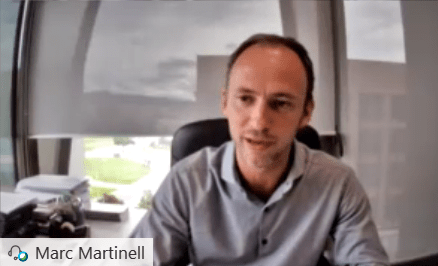 scientific field from the newspaper Le Soir. Marc Martinelli, CEO of Minoryx Therapeutics, began by explaining the basis of their current research into rare diseases of the central nervous system, as well as detailing the benefits of the Belgian market in the sector based on his current experience with the company’s subsidiary opened near the city of Charleroi (Wallonia). He was followed by Josep Samitier,
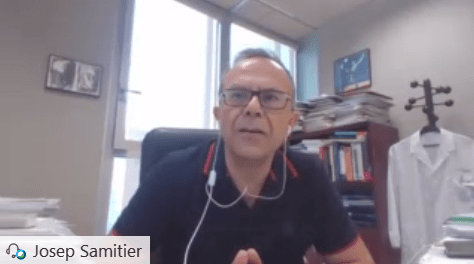 director of the Biotechnology Institute of Catalonia, and Marc Dechamps, director of international affairs for the BioWin cluster, who both gave their views on the benefits of biotechnology for improving the health sector, emphasising the advantages of Spain and Belgium in the sector.
The round table ended with Marina Martinez, H2020 Programme Officer at the Centre for Technological Development and Industry (CDTI), who briefly presented the numerous support and promotion mechanisms at European (Horizon 2020) and national level for companies in the biotechnology sector.
Finally, throughout the question time, participants had the opportunity to present their comments and questions on numerous issues of interest. From the Spanish Official Chamber of Commerce in Belgium and Luxembourg we would like to thank all the participants and the speakers at the event for their participation.