Agreement reached in limited cabinet: here are the new measures in the federal aid plan

On Friday night, an agreement was reached within the “superkern”, the Federal Government and the ten parties that support the special powers destined to fight Covid-19, after several hours of meeting. The text was not validated by the N-VA. The Flemish nationalist party did not sign the joint statement sent shortly before 22:00.

“Today’s agreement reinforces the social and environmental measures taken last week. The nonsense proposals pushed by the N-VA have been completely rejected”, Ecolo co-chair Jean-Marc Nollet said on Twitter.

On June 6th, the ten parties approved a first set of measures. Later it was agreed to identify in a second step what could complement this system. That was the work that was carried out during the meeting this Friday.

The new support measures, protagonists of the agreement can be classified into two categories, indicates the press release signed by the government parties (MR, Open Vld and CD&V), with the support of the Socialists (PS and sp.a), environmentalists (Ecolo-Groen), CD&V, cdH and Défi.


The first category refers to investment support.

  • The superkern has decided to establish a new temporary Covid-19  tax shelter system until the end of the year, open to all SMEs that have been affected by the Covid-19 crisis.
  • An investment deduction increased by 25% is provided for investments made between March 12th and December 31st, 2020.
  • The nine parties have also decided to increase the deductibility of expenses related to the organization of events and catering from 50 to 100% until December 31st.
  • The superkern has also decided to suspend the payment of VAT from December 2020 and increase from 10 to 20% the share of net income that can benefit from the reduction of subsidy taxes.
  • At the same time, the tax reduction for donations made in 2020 to approved institutions will decrease from 45 to 60%.


The second category refers to the organization of work, according to the statement.

  • The nine parties have decided to create adapted Corona unemployment, which consists of a transition between temporary unemployment due to the force majeure Corona and classic economic unemployment. This transitional economic unemployment can be used if the company shows a 10% drop in its turnover. The worker will follow two days of unemployment training per month and will continue to receive 70% of their last maximum salary.
  • It was also decided to offer companies in restructuring or in difficulties the possibility of reducing working hours pending the resumption of normal activity and to avoid layoffs, either through a collective reduction in working time, either through the time credit system, or through the time credit at the end of the degree, whose accessibility will be reduced from 57 to 55 years.
  • In addition, the Corona parental leave will run until September 30th with a subsidy increased to 150% for single parent families and families with a child with a disability.
  • It was also decided to facilitate the reimbursement of the costs incurred by teleworkers, up to a maximum of 127 euros per month.


In addition to these measures, an agreement was also reached to release funds of 100 million euros for the CPAS to be dedicated to people in difficulties in order to extend the benefit of the social measures decided during the previous meeting to a more public comprehensive, especially from the point of view of energy poverty. To cover the operating costs linked to an additional workload, the CPAS will receive an additional aid of 10 million euros.


Source: Rtl.be

Agreement between the social partners on the conditions for granting partial unemployment within the framework of the exit from the state of crisis

Under the joint presidency of Dan Kersch, Minister of Labour, Employment and Social Solidarity Economy, and Franz Fayot, Minister of Economy, the social partners represented on the one hand by OGBL President Nora Back and LCGB President Patrick Dury, and on the other hand by the President of UEL, Nicolas Buck, agreed on June 9th the new modalities to grant partial unemployment to companies affected by the COVID-19 crisis.

With the end of the crisis state, the emergency procedures established to help companies through a special mechanism of partial unemployment by “force majeure COVID-19” will expire. The meeting agreed that companies affected by the health crisis should continue to receive support through partial unemployment, preserving as many jobs as possible.

Taking into account that a good number of companies will continue to suffer the negative effects of the health crisis beyond the end of the crisis state, it has already been decided to continue supporting them with the instrument of partial unemployment until the end of the current year.

To take into account the fact that certain sectors have been more severely affected and will delay the return to the same level of activity as before the health crisis or will not achieve it in the near future, four possible ways of benefiting from the agreement were agreed upon partial unemployment:


  1. Industrial companies will continue to benefit from the cyclical scheme of short-term unemployment to be able to react to shocks in international markets. By applying the system of partial unemployment from cyclical sources, industrial companies undertake not to fire workers for economic reasons.
  2. The social partners have recognized the particularly difficult situation of companies in vulnerable sectors that continue to be strongly affected by the COVID-19 crisis. Therefore, companies in the hotel, tourism and events sectors will be able to benefit from rapid access to partial unemployment from a structural source, without limiting the number of employees who will be entitled to it. If necessary, these companies may resort to economic dismissals within the maximum limit of 25% of their employees until December 31, 2020. The social partners have explicitly insisted on the fact that the provisions of general jurisdiction provided for by the Code of the Labour Law relating to collective dismissal remain fully applicable. The social partners have agreed that, in the event of a return to an improvement in activity, the companies that have carried out layoffs must, in the event of subsequent recruitment of staff, rehire their former laid-off employees as a matter of priority.
  3. Companies affected by the health crisis, in addition to industrial companies and those from vulnerable sectors, can also resort to short-term work from structural sources along the accelerated route provided, however, without dismissing workers. This measure aims to preserve the jobs in the companies involved as best as possible. In this case, however, the number of employees covered by partial unemployment cannot exceed 25% in the months of July and August, 20% in September and October, and 15% in November and December. In this context, an employee is defined as each employee who has been declared partially unemployed during the current month, regardless of the number of hours of partial unemployment.
  4. Finally, the demands of companies in vulnerable sectors that lay off more than 25% of their workers, as well as those of all the other companies that want to make layoffs, must submit a “traditional” application for partial unemployment.


In fact, it was agreed in these situations that admission to the partial unemployment regime could only be granted if the companies proceeded to establish restructuring plans. These plans will be established in the form of a recovery plan in the case of small companies of less than fifteen people, respectively, and in the form of a job retention plan in accordance with the provisions of Article L. 513-1 et seq. Labour Code for companies that employ more than fifteen employees.

The social partners expressed their willingness to negotiate as far as possible the sectoral plans for job retention to use the temporary labour loan instrument.

All these proposals for partial unemployment were approved by the Government in the Council.

The Economic Committee also reserves the right to give negative notice to requests from companies that are clearly not affected at all or only slightly by the health crisis.

The secretariat of the Economic Committee is in the process of implementing, in collaboration with the services of the State Center for Information Technology (CTIE) and ADEM, computer applications to send applications as described above electronically through the myGuichet.lu platform.

Accurate information for business, staff and employee delegations will be quickly prepared and made available on the Guichet.lu website.


Communicated by the Ministry of Economy / Ministry of Labor, Employment and Social and Solidarity Economy


Source: Gouvernement.lu

Agreement by Kern+10 on measures to support the purchasing power of Belgians and sectors in difficulty

Following the meeting of the restricted Council of Ministers, extended to the ten political groups supporting the Federal Government, a series of support measures were agreed for the third part of the Federal Plan for Social and Economic Protection.


The first “package” refers to the measures that had already been adopted by the federal government and that will be extended beyond their initial deadline. The most important measures are:

  • Temporary unemployment due to force majeure “Corona”
  • The transition right for self-employed workers
  • Parental leave Corona

These measures are extended until 31st August.

Other measures are also extended, such as the suspension of the progressive reduction of the unemployment benefits, the package of measures destined to artists, the subsidy of 3 million euros to the CPAS in the framework of food aid and the allowances linked to the donations of IT material for schools.

Four specific support measures have been identified for the sectors in difficulty, including HoReCa, to cushion the socio-economic consequences of a gradual recovery in their activity. These are:


  • An extension and upgrade of the transition right until 31st August 2020 and extendable until 31st December 2020
  • At the same time, an extension of the temporary unemployment until 31st December 2020
  • In order to enable hotel and restaurants to improve their financial situation, a reduction of VAT to 6% until 31st December 2020 on all provisions of services, except alcoholic drinks
  • In the most affected sectors that have been forced to use the temporary unemployment, an agreement has been reached to grant a partial exemption from the payment of the withholding tax on salary income for the next three months, in order to encourage the return of workers who are currently in temporary unemployment.

With respect to the solvency of companies, the bank guarantee measure will be extended. The arrangements for extending the scope of the intervention to SMEs will be discussed in the Parliament shortly. The proposals for supporting artists will also be discussed next week.

The purchasing power of Belgians was also at the centre of the discussion. The intention of the meeting parties was to create a positive dynamic, first of all in favour of citizens, but also in favour of the country’s economic activity.

  • The employer may grant a 300 euro Consumption voucher to the sectors most affected by the crisis to buy goods and services in sectors such as the hotel industry, culture, etc. This voucher will be 100% deductible and tax free.
  • A complementary social aid of 6×50 euros (monthly) to the beneficiaries of a social integration income, disabled people and pensioners who benefit from the Grapa. This exceptional aid to the most vulnerable families will enable them to cope with their difficulties.
  • All residents in Belgium can benefit from a 10-trip rail pass (SNCB) valid from 1st July to 31st December 2020. The additional cost of the bicycle will be temporarily cancelled.

In addition, it has been agreed to provide additional support to the CPAS through a further temporary increase in the refund rate of 15% on the federal intervention.

In addition to this first package of measures that has been agreed, the ten parties agreed to continue discussions to identify additional support measures that could usefully complement this first package.


SOURCE: Premier.be

Interview to Israel Cuesta, Fundsquare

Webinar on “The appropriate word as a strategic instrument for international growth”

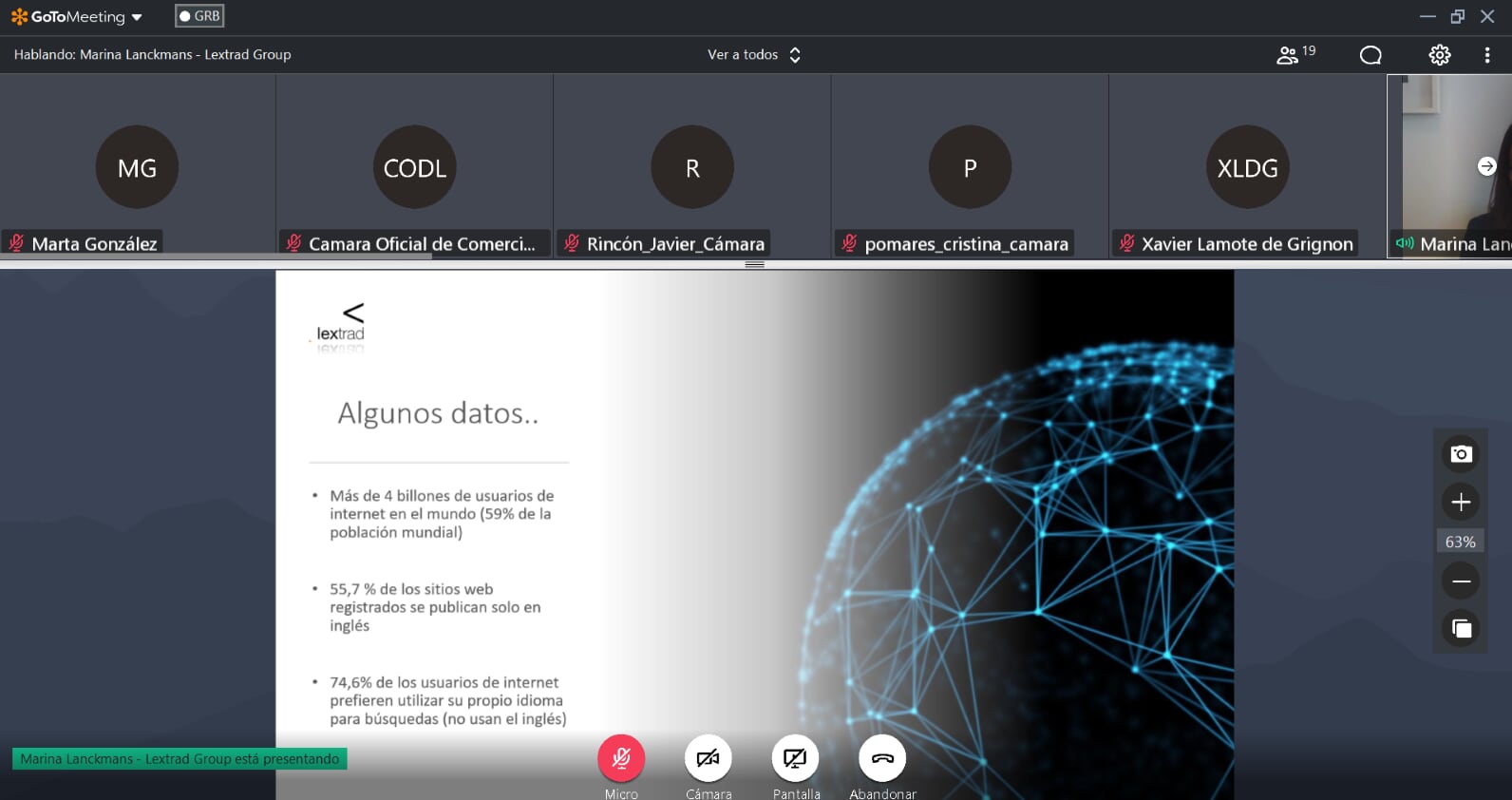
On June 4th, the Official Spanish Chamber of Commerce in Belgium and Luxembourg hosted a webinar on “The appropriate word as a strategic instrument for international growth”, in collaboration with its member company Lextrad.

The aim of this webinar was to discover the keystones for productive communication with our international clients, guaranteeing quality multilingual content, adapted to the cultural-specific needs of the target country, generating interest and attracting potential customers.

Marina Lanckmans, CEO & Founder of Lextrad Group started by highlighting the multilingual need that can be generated in companies to achieve their objectives due to the great cultural and language diversity that exists seeing that 74.6% of internet users prefer to do their searches in their own language and not in English.

Next, the speaker informed about what are the great advantages of following a multilingual strategy since choosing the right language to enter in a specific market can increase our sales.

Finally, Lanckmans reported on the importance of the localization in the translation process, since its main objective is to adapt the website to the market and convince the users that the content is directed to them. Marina explained this phase with some examples, emphasizing the SEO positioning and keyword lists when following this strategy.

At the end, a Q&A round was held in which the participants were able to raise their doubts about the information presented.

From the Chamber we want to thank Marina Lanckmans and Lextrad Group for their presentation and dedication, as well as all participants for their presence.


In collaboration with:

blank

The latest extension of the alarm state paves the way for a new normality that is still unknown

The Ministry of Health will delegate to the regions the competence to decide on the flexibility, modification and even duration of the measures over territories in phase 3 of the de-escalation as of Monday, June 8th. The state of alarm continues, but the new and last extension, approved this Wednesday and which will be in force until June 21st, transfers the powers to the autonomous regions and may even reach before time what has been called the ‘new normality’. A scenario that is not yet defined but whose “prevention, containment and coordination measures” will be specified on Tuesday in a law decree, as Pedro Sánchez has explained in Congress.

Technicians from Health and other ministries are currently working on that document. The Government does not give details at the moment about the process, although, according to president Sánchez, the content of the decree will be discussed before in an Inter-territorial Council with all the autonomous councilors that will be led by Minister Salvador Illa. Fernando Simón, director of the Center for Health Alerts and Emergencies, specified this Wednesday that the text “is being discussed now and we have to review it, probably tonight”.

The decree that will regulate the ‘new normality’, the stage of our lives that will go from the end of the state of alarm until the COVID-19 is controlled with a vaccine or a very effective treatment, this will feature not only sanitary measures but also related with transport and with commerce”, Simón stated. Regarding the strictly sanitary issues, it will have to guarantee above all “the assistance capacity, the fluidity of the data, and the supplies”. Illa has mentioned aspects that will surely be present in the daily life of the coming months, while “we learn to live with the virus”: “The interpersonal distance of two meters, the use of the mask in the stipulated conditions, and constant higiene”.


Don’t let your guard down

The ‘new normal’ will not only reach Spain but all the countries attacked by the pandemic, as they emerge from the de-escalation of confinement. But not even the World Health Organization (WHO) can define for sure what this exactly means. In any case, the criteria of the WHO and Government have not always coincided: the WHO still does not recommend masks to the entire population to reserve them for the healthcare workers, while the Spanish Executive has made them mandatory for everyone whenever the safety distance cannot be maintained. After the state of alarm, Health ministry will continue to recommend them as a minimum.

It is very important to understand that nobody has a map of the ‘new normal’. I speak worldwide. It is an unknown and unexplored territory that is about to be built and in which we have never been”, illustrates Daniel López-Acuña, former director of Acción Health in Crisis Situations of the WHO and professor at the Andalusian School of Public Health. What is clear is that this new context will be different and will have to deal with a horizon in which we do not know how the virus will behave and if there will be a second epidemic wave in the fall that will force again to impose restrictive measures.

The ‘new normal’, wields López-Acuña, “means not to let your guard down”: neither as regards sanitary capacities nor the “responsibility of the population” when it comes to complying with hygiene and safety measures. In other words, the system should continue to count on an extra muscle of resources and epidemiological surveillance to detect transmission chains and control possible outbreaks through early detection, racking and surveillance of cases and their contacts. On the other hand, the specialist points to the need for “a common framework at the state level” because “there cannot be 17 different ‘new normalities’”, he says, referring to the 17 regions.


No crowds or mass events

Beatriz González López-Valcárcel, professor of Public Health and part of the scientific committee of the Canary Islands government, recognizes that, even without a decree, they are not clear on what the ‘new normality’ will consist of. In the debates, “what worries us most in the Canary Islands is, on the one hand, what to do with tourism, which is our way of life. How two conflicting interests are reconciled: minimizing the risks of contagion but opening up the economy. The virus came here from the outside, and we know that it will come again from the outside. Regarding education, we talked about how to do it for a long time. And, of course, how to return to normality within the health sector itself”.

Regarding social interactions, López-Acuña details some ideas and stresses that “the behavior of distancing is going to have to continue and we must encourage very cautious behavior”. López-Valcárcel agrees, who relies more on “social control, in which all of us as citizens are responsible” than in coercive measures that may be stipulated. In addition, the former director of Health Action in crisis situations at the WHO focuses on nursing homes, which have been hit hard by the pandemic and which, since they have a vulnerable population, “must be vigilant and take precautions” also in this new stage.

All the specialists consulted are clear that large agglomerations should not be part of this ‘new normal’. Ildefonso Hernández, spokesman for the Spanish Society of Public Health (SESPAS) summarizes it in that “it will be a reinforcement of the issues that we have been establishing these months”, such as not meeting too many people. “Until there is a vaccine or I think that mass events or discos can be held. The virus is still there, it does not go away with the state of alarm”, says López-Valcárcel.


Reform of the Public Health Law

Another great question is how exactly the regulation of the ‘new normal’ will be carried out. There are several ways, but having anticipated that it will be by a royal decree-law, Juan Luis Beltrán, president of the Transparency Council of Navarra and former president of the Association of Health Jurists, bets on a modification of the General Law on Public Health of 2011: “It is an ideal norm for this that can be modified and expanded, that’s what it is for. It can contemplate everything other than restrictions of fundamental rights“. So adding paragraphs would be enough to legislate on masks, crowds and health services, he explains, under penalty of administrative sanction for citizens if it is not complied with and that the communities will apply as health authorities no longer in a state of alarm.

The law itself appeals to individual responsibility, with high penalties of thousands of euros”, continues Hernández. Although it was thought for things of less importance than the current ones, which is why everyone agrees that it would require expansion. It is a General Law so it is not valid for measures that restrict fundamental rights, as in the case that at some point it is necessary to confine territories again. For that, it would be necessary to resort, according to the criteria of Juan Luis Beltrán, to the Organic Law of Special Measures in Public Health, of 1986, which already includes the possibility of isolating people for health reasons “but not entire communities, but areas with For example, it was possible to quarantine people in a hotel in Tenerife in February, so that it can limit fundamental rights it would also have to be extended, but it would be another process: the government would have to request an urgent modification to the Congress”.


Source: Eldiario.es

Measures taken by the National Security Council of 3 June 2020

On Wednesday, June 3rd, the National Security Council, extended to include the Ministers-President, approved the transition to Phase 3 of the phase-out plan starting on June 8th. As the daily reporting from the health authorities shows, the health indicators are encouraging. The experts have therefore given the green light to start this new phase.

This implies a radical change in approach compared to the rules that have been in force so far. After all, from now on, freedom is the rule and what is not allowed is the exception.

Any activities that are still banned are not allowed because they either involve too close contact between people or mass gatherings, or because no protocols – i.e. specific rules for a sector – have been defined yet.

This new approach must be understood at two levels. Firstly, the individual behaviour (How should I behave in light of my renewed freedom?) and secondly, the regulatory framework applicable to organised activities (Which protocols should professionals apply when organising activities?).


  1. As far as individual behaviour is concerned, there are six golden rules:
  • Hygiene measures remain essential.
  • Outdoor activities should be favoured wherever possible. Where necessary, rooms should be adequately ventilated.
  • Additional precautions should be taken for people belonging to a high-risk group. A charter is being developed for older people who do volunteer work to provide them with more clarity about the activities they can engage in safely.
  • The rules regarding safety distance continue to apply, except for people within the same family, for children under the age of 12 and for people with whom there is closer contact, i.e. the extended bubble. Those who cannot respect the safety distance have to wear a mouth mask.
  • It is possible to have closer contact with 10 different people every week, in addition to the family members (= extended personal bubble). This is an individual right. These 10 people can change from one week to the next.
  • Group meetings are limited to a maximum of 10 people, including children. This applies to all gatherings, regardless of whether they take place at home or outdoors (e.g. in the park or at a restaurant).
  • Organised sports and now also cultural activities supervised by a person in charge are limited to 20 people in June and 50 people in July, provided that the safety distance is maintained.


  1. About the regulatory framework:
  • All organised activities are resumed, unless the restart is planned in another phase, with protocols that protect both users and staff. These protocols are determined by the competent Minister, after consulting the GEES, in consultation with the sector and, in the case of North-South issues, with an inter-federal approach.
  • The protocols will be evaluated by July 1st. If there is no protocol for a subsector, a document is placed online with the general rules that must apply as a minimum.
  • Working from home is recommended where possible.
  • The hospitality, sports and culture industries are the main industries where important decisions have been taken.


Hospitality industry

The industry is allowed to reopen partially. Gaming halls (e.g. casinos), banqueting and reception halls will not be allowed to reopen until July 1st. As far as banqueting and reception halls are concerned, they will be allowed to operate with a maximum of 50 people present, subject to the same conditions as catering. Nightclubs are not allowed to open before the end of August, as no safety distance can be ensured.

In addition to these exceptions, all other hospitality establishments such as cafes, bars and restaurants will reopen according to a very precise protocol.

The main features of this protocol include:

  • A distance of 1.50 metres between the tables.
  • A maximum of 10 persons per table.
  • Each customer must remain seated at their own table.
  • Waiters have to wear masks.
  • All hospitality establishments are allowed to remain open until one o’clock in the morning, just like the night shops.


Cultural industry

From June 8th, cultural activities may resume without an audience present.

Performances with an audience – including cinemas – can be resumed from July 1th, but only subject to specific rules regarding crowd management, such as respecting the safety distance in the audience and a maximum of 200 attendees.

Activities should be organised in such a way as to avoid gatherings of too many people, e.g. outside the venue.

When people take part in cultural and leisure activities, wearing a mask is recommended at all times.

Sporting and now also cultural activities that are organized and supervised by a person in charge are limited to 20 people in June and 50 people in July, subject to safety distances.

In these two industries – but not only those two – the very gradual reopening and associated requirements will make it more difficult to operate at a profit. At the federal and regional level, in addition to extending or adapting the generic measures to support the economy, we are currently working on a series of specific measures to help certain industries.


Sports industry

From June 8th, non-contact sports activities can be resumed, both indoor and outdoor, amateur or professional, league and training. Gyms and fitness rooms may also be reopened, subject to protocol.

However:

  • Contact sports (e.g. judo, boxing, football, etc.) should always be limited to “contactless” training.
  • As far as sports facilities are concerned, the protocols will also have to be followed. Changing rooms and showers will still not be accessible.
  • Swimming pools, saunas and wellness centres have to remain closed at this stage.

As far as sports are concerned, everything will be allowed again from July 1st, provided that the protocols are respected.

In both the cultural and sports industries, from July 1st, a seated audience of up to 200 people – regardless of the size of the venue – will be allowed, subject to safety distances and always in strict compliance with protocols.


Religious services

Religious worship or gatherings may be resumed on June 8th, subject to, inter alia, the following rules:

  • Safety distances must be observed with a maximum of 100 persons.
  • As of July, this number will be increased to 200, just like in the cultural and sports industries.
  • Rituals with physical contact are still not allowed.


Travel

From June 8th, it will be possible to travel inside of Belgium with trips lasting one or more days.

From June 15th, Belgium will open its borders for travel to and from the European Union, including the United Kingdom and the four other Schengen countries (Switzerland, Liechtenstein, Iceland and Norway). However, it is up to each country to decide whether to open its borders. To know the situation in the country of destination, it is therefore advisable to consult the website of the FPS Foreign Affairs. The conditions for travel outside of Europe have yet to be defined in light of the evolution of discussions at European level.


Leisure and free time

Leisure and free time activities are permitted from June 8th, except for conferences, amusement parks and indoor playgrounds, which may only be reopened from July 1st.


Get-togethers

Cultural and leisure activities have to be organised in such a way as to avoid large gatherings. Wearing a mask is recommended at all times.

Gatherings (e.g. village fairs, village festivals, etc.) are prohibited until August 1st and may then be resumed gradually. Large-scale mass events, on the other hand, will remain prohibited until August 31st, as previously announced.

At the beginning of summer, an online evaluation tool will be made available for organisers who want to know whether they can organise an event and subject to what conditions.


Phases 4 and 5 of our phase-out strategy will take place in July and August, if the epidemiological situation permits.


Source: Belgium.be

Online Breakfast-Debate with Cristina Rueda-Catry, Member of Cabinet of Phil Hogan, EU Commissioner for Trade

On June 3rd, the Official Spanish Chamber of Commerce in Belgium and Luxembourg hosted a new session of its Breakfast Debates, a platform for meetings between Spanish companies and European Institutionsblank. The event was addressed by Cristina Rueda-Catry, Member of Cabinet of Phil Hogan, EU Commissioner for Trade and covered “Implications of Covid for the European trade policy and the structure of supply chains”. Given the exceptional circumstances of the spread of COVID-19 in Belgium, this breakfast debate was held online and was attended by representatives of member companies of the Chamber, managers of companies, multinationals and Spanish Regional Delegations.

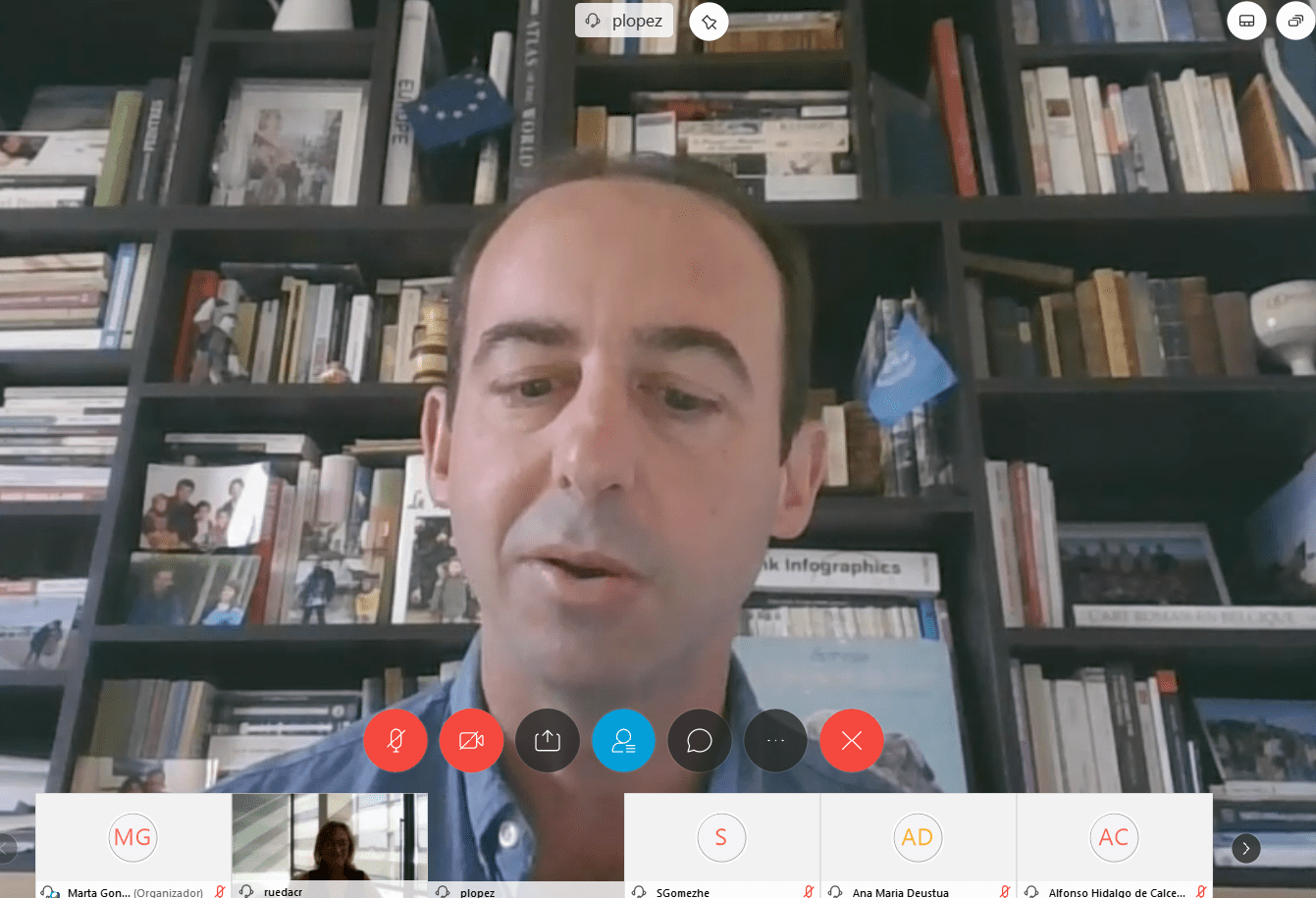
Pablo López Álvarez, Vice-President of the Chamber and moderator of the event, welcomed the speaker and thanked all the attendees for their participation. He began with a presentation of the speaker and gave a quick introduction to the current situation we are facing, which is undoubtedly affecting the priorities and activity of the Commission.

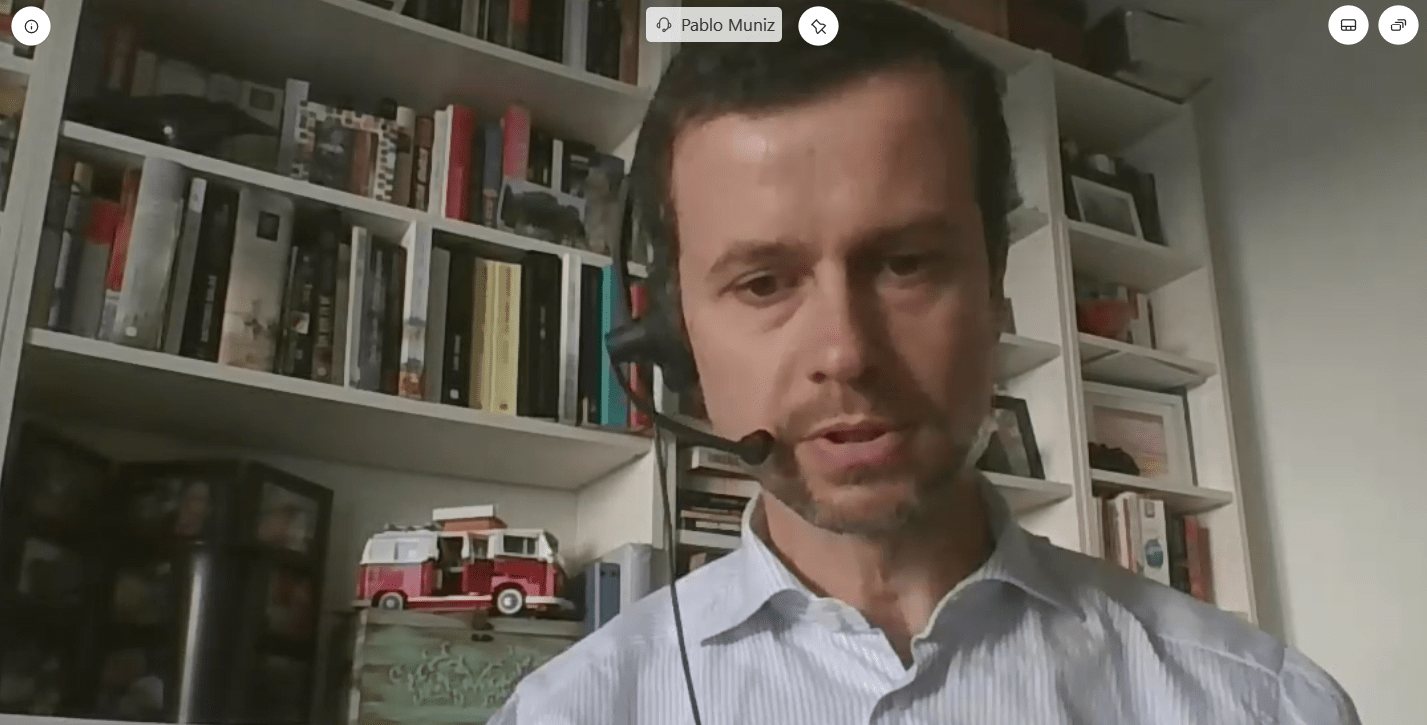
Then, on behalf of our member company and sponsor of the event Van Bael & Bellis, a law firm specialized in EU Commercial Law, its partner Pablo Muñiz took the floor and thanked the speaker and all attendees for their participation in this event.

Cristina Rueda began by explaining how this pandemic has overtaken all sectors of society and that it will reach both public health and the economy, given this the European Commission is paying attention to the economic recovery of its members and companies.

blankDuring her speech, Rueda explained how this crisis has impacted the world trade with a drastic drop in both exports and imports in Europe. The speaker highlighted that world trade was one of the main growth booster of the European Union and that a proactive trade policy will be necessary for its recovery. European trade policy has seen many changes during this crisis, so a new revision of it will be necessary, giving the EU the leadership to guarantee greater resilience and sustainability. This will be achieved, among many other points, by supporting SMEs, diversifying supply chains, protecting companies and workers or keeping the markets open, when companies integrate the needs of the workers and society. She also informed that it will be crucial for this recovery to guarantee the diversity of the offer and to reinforce the anti-dumping duties that protect many jobs and companies from unfair practices. In another area, she reminded that the relaxation of the State aid regulations is merely temporary and that this practice should not be over-extended so that it is not perceived negatively by our present and future trade partners.

On the other hand, the speaker reported on the agenda of bilateral negotiations with Latin America, in which she explained some of the agreements that are currently under negotiation  with Mexico or Chile as well as the single bilateral agreement with MERCOSUR that will allow great savings in rates and which is unique since the block does not have other blanksimilar agreements.

Finally, Rueda informed that, in these months of great activity that lie ahead, it will be essential that all interested companies participate in the forthcoming consultations and debates of the European Commission, not only to face the challenges of Covid but in all sectors that already had problems previously that also have been affected by this crisis.

During the Q&A session, participants were able to raise many questions of interest to them. Thus, various topics were discussed such as the impact of this crisis on the negotiation and implementation of free trade agreements, the agreements with China and India or the sustainable development measures that will be carried out during the economic recovery.

The Spanish Chamber of Commerce in Belgium and Luxembourg would like to thank Cristina Rueda-Catry, all the participants in this session and our member Van Bael & Bellis for sponsoring this event.


Sponsored by:

blank

General Assembly FEDECOM

The consequences of the pandemic affect specifically to the Chambers abroad, whose financial structure corresponds to non-profit organizations, which due to their official status they represent Spain, lacking of administrative resources and are managed by the representatives of associated companies. The cancellation of activities, the withdrawal of members, sponsorships and other sources of income, give serious difficulties to most of the chambers. FEDECOM is working to alleviate the consequences of the COVID-19 crisis. Despite the circumstances, the FEDECOM chambers, thanks to the enthusiasm and professionalism of their staff, keep their commitment to Spain and with their members.
 |
On May 28th, FEDECOM Europe, Africa, Asia and Oceania, the federation of the 23 official chambers of commerce on the 4 continents, gathered its General Assembly, with extraordinary character, to debate on the support measures claimed from the Secretary of State for Trade and the Spanish Chamber of Commerce, during the meeting on April 16 last. The agenda also included the approval of the constitution’ statutes of the new association.
Regarding about the financial support measures requested from the Administration, at the moment, they have not been addressed.
Respecting the measures aimed to strength the network of the Chambers abroad (CAMACOES), the Spanish Chamber of Commerce proposed a series of strategic lines in order to increase institutional and representative activities and promised to enhance the business activities and services.
 |
FEDECOM has been an association under Belgian law until the recent decision to transform it into Spanish law. During the meeting, the new statutes were approved.