New Board of Directors of the Spanish Charity Assotiation in Belgium

The SEBB is a charitable institution which, set up at the beginning of the 20th century, serves, as far as it is able, the needs, both material and moral, of the Spanish people in Belgian territory.

The Board of Directors, which governs the activities of the SEBB, is made up of volunteers of Belgian and Spanish nationality.

The Honorary Presidency is held by the Ambassador to the Kingdom of Belgium.

In her capacity as Honorary President, the Ambassador, Beatriz Larrotcha Palma, convened the General Assembly which, meeting on 16 July, dealt, as a matter of priority, with the renewal of the Board of Directors.

For reasons of age, the following resigned from their posts: the President, Carmen Gómez de Olea de Felsenhart, the Treasurer, Nieves Calatayud de Glanard and the Judge, Hubert Preiser.

The Assembly elected María José Cano Alemán as President. Manuel Menéndez Barrero, a member of the Chamber’s CA, continues as Vice President. Our President, Juan Rodríguez-Villa Matons, joins the Board of Directors as Treasurer.

The Chamber of Commerce, as the spokesperson for a significant part of Spanish civil society in Belgium, expresses its admiration and gratitude to the three outgoing members for the dedication, commitment and generosity that, over several decades, have made it possible to alleviate the economic and moral problems of Spaniards in need.

Interview to Carmen Verdonck, ALTIUS.

Measures taken by the National Security Council of 27 July 2020

Additional measures to strengthen the double strategy to fight the Corona virus’ resurgence

The National Security Council, extended to include the ministers-president, met today in view of the evolution of the epidemiological situation, which is permanently monitored.

Based on the new health information, a new report was requested from Celeval last weekend.

On the basis of this report, it was decided to strengthen the double strategy – national and local – introduced last week to tackle the resurgence of the virus.

National approach

To this end, it is decided that the following measures shall apply from Wednesday 29 July and for at least four weeks (until the end of August):

  • Until now, the social bubble for each individual was limited to 15 people per week. As of Wednesday, the bubble will consist of the same 5 people for the next four weeks and for an entire family, so no longer per individual. Children under the age of twelve are not included in this count. These 5 people are individuals you are allowed to have close contacts with, in addition to the members of your household. In other words, they are contacts with whom social distancing does not always have to be respected.
  • Non-facilitated get-togethers such as gatherings of family or friends are limited to a maximum of 10 people (excluding children under the age of 12). This limit also applies to receptions and banquets.
  • Regarding events that are supervised and follow standard protocols, mayors are responsible for a meticulous re-assessment of the activities they organise or have already authorised on their territory, taking into account the epidemiological evolution. In any case, events with a large audience will be strictly limited to a maximum of 100 people indoors and 200 people outdoors and wearing a face mask will be mandatory. Such events are also only allowed if the safety regulations and protocols are strictly adhered to.
  • Working from home is strongly recommended where possible in order to avoid too much contact between colleagues.
  • The rules that previously applied in shops, i.e. doing your shopping alone (or accompanied by a minor living under the same roof or a person in need of help) for a maximum of 30 minutes (except by appointment), are reinstated.
  • To avoid crowing throughout the country, the measure to grant citizens free train tickets has been postponed until September.
  • Contact tracing will be reinforced in certain specific situations where the epidemiological risk is higher because of individuals being “active”, i.e. mobile or exercising. Contact details are also requested at these locations, such as in wellness centres and at sports lessons. A full list of the locations concerned will be published in the Ministerial Order. They will be subject to the same obligations as the hospitality industry.

Local approach

The National Security Council urges local authorities to take strong measures if the epidemiological situation on their territory deteriorates. They will receive epidemiological data from the regional authorities and will have scope to intervene if the situation so requires.


Source: belgium.be 

New Covid-19 measures by the National Security Council

Masks, restaurants, travelling… Belgium steps up the fight against the virus.

The fight against the coronavirus is far from over. The National Security Council (NSC) published new measures.

The evolution of the health situation required new and stricter actions, NSC members said on Thursday.

Phase 5 postponed

Although a certain relaxation of the measures was planned for 1st August, this will not finally happen. In view of the concerning development of the epidemic, the National Security Council has postponed phase 5 of the de-escalation. As a result, the maximum number of people for celebrations and events with indoor and outdoor audience will remain the same.

As announced at the end of June, the maximum number of people in celebration rooms is therefore 50, while events are limited to 200 participants indoors and 400 outdoors.

This deferral is also bad news for event organisers, who will not be able to resume their activities on 1st August. If the epidemiological situation allows it, these activities are expected to resume on 1st September.

Masks 

The use of the mask is already mandatory in places such as cinemas or public transport, and in others it will also start to be mandatory from Saturday.

Specifically, the use of the mask will be required in markets, street markets, fairs, public buildings and commercial streets.

More generally, the mask will have to be worn in all highly-transited areas, private or public, which will be determined by the municipal authorities. It is also strongly recommended in other cases, especially in situations where safety distance cannot be ensured.

Horeca

In restaurants and cafes, the use of masks will also increase, as this protection will become mandatory everywhere except at the table.

Another new feature will be that customers will be required to leave a telephone number or e-mail address to follow up of possible contaminations. The data collected will have to be destroyed after 14 days and cannot be used for any other purpose than fighting the epidemic, said Prime Minister Sophie Wilmès. A standard form allowing this information to be collected will be available from Saturday on the FPS Economie website.

In view of the excesses observed in certain establishments (non-compliance with the safety distance, illegal parties, etc.), controls will also be reinforced.

Night shops

The night shops will have to close at 10 p.m. The idea of this measure is to fight the temptation of some customers to visit these shops after the restaurants and bars close.

Increasing the role of mayors

At the local level, mayors will now have “the necessary margin of manoeuvre” to take stronger action if the situation requires it, stated Prime Minister Sophie Wilmès.

In other words, the introduction of small-scale lockouts is not out of the question. However, local authorities will have to consult the regions and governors before taking additional protective measures.

Each of the regions has a phased programme of action that may be adopted by the mayors depending on the situation in their locality.

Travellers

For travellers, the rules will now be a little more clear. An online form will soon be available on the Foreign Affairs website. Anyone travelling abroad for more than 48 hours will need to fill it in from 1st August.

This “Passenger Location Form” will be valid for everyone, regardless of the means of transport used.

As far as the “orange” zones are concerned, the NSC continues to recommend a period of quarantine and the performance of the test, measures which are compulsory for travellers returning from the “red” zones.

Social bubble

The social bubble of 15, the number of people you can keep in touch with each week, remains the same. However, its maintenance depends on everyone respecting the rules, the Prime Minister warned.

In Flemish nursing homes, visits are still allowed, but physical contact between visitors and residents is now prohibited.

In addition, each citizen must list all persons with whom he or she has had close contact each week.

Golden rules

In addition to these new measures, the Prime Minister has once again insisted that the six golden rules be respected. These rules are not “an advice, but a set of instructions”.

They include washing hands regularly, encouraging outdoor activities, being extremely cautious in the presence of people in risk groups and keeping a safety distance (1.5 metres) when possible.

Although repeated over and over again, these measures have probably been less followed in recent weeks. As a result, the NSC has just stepped up the pace again.


SOURCE: L’Echo.be

Webinar on “Taxation in Spain in times of COVID-19: Opportunities and challenges”


On July 22nd, the Official Spanish Chamber of Commerce in Belgium and Luxembourg organized a webinar on “Taxation in Spain in times of COVID-19: Opportunities and challenges”, in collaboration with its member law firm Garrigues. The webinar was held within the framework of the Spanish Financial Forum, a committee of the Chamber focused on the financial sector in Luxembourg.

During the webinar, the speakers, Pablo Torrano, Albert Collado and Nuria Cabré, three partners from the tax department of Garrigues in Barcelona, presented the different options through which the losses generated by the crisis derived from the Covid-19 could be compensated for tax purposes, as well as the operations that could be considered taking advantage of the drop in asset valuation.

On the other hand, the tax changes implemented in Spain in the recent months were discussed, as well as the prospects of possible new measures that could be adopted in the future.

Finally, a round of questions and answers was held in which the participants were able to raise their doubts with the speakers. Thus, various topics were discussed, such as the competitiveness of the Spanish tax system when it comes to attracting new residents or the range of possibilities that arise when making a donation.

From the Official Spanish Chamber of Commerce in Belgium and Luxembourg, we thank the speakers for their presentation, and our partner company Garrigues for its collaboration in organising the webinar.
In collaboration with:

Interview to Antonio Corpas, The OneLife Company S.A.

Interview to Jesus Orozco, Ernst & Young S.A.

Virtual Breakfast-Debate with Clara de la Torre, Deputy Director-General of DG CLIMA and Nicolás González Casares, MEP of the ITRE Committee

On 16th July, the Official Spanish Chamber of Commerce in Belgium and Luxembourg hosted a new session of its Breakfast Debates, a platform aimed for bridging Spanish companies and European Institutions. The event featured Clara de la Torre, Deputy Director-General of DG Clima and Nicolás González Casares, MEP of the ITRE Commission and shadow rapporteur for the European Climate Law, under the title: “Green Deal: Towards a carbon neutral economy for Europe”. Given the exceptional circumstances due to the spread of COVID-19 in Belgium and the social distancing measure in place, this breakfast debate was held online and was attended by representatives of member companies of the Chamber, European affairs director, members of multinational companies and Spanish Regional Delegations.

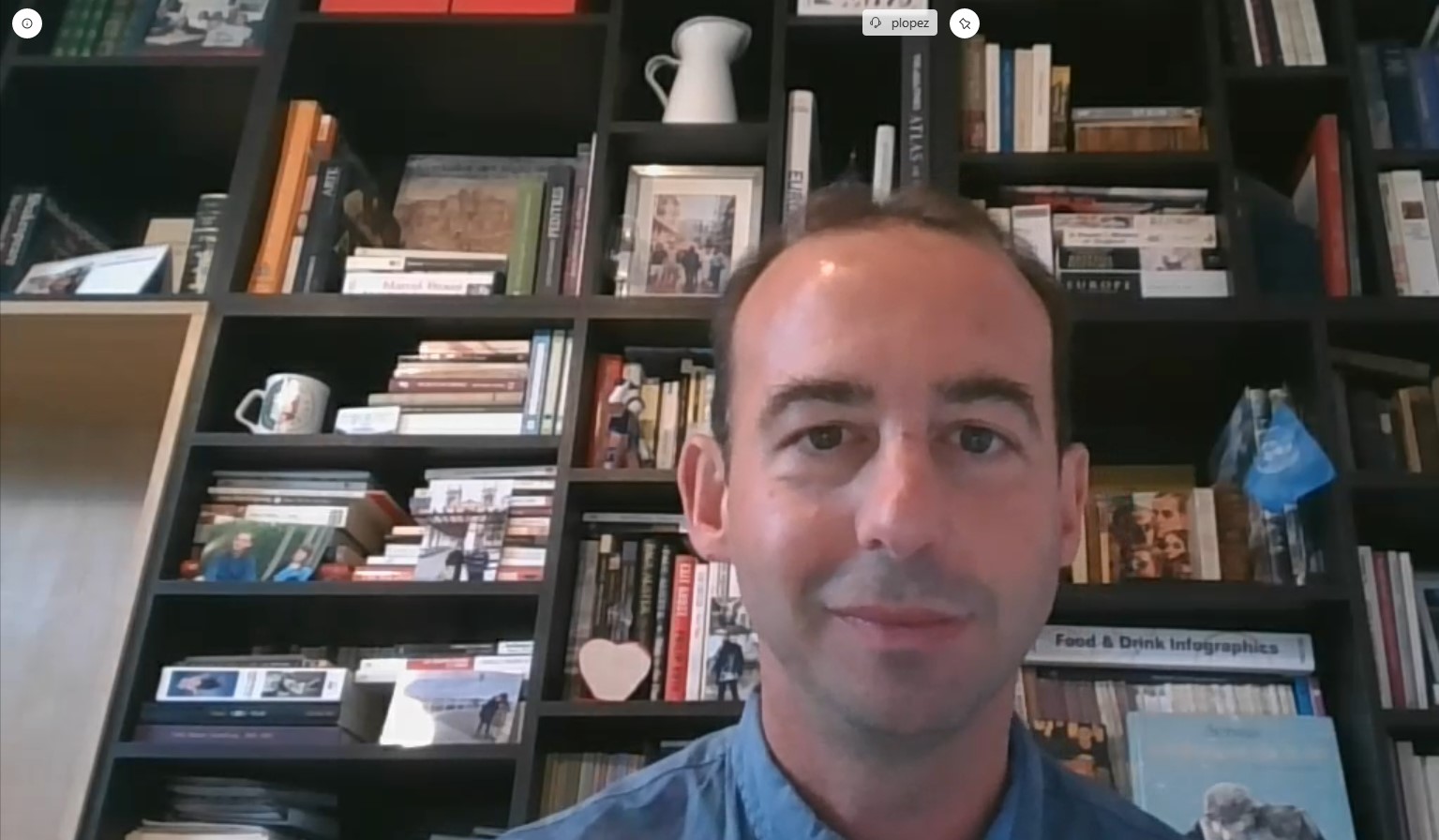
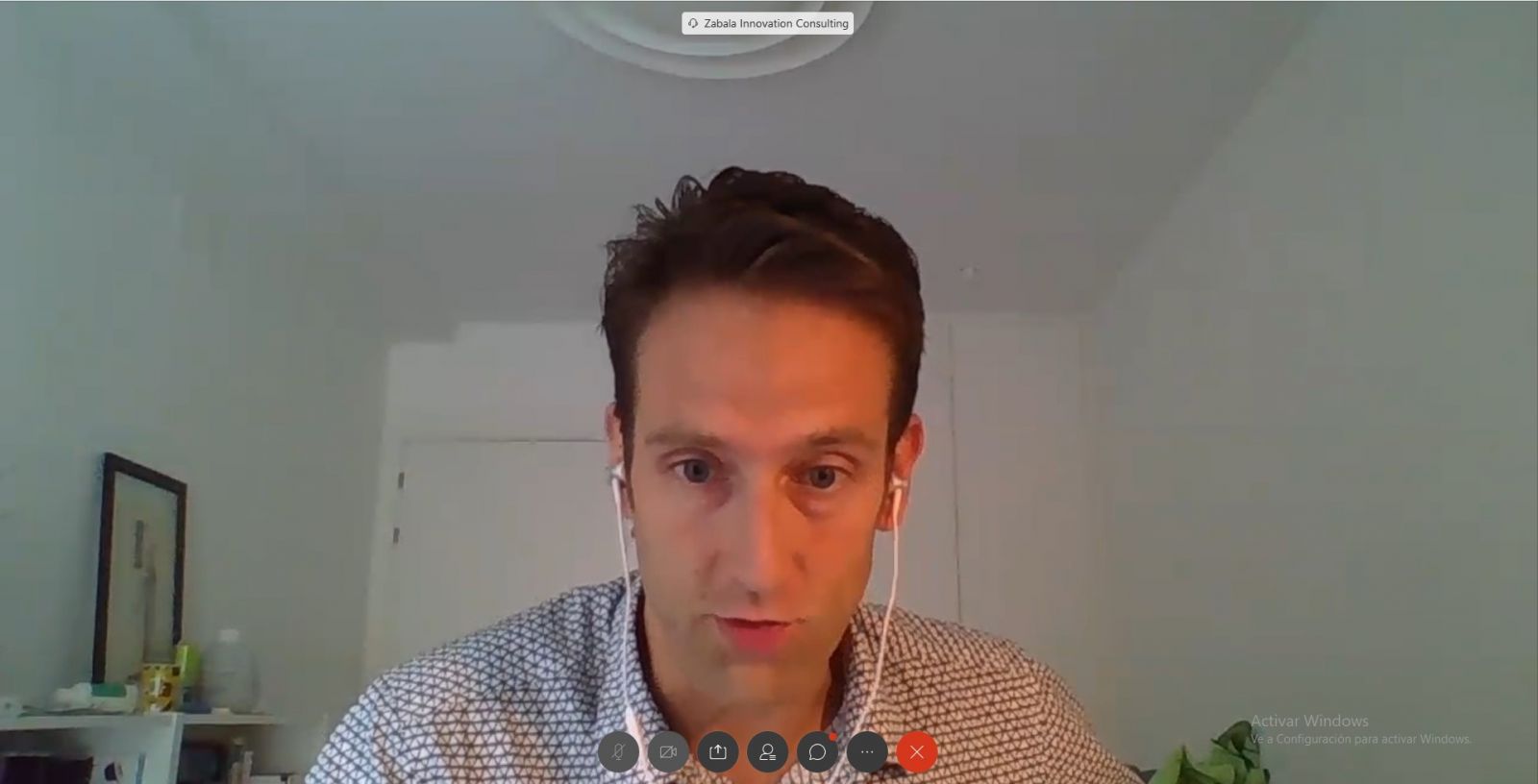
Pablo López Álvarez, Vicepresident of the Chamber,  welcomed and thanked the speakers as well as all the attendees. He began by presenting the background of the speakers and made a brief introduction. The event was moderated by Igor Idareta from Zabblankala Innovation Consulting, member company and sponsor of this Breakfast-Debate.

De la Torre began by mentioning the enormous importance of the upcoming European Council meeting to be held this weekend and its links with the “Green Deal”. After the crisis that all countries are experiencing as a result of the COVID-19, the Deputy Director General highlighted the importance of the Green Deal as a growth strategy and a key tool in the recovery of the European Union, without forgetting the goal of achieving climate neutrality by 2050. The economic recovery must be green to achieve a sustainable digital transition based on innovation and new technologies. In this same line, she pointed out the importance of public-private investments to boost a fair transition towards a circular, clean and sustainable energy that will allow our economies to be transformed. In this context, it is important to clarify the taxation of green investments in order to give certainty to companies in their financing. There are encouraging aspects in this context since the economic recovery is not directly linked to polluting emissions as shows the fact that since the 1990s emissions have been reduced by 20% to 30% but our economies have continued to grow. In the same sense, she pointed out that the European Union is the only region in the planet where a legal framework has been established that makes it compulsory to reduce emissions for the next ten years. This regulation is based on the commitment of the Member States to reduce up to 55% polluting gases emissions in order to comply with the Paris agreements. This European initiative has led many countries in the Union to adapt their legal frameworks to this ecological transition. One example would be Spain, that has already published a Climate Law. Finally, the speaker pointed out how this Green Deal is funded on joint action at European level, the support of the Member States and consistent legislation that will make possible to guide this change and achieve the ambitious objectives set.

González Casares emphasized how essential achieving a coordinated action by all Member States is in order to create an European fund for recovery from the pandemic that will enable us to boost the economy again. During his speech, the MEP highlighted the great challenge that the Green Deal still has ahead, a deal that will serve as a multi-tool in the fight against climate blankchange towards ecological and fair sustainability. This agreement also has the support of the European Parliament which is confident that the Green Deal will lead to change in economic, technological and digital policies. The rapporteur also highlighted the need to support innovation as the driving force behind this green transition, through the electrification of transport and, especially, through the promotion of renewable energies. As an example of this new transition, he highlighted the closure of thermal power plants in Spain as a first step towards the decarbonization of the economy. He also stressed the need to protect workers in the impacted sectors so that they are not left out of this ecological transition. To tackle this problem, González Casares mentioned the creation of the Community’s Just Transition Fund, which will make possible a balance between sustainable economic growth and job losses.

During the Q&A time, the participants were able to present their comments and questions on many issues of interest. Thus, various topics were discussed, such as the taxation that will encourage sustainable investments and serve as a reference for the financial sector; the Horizon Europe Initiative; emissions traffic and its impact on the Climate Act; job protection and its consequences on the future remodeling of the labour market or the importance of fossil fuels and the circular economy.

From the Official Spanish Chamber of Commerce in Belgium and Luxembourg we would like to thank the speakers Clara de la Torre and Nicolás González Casares as well as to all the participants in this session and our member Zabala Innovation Consulting for sponsoring the event.

Sponsored by:

blank

Interview to Eduardo Trancho from Van Campen Liem

Interview to Paloma García, Banca March SA Luxembourg Branch