Infoday about the PICE Mobility Plan

Last June 30th, the Official Spanish Chamber of Commerce in Belgium and Luxembourg as the new local contact point for the PICE Mobility Plan in BeLux, organized an online Info Day about the program.

The Mobility Plan is a program created by the Spanish Chamber of Commerce’s Network and co-financed by the European Social Found which is part of the Spanish National System of Youth Guarantee and offers both personal and professional development opportunities through internships or employment contracts in companies from the European Union. 

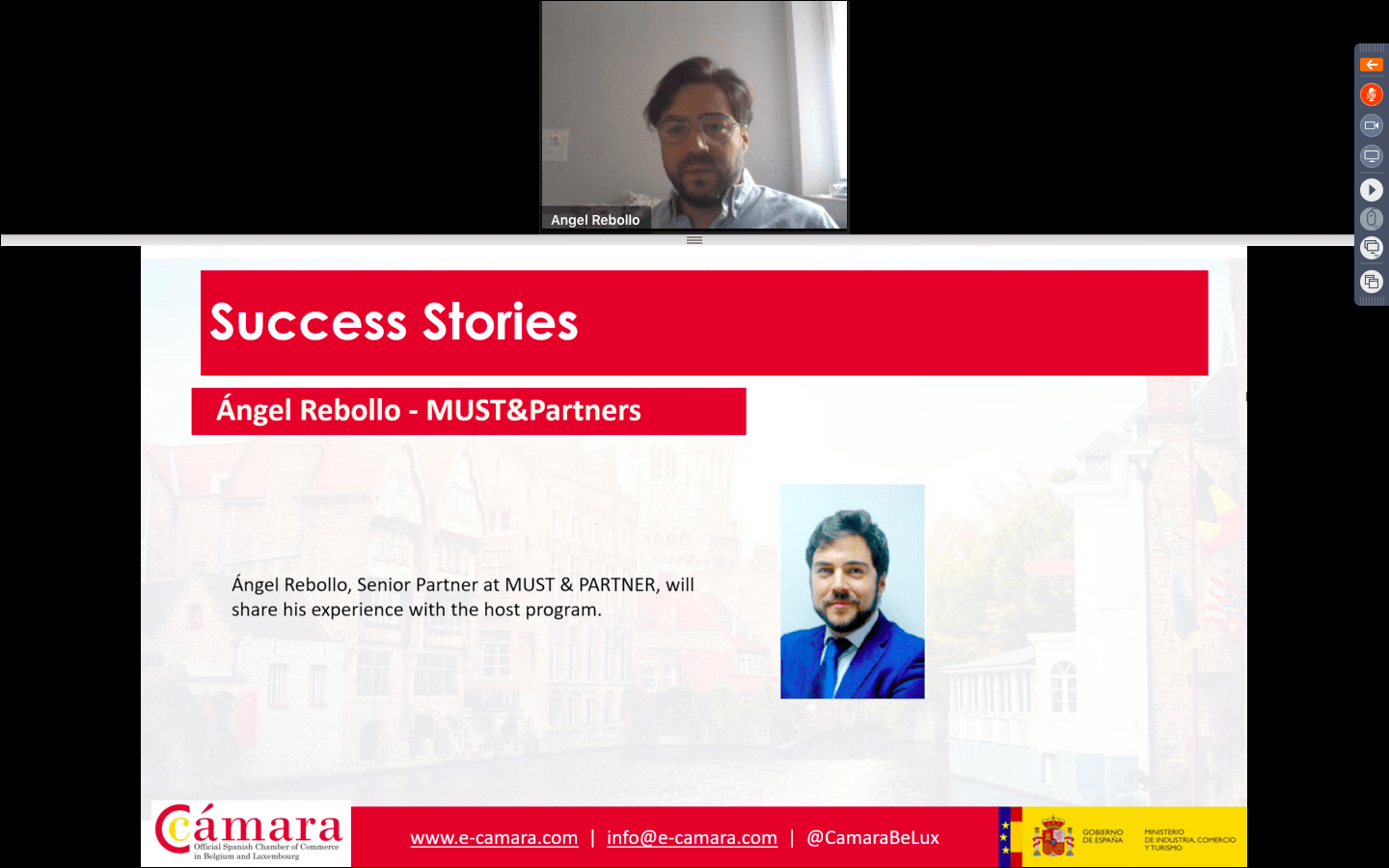
During this Infoday online we had the participation of Ángel Rebollo, from our company member Must&Partners who told his experience as a successful story in this mobility plan to all the participants.

Thanks to this program we can help Belgian companies to find young and motivated talented professionals with the education and experience adapted to business’ needs. 

If you are interested to incorporate new trainees in the upcoming months you would like to have more information about it please send an email to info@e-camara.com

blank

Lunch&learn: How to attract talent trough mobility schemes

On June 29, the Chamber, in collaboration with the Incubator of Luxembourg City, organized a briefing on mobility programs for SMEs and Startups.

The session was divided into individual meetings with each of the interested companies to answer their questions about the different participation requirements in each of the programs managed by the Chamber:

Erasmus for Young Entrepreneurs, a cross-border exchange program that gives new entrepreneurs the opportunity to work with experienced entrepreneurs who run small businesses in other EU countries.

The PICE Mobility Plan, a program created by the Spanish Chamber of Commerce and co-financed by the European Social Fund, whose main objective is to offer opportunities for personal and professional development to young people who participate in the program and, at the same time, improve the productivity of partner companies.


For more information about our mobility programs, contact us info@e-camara.com.

Virtual Breakfast-Debate with Lucía Caudet Balzer, Deputy head of cabinet of Thierry Breton, EU Commissioner for Internal Market.

On June 25th, the Official Spanish Chamber of Commerce in Belgium and Luxembourg hosted a new session of its Breakfast Debate, a platform aimed for bridging Spanish companies and European Institutions. The event featured Lucía Caudet Balzer, Deputy head of cabinet of Thierry Breton, EU Commissioner for Internal Market, under the title “COVID-19 recovery: what future for our digital sector, our industry and our internal market”. Given the exceptional circumstances due to the spread of COVID-19 in Belgium and the social distancing measure in place, this breakfast debate was held online and was attended by representatives of member companies of the Chamber, managers of companies, multinationals and Spanish Regional Delegations.

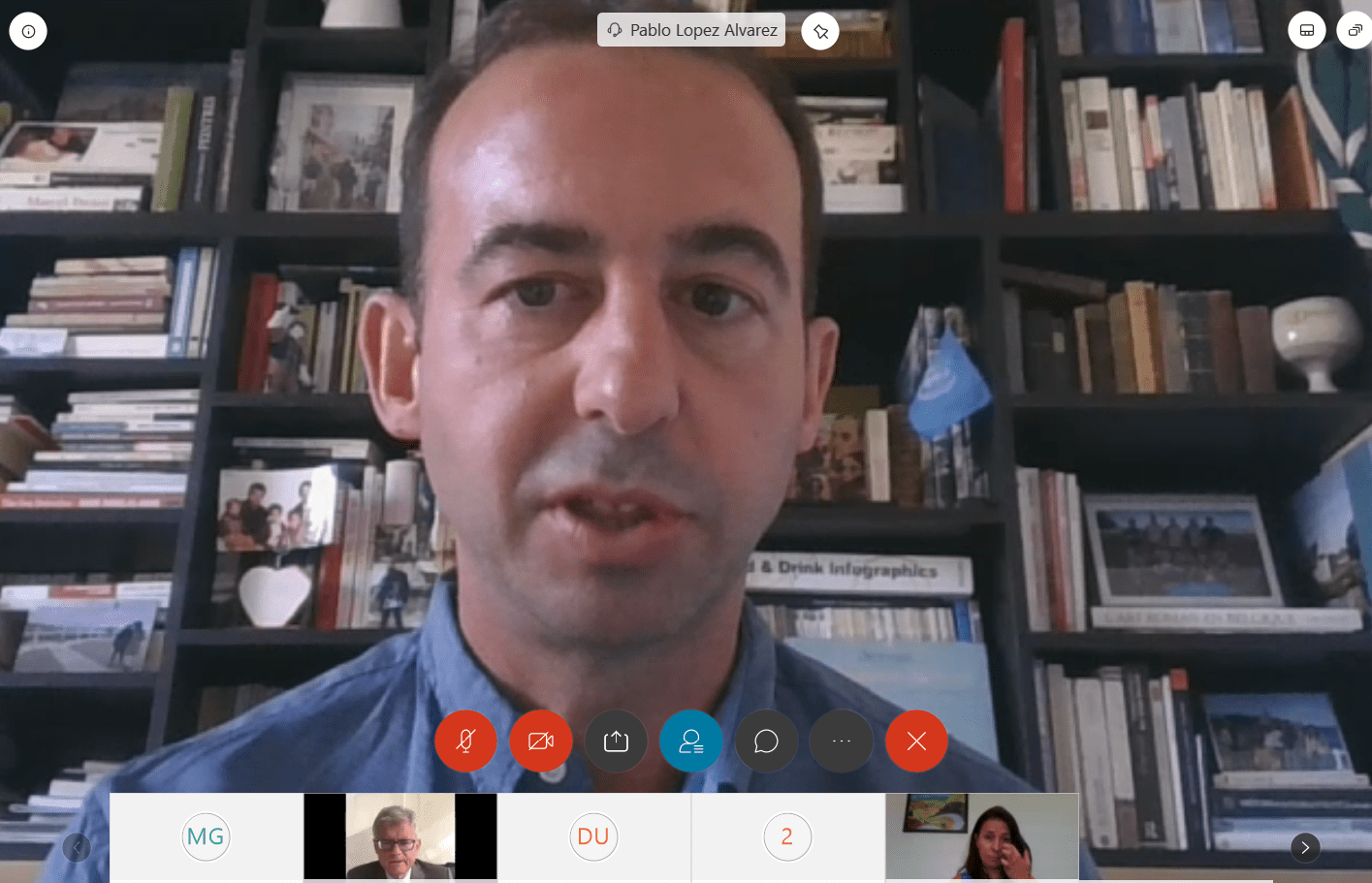
Pablo López Álvarez, Vice-President of the Chamber and moderator of the event, welcomed and thanked the speaker as well as all the attendees. First he introduced the speaker’s career and gave a quick introduction to the current situation we are facing that without doubt is affecting the pblankriorities and activity of the European Commission.

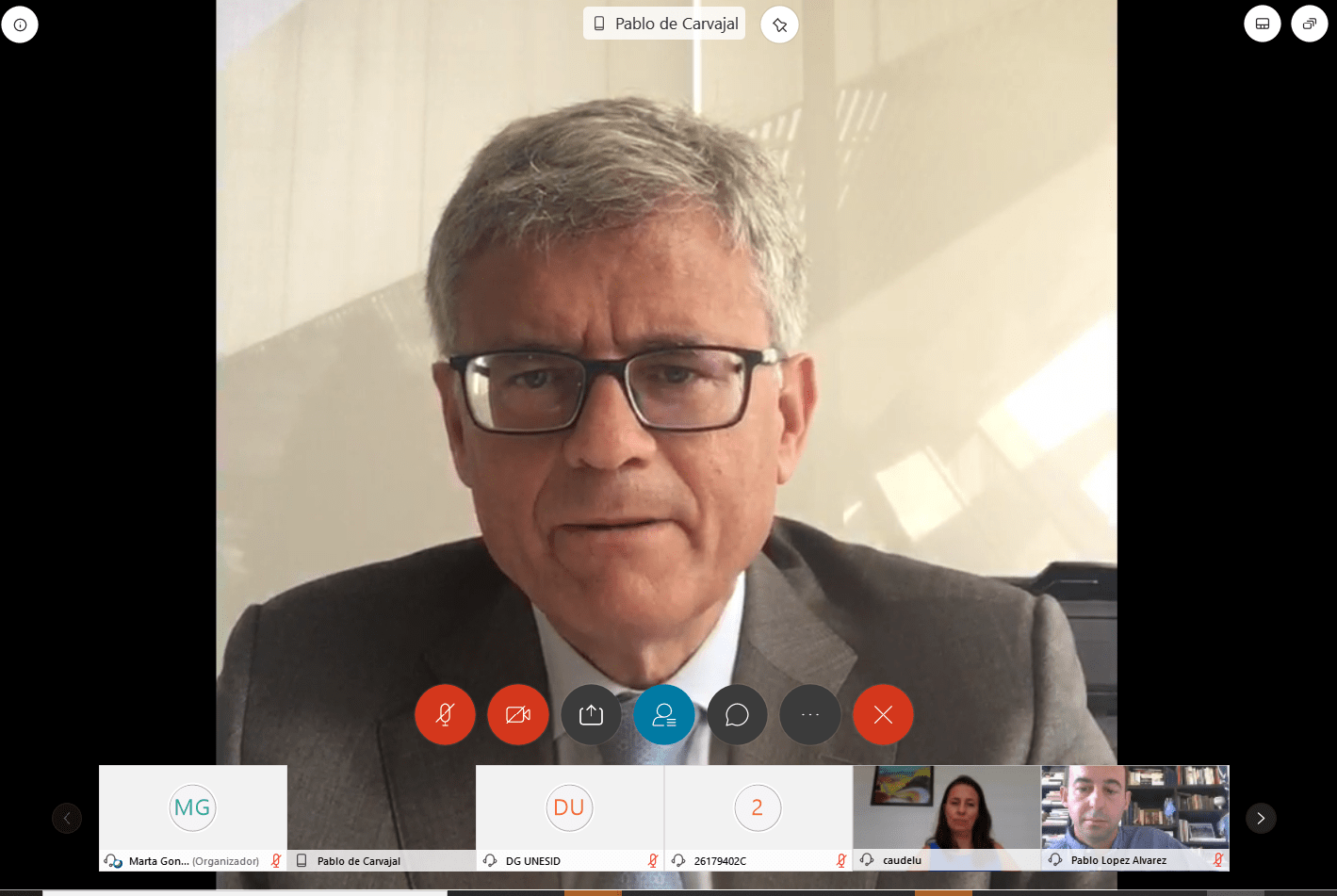
Then, on behalf of our member company and sponsor of the event Telefónica, its General Secretary Pablo de Carvajal took the floor and thanked the speaker and the entire team of Commissioner Breton for their enormous dedication in the fight against the pandemic, as well as their dedication for an early economic recovery. He also did a brief summary of the situation in the telecommunications sector, which has demonstrated its reliability and highlighted its importance in our society, and aimed that it will be necessary to apply new measures to improve the European digital ecosystem.

Lucia Caudet began by summarizing the activities and objectives that the commissioner had been carrying out during his first 100 days marked by the Green Deal. After the emergence of the coronavirus, the agenda changed all of a sudden to focus during a first phase in boosting the production of masks and blowholes by contacting the industrial manufacturers to give these products to those who needed it most. After this first phase of emergency management, the commissioner’s activity is currently focused on the new European industrial strategy. To explain this new strategy, the speakerr began by referring to the different industrial ecosystems, highlighting that this is not a problem that affects a single member State, but involves the entire single market itself. To carry out this strategy, it will be necessary to provide liquidity and repair these industrial ecosystems by doing a microeconomic analysis of them.

The speaker reported that the European Commission has presented a historic recovery plan where the member States and the industrial sector will play a major role generating the necessary synergies that will transform our economy and industry through fair conditions within Europe but also in relation to the United States and China to maintain the competitiveness of our companies.

To conclude, Caudet explained that an agenda has been made to improve the resilience of our economies in order to blankensure the interests and decision-making autonomy of Europeans by avoiding a great dependence on third States as the current sanitary crisis has staged. Then speaker then stand out that this crisis may represent, beyond the terrible human cost, an opportunity to modernize our economies for example with a better connectivity throughout Europe in which technologies such as 5G, block chain or artificial intelligence will be fundamental. It was also highlighted that despite the critics that have been received, this strategy is not based on planning the economy and does not pursue protectionist ends. Finally the speaker explained that despite of Europe arrived late to the first technological wave based on personal data, the European institutions won´t let pass this second wave based on industrial data.

During the Q&A session, participants were able to raise many questions of interest to the speaker. Thus, various topics were discussed such as the strategies to support the various ecosystems of the European economy through new technologies and the promotion of value chains, the different aspects that are being addressed in the standardization of technological components, the trends of the European Defense Fund or the leadership of European projects ourtside of internal borders.

The Spanish Chamber of Commerce in Belgium and Luxembourg would like to thank Lucía Caudet Balzer, all the participants in this session and our member Telefónica for sponsoring this event.

Sponsored by:

blank

General Assembly Meeting 2020

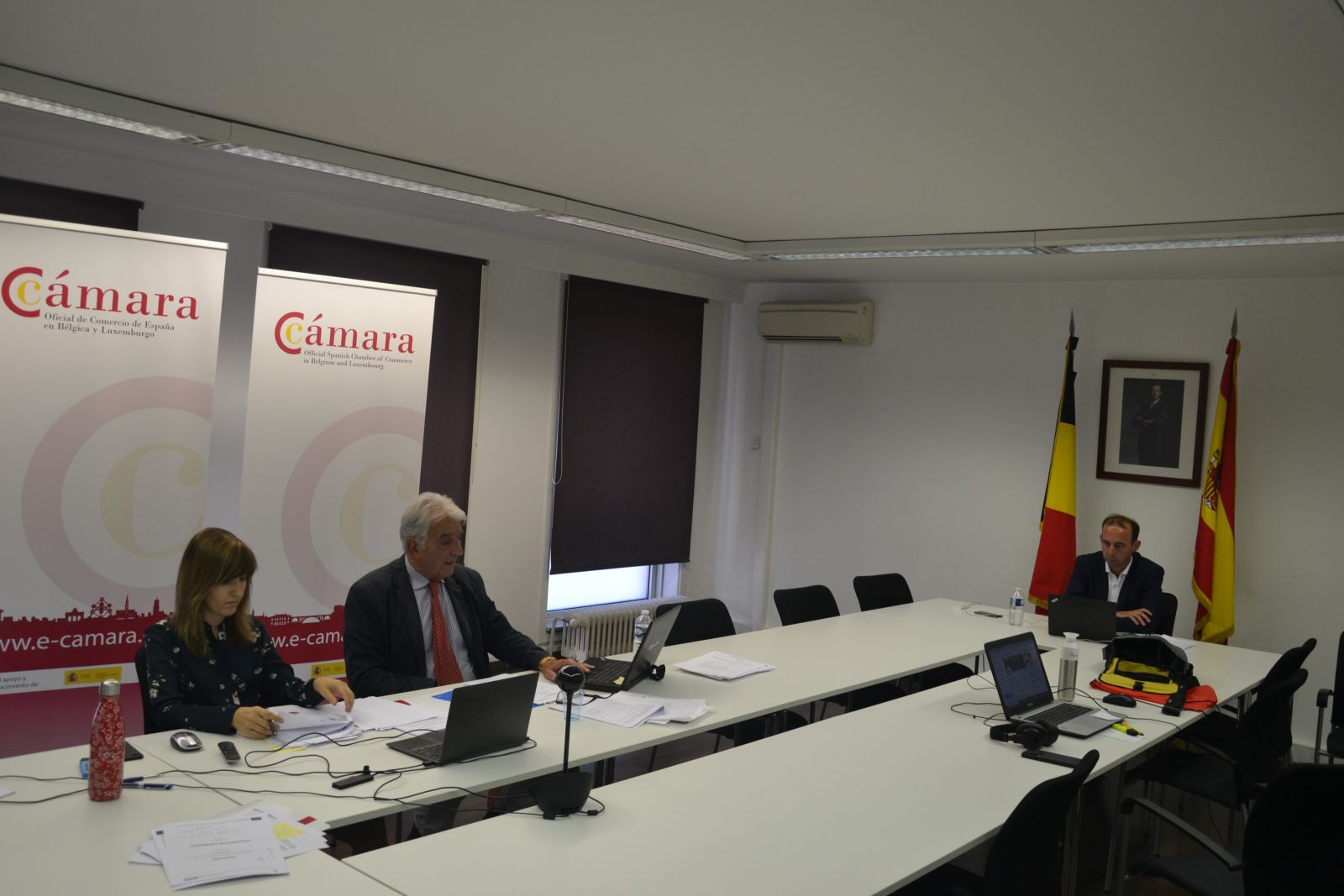
On June 24th, the Official Spanish Chamber of Commerce in Belgium and Luxembourg hosted its General Assembly Meeting. Due to the spread of COVID-19 in Belgium and in order to follow the social distancing measures, the Assembly had to be celebrated in an online format.

 The Ambassador of Spain in Belgium, H.E. Ms. Beatriz Larrotcha Palma, and the Ambassador of Spain in Luxembourg, H.E. Mr. D. Bernardo de Sicart Escoda, both presidents of Honor of the Chamber, were present during the Assembly. The Economic and Commercial Counselor of the Embassy, Ms. María Palanca Reh, also attended the meeting as vicepresident of Honor of the Chamber.

 The President of the Chamber, D. Juan Rodríguez-Villa Matons, took the floor firstly to thank the present members its attendance and he apologized for any eventual technical problem because of the format that may have. blankHe also wanted to wish to all the members and its families the best against this pandemic. The President also mentioned the main news regarding the staff with the appointment of Marta Gonzalez Benguria as Secretary General after María Catalan left the post and the enrollment of Javier Rincón Cruz as Business Development Manager. The President wanted to thank María Catalan for its outstanding dedication to the Chamber for many years. The recognition was also extended to Miguel Ángel Arrimadas that leaves the Treasurer post. After this he gave the floor to the Secretary General of the Chamber.  

Marta Gonzalez Benguria explained the agenda of the Assembly and afterwards summarized the main activities and events organized by the Chamber during 2019. She also made a brief resume of the current situation that the Chamber is facing due to the impact by the COVID-19 and the lockdown measures taken. The Secretary General highlighted the rising tendency in the number of members in the last years that has been consolidated in 2019. The diversification in the Chamber’s activities during the last year was also highlighted with a special mention to the new services available for members in Luxembourg. At the end of its speech the Secretary General presented the beginning of the management of PICE international mobility program from the Spanish Chamber and supported by the European Social Fund.

Based on the statutes and as a recognition for all the years of dedication, the Secretary General and the President proposed to the Assembly to validate María Catalan and Miguel Ángel Arrimadas as Honor members, being validated by the Assembly by acclamation.  

 Due to the absence of the Treasurer in the Assembly and as the documents were sent to the members the income and expense accounts, the income statement and the balance sheet for the 2019 financial year were set as presented and approved by acclamation.

blank

After this the President proposed the candidates to the General Assembly. Given that the number of vacancies in the Board of Directors was equal to the number of candidates and as no one expressed against, the Assembly approved the following (4) candidates as members of the Board of Directors for a 3-year period:

  • Juan Alfonso Herrero (Mercadona)
  • Pablo López Álvarez (FTI Consulting, Hispania y Alvarez & Associates)
  • Carlos Rodríguez Cocina (Telefónica)
  • David Luengo (Indra)

 Additionally, the appointment of Abelardo García González (BBVA) was ratified by the Assembly.

The Ambassador of Spain in Luxembourg, H.E. Mr. D. Bernardo de Sicart Escoda took the floor for itself and in the name of H.E. Ms. Beatriz Larrotcha Palma, Ambassador of Spain in Belgium, to thank Miguel Ángel Arrimadas and María Catalán for its work over the last years.

The President of the Chamber thanked the Secretary General and its team for its work as well as to the young stagiaires for their vitality and commitment with the Chamber. Last but not least, he wished to best of luck to all the presents in this difficult time due to the current health crisis.

Launch of phase 4 de-escalation, starting July 1st in Belgium

Press release by Sophie Wilmès, Prime Minister

The National Security Council extended with the Ministers-presidents of the regions, agreed for a transition to phase 4 of the de-escalating since July 1st, based on the agreement of the GEES experts that is based on the good evolution of the epidemiological situation.

The six golden rules are still in force:

  • Respect for hygiene rules.
  • Prioritize outdoor activities.
  • Take extra precautions for those at risk.
  • Respect for safety distances.
  • The “extended bubble” rule that increases from 10 to 15 different people per week in addition to the co-living. As a reminder, this right is individual.
  • Group activities cannot exceed 15 people, children included. This applies to all unsupervised meetings, regardless if they take place at home or outdoors.

It will now be possible to open under certain conditions:

  • Pools and wellness centers.
  • Amusement parks and indoor playgrounds.
  • Theatres and cinemas.
  • Casinos and game rooms.
  • Conference rooms.
  • Reception and party rooms with a maximum of 50 people.

Among the conditions is the application of protocols. In addition, the general rules that are already in force for other activities will be applied, such as the mandatory respect of safety distances, the establishment of time slots and crowd management, the cleaning of infrastructure and the use of mouth masks, which continues to be highly recommended.

Activities that cannot be restarted at this stage:

  • Nightlife activities such as disco clubs.
  • Massive events.

However, it will be possible to organize activities from July 1st in front of an audience, under certain conditions established in the protocols.

For regular events organized in permanent structures such as theaters, cinemas, galleries, congress halls, protocols will be drawn up with competent ministers and experts from GEES.

For specific events in the public space, an online tool will be available on July 1st and will serve as a reference for local authorities in granting authorizations for these events. Specific rules should also apply.

For all these events, there is a capacity limit set at:

  • 200 people inside.
  • 400 people outdoors.

This capacity limit will be re-evaluated in August to 400 people indoors and 800 outdoors maximum if the health situation allows it. An exception can be requested for permanent infrastructure with a public sitting to exceed this limit, respecting health regulations.

The maximum number of outdoor participants will also apply to demonstrations. These should always be subject to a request for authorization from local authorities. In any case, they must always be static and take place in a place where safety distances can be respected.

At the same time, in addition to the resumption of these activities, certain protocols will be relaxed as of July 1st:

  • Possibility of going to the stores with people from your contact bubble and without time limitation. The safety distance will continue to apply.
  • Elimination of the limit on the number of positions for the markets. Health protocols and regulations must continue to apply.

With respect to the next National Day, it was decided that the traditional military and civil parade would take another form exceptionally to meet health standards. In fact, different artistic performances in symbolic places will highlight our country and its artists and will be broadcast on television. Detailed communication will be made later on this topic.

On the longer-term perspective, the start of the school year is already in full swing. The ministers of education, in collaboration with the GEES experts, have established a colour code system that indicates how the school should be organized according to the health situation. Education ministers will explain the plan in more detail at a press conference.


Source: Info-coronavirus.be

Webinar on “Covid-19: consequences on employment relationships in Belgium”

On June 23rd, the Official Spanish Chamber of Commerce in Belgium and Luxembourg, organized with SD Worx a webinar on “Covid-19: consequences on employment relationships”.

The conference was held by, Valérie t’Serstevents, legal consultant in national and international law at SD Worx, that spoke about key issues at the moment such as different telework schemes, changes in the situation of international workers who have moved to work in one territory, unemployment linked to covid-19, the parental leave by covid-19 recently introduced in Belgium, rules regarding dismissal or the possibility for workers to demand postponement of their holidays when they have coincided with the period of confinement.

After the presentation, the participants had the opportunity to ask their doubts about the topics discussed. The questions addressed to the speaker concerned the status of payments considered as ‘travel expenses’ when travels no longer take place or the differences between structural and occasional teleworking.


In collaboration with:

blank

EU Funding Week for non-profit organizations – Project Management

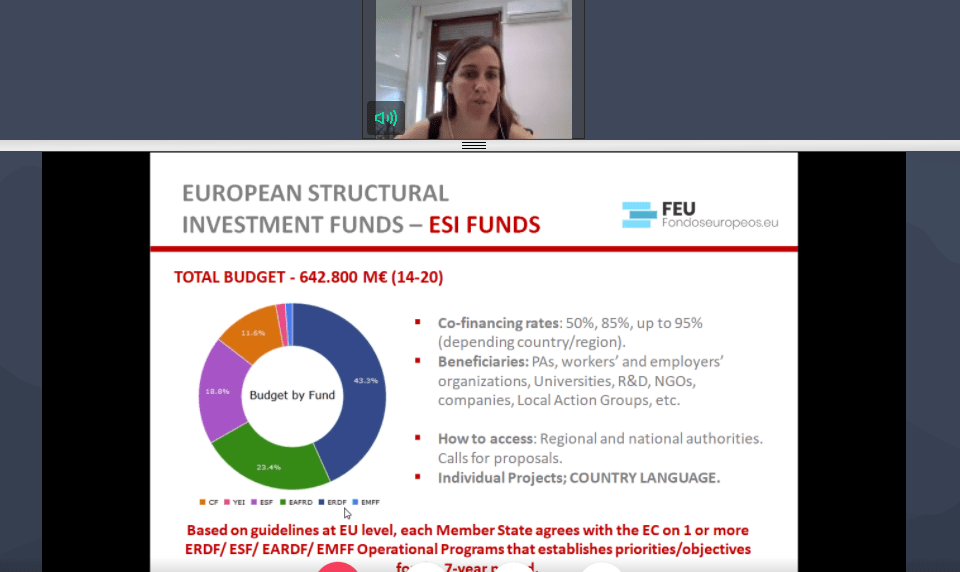
On June 16th, 17th and 18th the Official Spanish Chamber of Commerce in Belgium and Luxembourg organized the EU Funding Week for non-profit organizations – Project Management in collaboration with Fondos Europeos. This webinar was destinated for beginners and aimed to give an introduction to all the relevant aspects of EU projects with an special focus in Non-Profit Orgblankanizations. The audience featured a great diversity of organizations with consultancy firms, civil society organizations or small business.

During the first session the attendants had the opportunity to have a quick introduction to the EU funding dynamics by understanding what is an EU project, the differences between shared/direct/indirect management. Speakers gave an approximation on what the next European strategy for the 2021-2027 period will be with topics such as recovery funds, green deal, etc. Despite the next MFF has not been approved yet, some general lines could be given as well as an update on the current status of the negotiations.

On the second day of the workshop, attendants learnt how to get involved on the different EU funded projects by applying for the correct fund, choosing the ideal call, planning activities and budget or joining a consortium. The need of geographical balance in consortium, the importance to define clearly the different roles or the financial split among members of the consortiums were also highlighted. Finally the different online platforms and tools to apply for EU projects or join consortiums were also explored.

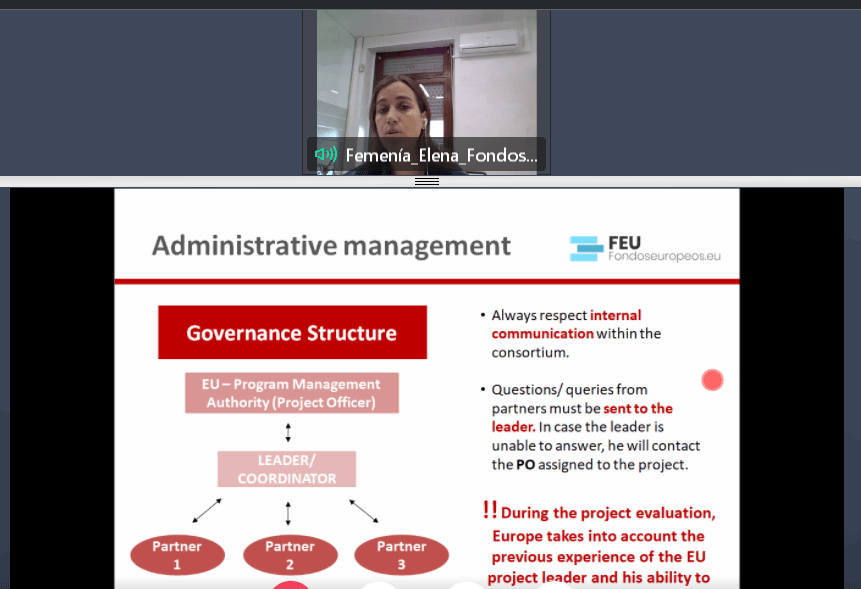
blankFinally, on the last session of the webinar, the audience had the opportunity to know more in detail what the management of EU projects looks like by focusing on the financial, administrative and communication sides of the project management as well as the due legal framework for the different phases. All those aspects were explored based on real cases in different funds by exploring the different milestones, key performance indicators (KPI), deliverables, etc.. And last but not least, attendants learned to deal with difficult situations that may occur within an EU project management or in a consortium as well as some tips and tools were given to solve this kind of situations.

During the conference, the participants were able to raise their doubts about the exposed information. The doubts were solved on a permanent basis by the speakers and were both written down or spoken out loud.

From the Official Chamber of Commerce of Spain in Belgium and Luxembourg we want to Fondos Europeos for their presentation and dedication, as well as the participants for their presence.

Virtual round table on “The tourism sector in post-Covid-19 Europe: Challenges and opportunities”

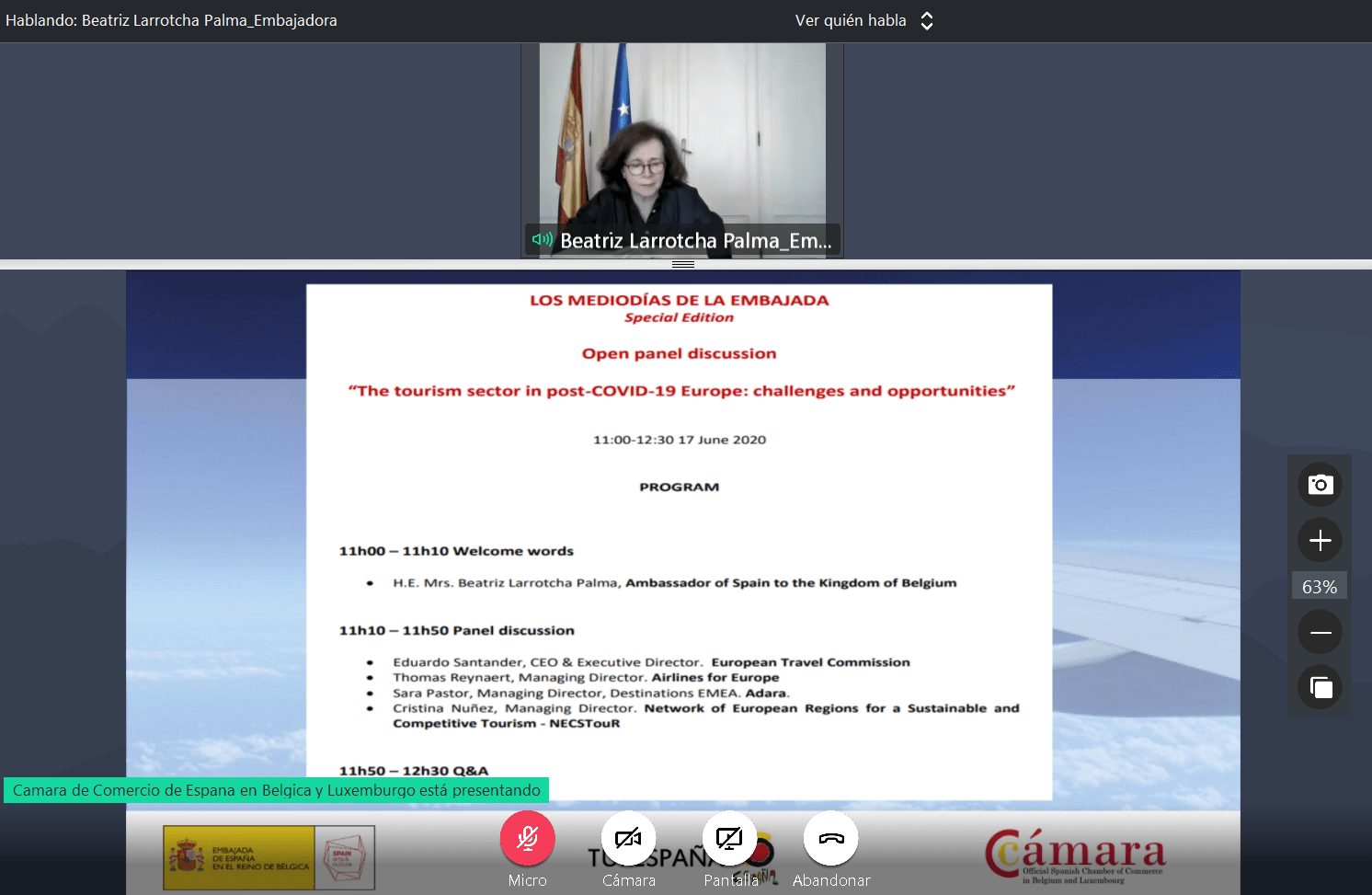
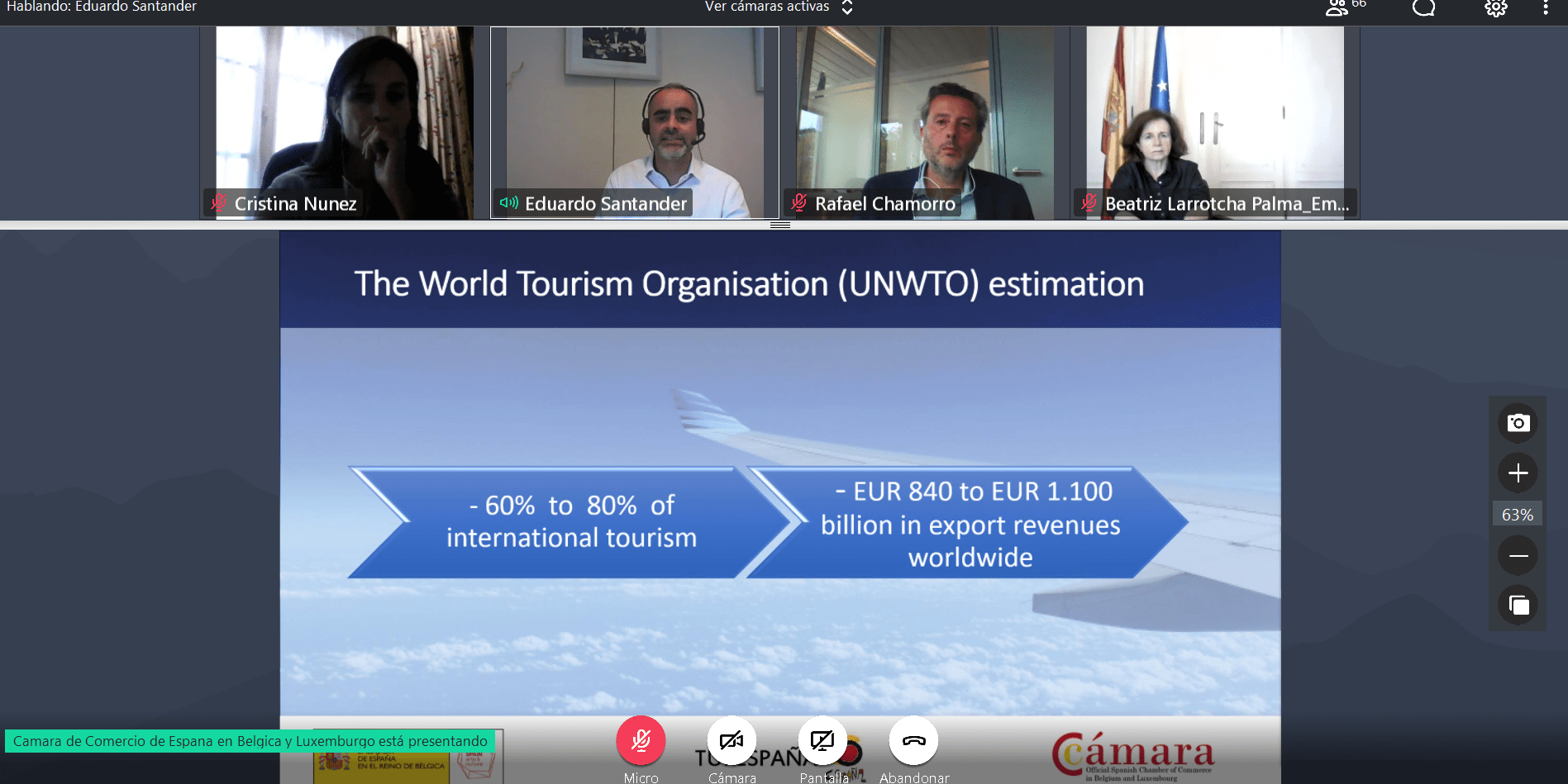
On Wednesday, June 17th, from 11:00 to 12:30, the Embassy of Spain in the Kingdom of Belgium and the Spanish Tourist Office in Belgium, in collaboration with the Official Spanish Chamber of Commerce in Belgium and Luxembourg, organized a virtual round table on “The tourism sector in post-Covid-19 Europe: Challenges and opportunities”, a special edition that is part of the Mediodías de la Embajada events.blank

The debate was chaired by Rafael Chamorro, Director of Spanish Tourism Office in Belgium, and featured H. E. Ms. Beatriz Larrotcha Palma, Ambassador of Spain to the Kingdom of Belgium. For the roundtable the speakers were Eduardo Santander, CEO & Executive Director of European Travel Commission, Thomas Reynaert, Managing Director of Airlines for Europe, Sara Pastor, Managing Director, Destinations EMEA of Adara and Cristina Nuñez, Managing Director of Network of European Regions for a Sustainable and Competitive Tourism – NECSTouR.

The welcome words were given by H. E. Ms. Beatriz Larrotcha Palma, Ambassador of Spain to the Kingdom of Belgium, stating the importance of tourism for Spain and Europe and the great effort put in place by Spanish authorities to restore trust in Spain as a safe destination. The Ambassador also thanked all the organizers for the webinar as well as to all the attendants for their interest.

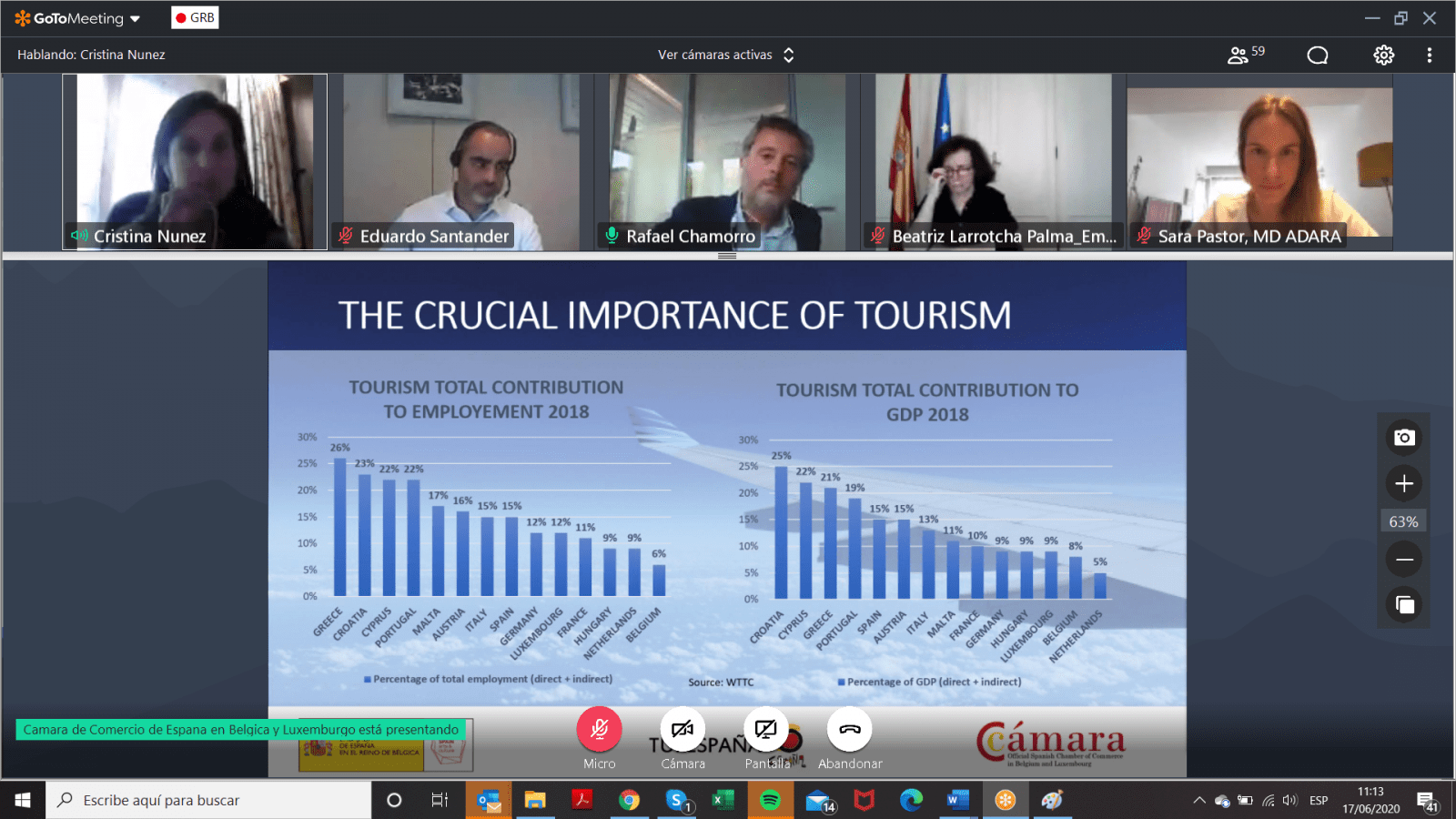
Following the welcome words, Rafael Chamorro, Director of Spanish Tourism Office in Belgium, Presented all the speakers and opened the roundtable by giving some key numbers about the critical importance of tourism sector not only for Spain but also for Europe as around 10% of EU’s GDP depends directly from this sector. Despite some disparities between EU countries, the economic importance of tourism in terms of employment and growth make compulsory for Europeans to be able to travel again with open borders.

blankDuring the debate, Eduardo Santander, CEO & Executive Director of European Travel Commission, insisted in the fact that this crisis might be the perfect opportunity to rethink tourism once the health crisis is over. As some symptoms of the lack of sustainability arise earlier than the COVID-19 crisis, it is the perfect time to think in a future of tourism with a green mark that gives opportunities to regions that traditionally were not receiving much tourism (España vaciada) rather than coming back to unsustainable massified destinations.

Thomas Reynaert, Managing Director of Airlines for Europe, gave his impressions on how severely this crisis has affected the airlines and how they are taking measures to recover from it. Airlines will also be key for the development of the green deal strategy in the near future in addition to some harmonization policies needed in the sector at the EU level. The speaker also highlighted the importance of individual responsibility in flights as long as the health crisis lasts even if the safety is completely ensured thanks to air technologies on planes.

Sara Pastor, Managing Director, Destinations EMEA of Adara, shared with the audience a general picture on how the crisis has been faced by the sector and how the data shows we are starting to rise the curve of reservations as Europeans have not lost their will to travel. This current scenario means that the right strategy to attract the tourists can make the difference for all actors in the sector (regions, hotels, airlines, etc.). A common strategy Europe-wide is needed to prevent comparative advantages (and disadvantages).blank

Cristina Nuñez, Managing Director of Network of European Regions for a Sustainable and Competitive Tourism – NECSTouR, highlighted the importance of regions in this sector recovery as it is crucial for them to keep attracting public attention by focusing on their strong points. She also agreed that this crisis can be a huge boost for rural areas or regions that traditionally were not among top destinations, therefore it is important to generate trust in the tourist that are looking for this non-massified destinations.

During the Q&A session, participants were able to raise questions of their interest. Some topics covered during this session were the need to restore trust in tourism or the opportunities given to rural areas.


Organized by:
In collaboration with:

blank      blank
blank

Interview to Florentino Quidiello and Laurent Degrelle, Fiscalift