Breakfast-debate with Nathalie de Basaldúa, Deputy Head of the Cabinet of Mairead McGuinness, Commissioner of Financial services, financial stability and Capital Markets Union

Last Thursday January 28th the Official Spanish Chamber of Commerce in Belgium and Luxembourg organized a new virtual breakfast-debate in the framework of its “Business Circle” platform.  Nathalie de Basaldúa, Deputy Head of the Cabinet of Mairead McGuinness, Commissioner of Financial services, financial stability and Capital Markets Union, participated in the debate. The breakfast focused on the “Priorities for the Financial Services Agenda in 2021” and was organized in collaboration with the Spanish Banking Association (Asociación Española de Banca – AEB).
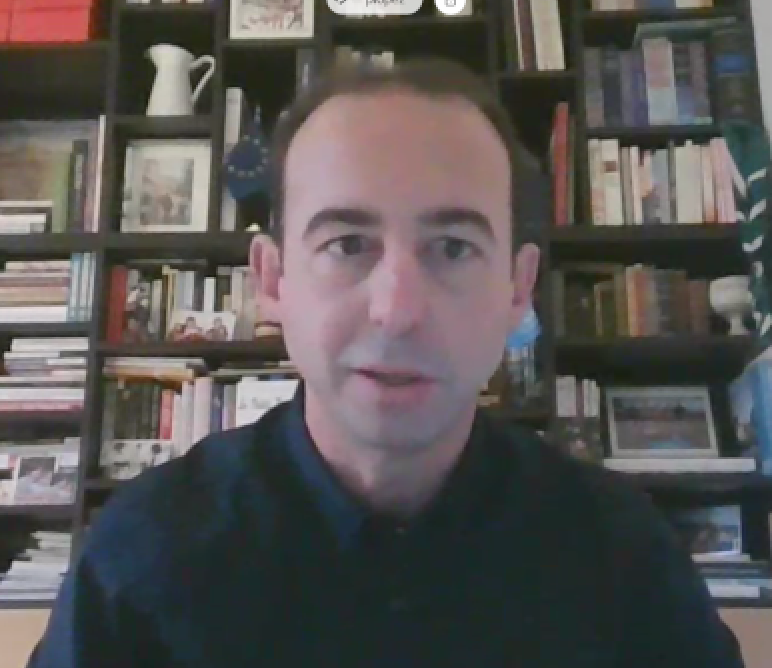
Pablo López Álvarez, Vice President of the Chamber and moderator of the event, welcomed and thanked the speaker and all the attendees for their participation.

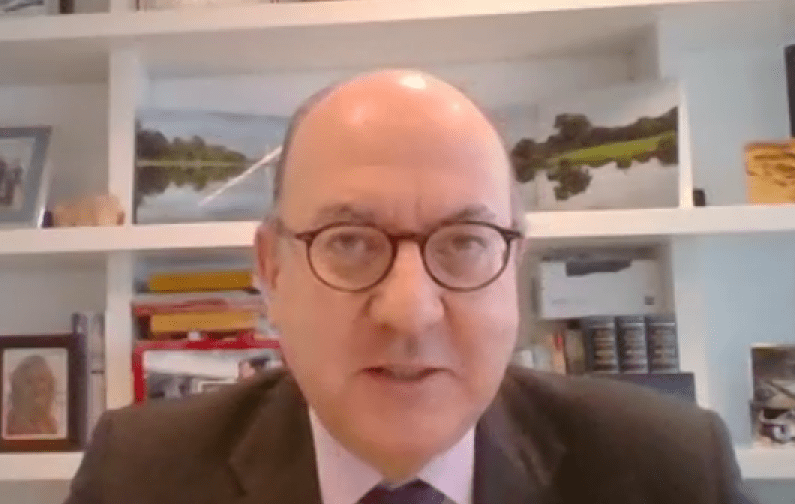
To begin with, José María Roldán, AEB President, member of the Chamber, took the floor to thank the speaker for her availability and those present for their attendance. The President highlighted how, apart from the crisis linked to Covid-19, the mere development, maintenance and updating of the European regulatory framework already entails an activity for the sector in the coming years. José María Roldán also wanted to highlight the importance that the new US administration could have on relations with the EU for the financial sector due to its regulatory influence. Although, for the moment, the current crisis does not seem to have had a critical impact on the financial sector, the reality is that great uncertainty persists, anblankd the sector must be prepared. Finally, the President highlighted the impact of digitalization on the sector and suggested changing the regulatory paradigm from reactivity to prevention to regulate the growing financial role of large digital players.
Nathalie de Basaldúa began her speech by thanking all the organizers and attendees for the possibility of holding this event. The speaker began by highlighting the various initiatives launched by the European Commission during 2020 as a result of the Covid-19 crisis, especially by Commissioner McGuinness, such as the European bonds, the Sure program, the mobilization of billions of euros or the quick fix mechanism implemented for the financial sector. The Deputy Head of the Cabinet also focused her speech on the work program scheduled for 2021 and the several dossiers that will be published in a very wide range of areas ranging from the review of existing financial frameworks to the regulation of digital financial areas, including green investments and insurance.

Among the dossiers scheduled for 2021, the banking union, where a consultation has been launched on crisis management and the deposit guarantee framework, or the incorporation of the Basel III agreements, postponed due to the pandemic, stand out. In the digital area, the Commission will launch a proposal to regulate figures such as cryptocurrencies/crypto assets, a digital operational resilience framework and will study the possibility of a digital euro. She also highlighted the anti-money laundering and MFID proposals as well as the regulation of green insurance, sustainable finance and the implementation of an ecolabel and an ecobond. Finally, de Basaldúa emphasized the new reality of financial services after Brexit as they are not covered by the agreement, having to be detailed in a cooperation framework of their own before April 2021. With regard to the new US administration, everything seems to indicate that the change of tone will favour greater cooperation in the area of sustainability and other sectors.

Lastly, during time allotted for questions, attendees were able to express their doubts and comments on numerous issues of interest. Thus, topics such as the dependence of the euro on the London financial centre, the constant review of the different regulations, the uncertainty about the impact of the crisis on SMEs, the regulation of the activity reserve in consumer loans and the Digital Services Act were discussed.

From the Official Spanish Chamber of Commerce in Belgium and Luxembourg we would like to warmly thank Nathalie de Basaldúa for her participation, our member company the Spanish Banking Association (AEB) for their collaboration in organizing this event and all the attendees for their presence.

In collaboration with:

blank

The forums “StartCraft, Co-innovating for the future of crafts” gathered testimonials and advice from artisans to achieve successful crafts business.

On January 18th, 20th and 25th, the Official Spanish Chamber of Commerce in Belgium and Luxembourg organized the professional networking forums StartCraft, Co-innovating for the future of crafts, in the framework of the European project StartCraft, with the presence and participation of renowned artists and craftsmen from Belgium and Luxembourg, specialized in a wide range of sectors.

StartCraft is a project funded by the European Erasmus+ programme, whose main objective is to develop and offer training and practical education in entrepreneurship and business management for artisan entrepreneurs. For this reason, and in order to ensure that these online training courses are adapted to the real-life challenges faced by artisans and craftworkers, the project launched these meetings with the blankcollaboration and intervention of craft professionals.

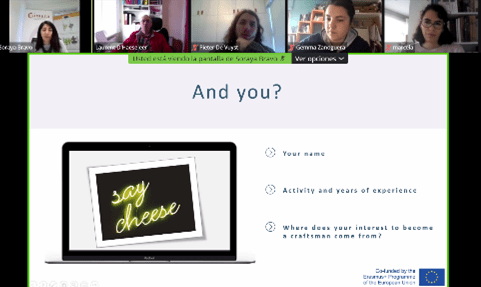
During these sessions, the participants were able to learn more about the project in detail, as well as to put forward the difficulties they had to face when starting their own business. They also exchanged views with StartCraft managers on training, tax issues, customer acquisition methods and how Covid has affected them.

The Chamber thanks all participants for their testimonials and advice.

Find out more about the program here.

How to innovate in craft education? The Chamber asks the experts.

As part of the StartCraft project, the Official Spanish Chamber of Commerce in Belgium and Luxembourg collaborates with the Institut wallon de Formation en Alternance et des indépendants et des Petites et Moyennes Entreprises (IFAPME) and the entrepreneur Karel Goetghebeur, founder of the company Adolphe Sax & Cie®, to gather the knowledge and expertise of the parties involved in the education and crafts sectors.

StartCraft is a project financed under the Erasmus + program, and whose main objective is to develop and offer training and practical entrepreneurship education for managers of crafts businesses. The project has a complete set of educational materials for artisans, including an online learning platform, a market training tool, as well as teaching notes for vocational training centers.

To ensure that these online trainings are adapted to the real-life challenges faced by faced by artisans and reach an appropriate quality level, the project will be supported by external evaluators representing educators and artisans.

On the first phase of this project a Mobile Report about crafts entrepreneurship and crafts entrepreneurial skills demand will be developed. Therefore, during the month of January, the Chamber is conducting a study on:

  • The current methods and approaches as well as the main skills being taught and developed, through a research among VET and C-VET educators, especially from crafts and business fields.
  • The needs of artisans when starting a business, the challenges of managing a craft business, the skills, and aptitudes necessary to be a successful artisan entrepreneur, as well as the challenges imposed by the current health crisis, through the meetings held on January 18, 20 and 25 with artisans and future artisans from Belgium and Luxembourg.

Thanks to the support of IFAPME and Karel Goetghebeur, the Chamber and its project partners have successfully adapted the methodology to develop the research of this first phase.

If you are interested in participating in the study for educators, you can complete our survey through the following link.

To find out more about the programme click here.

In collaboration with:

blank      blank

The Concertation Committee bans non-essential travel and extends isolation period

Last Friday, January the 22nd, the federal government and the federated entities discussed the current coronavirus situation as a Concertation Committee. In an attempt to stop the spread of new strains of coronavirus, the Concertation Committee has decided to temporarily impose a ban on non-essential foreign travel to and from Belgium.

 RESTRICTION OF INTERNATIONAL TRAVEL

I. Restriction of non-essential travel

Non-essential trips in and out of Belgium are prohibited from Wednesday, January 27th to Monday, March 1st, 2021. The travel ban will be monitored for road, air, sea, and rail traffic.

Anyone travelling to or from Belgium will be required to carry a sworn statement. A form will be made available by the Ministry of Interior. The sworn statement must be linked to the Passenger Locator Form and supported by the necessary documents.

Only essential travel is allowed during this period, i.e. travel for:

  1. Compelling family reasons
  • Family reunification;
  • Visits to a spouse or partner who does not live under the same roof, insofar as the stable and long-term character of the relationship can be proven;
  • Journeys in the context of co-parenting, civil and religious marriages, funerals or cremations (of relatives or next of kin).
  1. Humanitarian reasons
  • Travel for medical reasons and continuation of medical treatment;
  • Assistance or care to an elderly person, minor, disabled or vulnerable person;
  • Visiting relatives receiving palliative care.
  1. Study purposes
  • Journeys by pupils, students and trainees as part of a student exchange program;
  • Researchers with a hosting agreement.
  1. Residents of border areas
  • Journeys as part of everyday activities that are also allowed in Belgium
  1. Professional reasons when performing work-related activities
  2. Miscellaneous
  • Animal care, travel in the context of legal obligations (insofar as these cannot be done online), urgent repairs in the context of vehicle safety and a house move are also considered essential.

II. People travelling from the United Kingdom, South Africa, and South America.

As of Monday, January 25th, all people travelling to Belgium from the United Kingdom, South Africa or South America must quarantine for 10 days with a PCR test on day 1 and day

III. Additional test upon arrival

In addition to the mandatory negative test result prior to departure, the Concertation Committee would like every non-resident travelling to Belgium to be tested again upon arrival. This can be done with a PCR test or a rapid antigen test. The Concertation Committee has requested that the Interministerial Conference on Public Health, the Testing Task Force and the Covid-19 Commissariat make this mandatory.

Extended isolation period

People who test positive for Covid-19 will now have to isolate themselves for ten days.

After a high-risk contact or upon arrival in Belgium, the duration of quarantine remains ten days. This period may be reduced to a minimum of seven days on condition of a negative test result, where the test was taken, at the earliest, seven days after exposure.

Prospect for non-medical contact professions

At this stage of the pandemic, a reopening of non-medical close-contact professions is not yet appropriate.

This may become possible from February 13th at the earliest, provided that the epidemiological situation evolves favourably.

The Concertation Committee will review this situation on February 5th.

The opening of non-medical close-contact professions will only be possible if the existing protocols are strictly adhered to, supplemented by a series of additional measures such as the obligation to make an appointment, compulsory registration, customers waiting outside and windows and doors that must be open at all times.

Source: Info.Coronavirus

Online Breaktfast-Debate with Sonia Vila Nuñez, Head of Unit of “Management and Resources”, of the Presidential Service I.D.E.A and Policy Coordinator in the Cabinet of the President von der Leyen and her Deputy Head of Cabinet B. Seibert – Cabinet of the President von der Leyen, European Commission

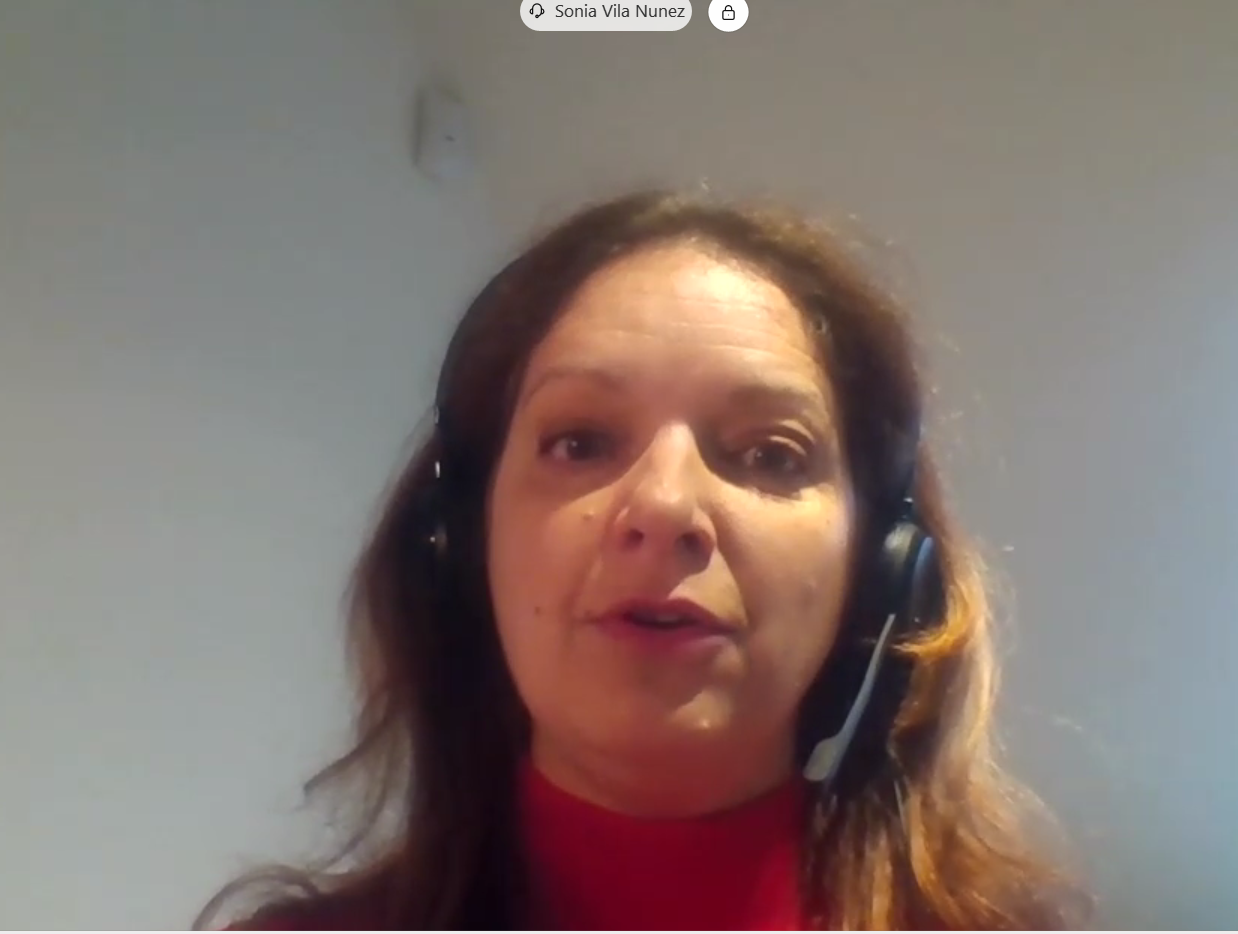
On Monday 18 January 2021, the Official Spanish Chamber of Commerce in Belgium and Luxembourg organised a new virtual breakfast debate in the framework of its “Business Circle” platform.  Sonia Vila Nuñez, Head of Unit “Management and Resources” of the Presidential Service I.D.E.A. – Inspire, Debate, Engage and Accelerate Action, European Commission and Policy Coordinator of President von der Leyen and her Head of Cabinet, B. Seibert- President von der Leyen’s Cabinet, participated in the debate. The breakfast focused on the “Priorities of the European Commission for 2021: Impact on Spanish businesses”.

blankPablo López Álvarez, Vice-President of the Chamber of Commerce and moderator of the event, welcomed and thanked the speaker and all the attendees for their participation.

Sonia Vila Nuñez began by presenting the I.D.E.A. presidential service as the ambition of the current presidency to bring academic and private sector debates closer to the legislative work of the institutions. She then highlighted the special context in which the European Commission’s Work Programme for 2021 will be developed with a clear priority on implementing the legislative measures taken in 2020. The current Work Programme is based on the need to achieve a rapid economic and social recovery from the pandemic. This will require linking this recovery to the dual, green and digital, transition and to an European resilience based in a strong social agenda and greater strategic autonomy. The Policy Coordinator also highlighted the Commission’s extensive work against Covid-19 and the various contracts signed with up to 7 vaccine manufacturers to cover vaccination in Europe and assistance to less developed countries. The focus was also on the various historical agreements recently reached such as the Multiannual Financial Framework 2021-2027, the Next Generation EU recovery fund, and the Brexit agreement. Regarding the recovery funds, the speaker detailed the role of the national recovery plans and their link with the European semester and its country-specific recommendations.

blankRegarding the Work Programme for 2021, Sonia Vila developed the list of legislative and strategic initiatives that the European Commission plans to carry out in 2021. The Green Deal will continue to be of great importance due to the need to update energy and climate legislation with the new emission reduction targets for 2030. This will be developed through the comprehensive Fit 4 55” legislative package in areas such as taxation, construction, and climate diplomacy, among others. Other initiatives to be presented in 2021 include the border carbon adjustment mechanism and the strategies of 2030 biodiversity, circular economy and “Farm to Fork”. The second of the strategic axes will be the digital transition to achieve the objectives set for 2030. Any legislative development in this area will be based on a commitment with privacy and data control, together with the promotion of connectivity for all as the basis of a European digital identity. The future proposal for the development of a European digital tax and the reform of legislation for people who provide services through digital platforms stand out in this area. Finally, the work programme will also include developments in other areas such as competition law, industrial strategy, banking union, trade policy, social rights, or the building of a new transatlantic relationship.

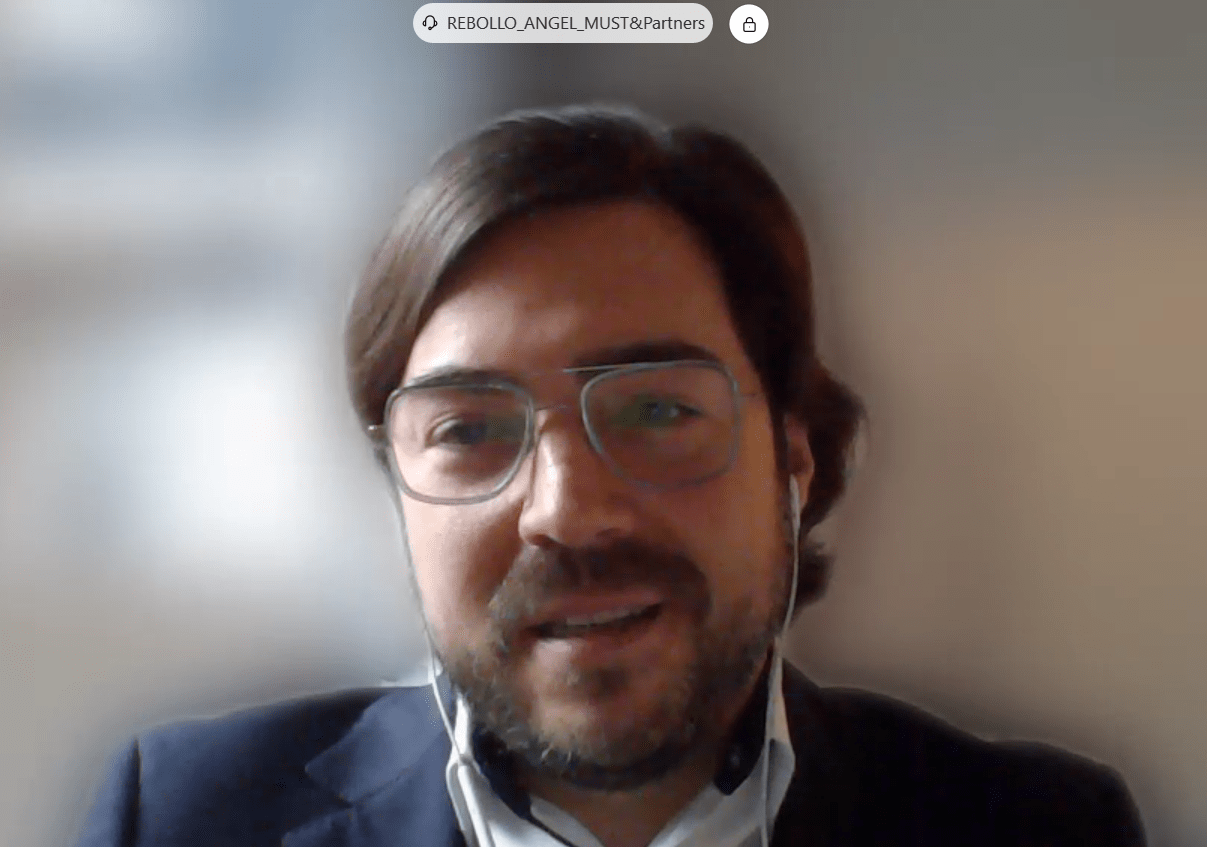
blankAfterwards, on behalf of the member company and sponsor of the event Must & Partners, its Senior Partner, Ángel Rebollo, took the floor and thanked the speaker for her participation. He also wanted to emphasize the importance of European recovery funds for Spain, especially in certain sectors, as well as the potential social impact that these may have.

During the question time, the attendees were able to put forward their doubts and comments on numerous issues of interest. Thus, topics such as the European pillar of social rights and its possible link to the care economy, the technological skills deficit for digital transition, digital and energy taxation, or the inclusion of criteria for equality and non-discrimination of people with disabilities in national recovery plans were addressed.

From the Official Spanish Chamber of Commerce in Belgium and Luxembourg we would like to thank Sonia Vila Nuñez, our member company Must & Partners for sponsoring this event and all the attendees for their presence.


Event sponsored by:

blank

The Erasmus for young entrepreneurs, a great help for the HORECA sector

Anke De Mulder and Sebastian Malieni are two entrepreneurs who started collaborating through the Erasmus program for young entrepreneurs in July 2020. On that date, the first Covid wave had already passed and the HORECA sector had the possibility to reopen in Belgium. However, a few months later, bars and restaurants were closed agaiblankn, and they had to adapt their activities to this new situation 

Anke De Mulder registered in the Erasmus for Young Entrepreneurs program with the Chamber in May of the same year. She was looking forward to sharing her experiences and knowledge with the new generations of young entrepreneurs and explore possibilities to enlarge her professional network at the European level. 

When we first interviewed her, she told us about her vegetarian restaurant, Shyam, located in Brussels and the new services and products that she was trying to develop. A few weeks later, thanks to the platform of the program, she got in contact with Sebastian Malieni, an enthusiast new entrepreneur from Spain interested in learning by doing about HORECA company managementHe told us that his interest was to go extend his knowledge of the food business.  

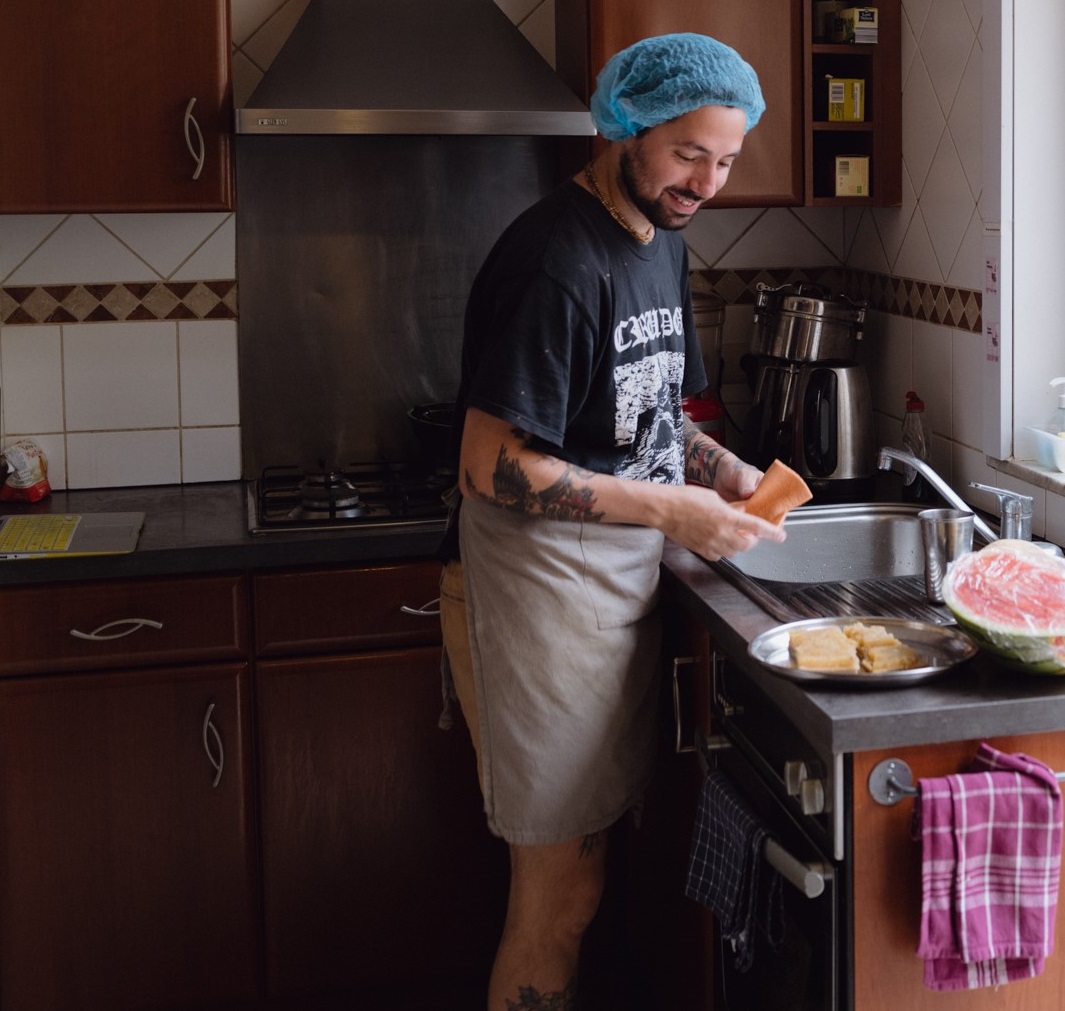
A few months after the start of their exchange, the sanitary situation changed. Anke had to adapt her business to the new situation, and she and Sebastian had to also modify the activities they had planned to develop. Despite this setback, they were very motivated to continue collaborating. They worked exclusively for takaway orders, behind closed doors, and complying with all the necessary regulations.  

“Our office is a kitchen, andon a normal day, of course, we cook, but we also focus on organizational issues, orders, procedures, etc.” Additionally, they told us that they did not see the need to stop collaborating. It is precisely at this time that he (Sebastian) is being of great help”, Anke told us.  

According to Sebastian, “for better or for worse, it has been a great experience for me to participate in the exchange in times of pandemic, since I have learned how to overcome complicated situations in the best possible way.” 

Now that the exchange is over, neither of them sees an end to their relationship. They will stay in touch and Sebastian confirmed to us that since his next step is to open his own business, he will continue to be in contact with Anke in case he needs any advice. 


Click here to discover more about the Erasmus for Young Entrepreneurs. 

Contact us to register in the program by sending an email to erasmus4youngentrepreneurs@e-camara.com  

Letter from the President to the members in Belgium

Dear members:

The weekly alternation of the editions of our two “newsletters”, intended for members in each of the states that make up the territorial area of the Chamber, has meant that, by chance, my congratulations for the New Year, dedicated to those of you in Belgium, are sent in second place.blank

I would like these lines to help turn the page on the dreadful year of the pandemic, in which we are still immersed, and to be a harbinger of a return to normality or, rather, the beginning of a new normality. A different kind of normality.

The end of the tunnel can be sensed thanks to the vaccination measures. But it is still not a reality. We cannot let down our guard.

I flee from pessimism, but I cannot escape the feeling of uncertainty. We will keep working with special dedication to win over the battle against the pandemic.

The consequences are devastating, both in society and in the economy worldwide. And we are endeavouring, with great concern, to guess at the future of society and the economy of Spain. And we want to do our best to help rebuild both.

In the current circumstances, there is no room for complacency, and I admit that I feel a sense of satisfaction: the 2020 financial year in our Chamber, which is as difficult as it is strange, has allowed us to collectively bargain with the “coronavirus”. My thanks go to the authors of this win.

First of all, I would like to highlight the intense collaboration with the Spanish Embassy, promoted by our Ambassador, Beatriz Larrotcha Palma, our Honorary President, promoter of numerous activities and close observer of the progress of the Chamber, who, with the support of a competent, generous and cordial diplomatic team, has made it possible to hold various events in collaboration with its Cultural and Scientific Council, under the leadership of its head, Sergi Farré i Salvà.

On a functional level, the Chamber has the reference of the Economic and Commercial Councillor, María Palanca Reh. With her presence on the Board of Directors, in her capacity as Honorary Vice-president, she has exercised the guardianship of the Chamber assuming an active and beneficial role, facilitating the necessary public-private understanding.

My recognition goes to our Secretary General, Marta González Benguria, who was ratified in her position in September. Marta surprises me with her initiatives, her capacity to work and her enthusiasm. She oversees a team that shows similar conditions.

Our Board of Directors is the pillar on which our organisation is based. Its solidity is notorious and the unity of criteria in the achievement of objectives assures the exit from the storm without deterioration. I would like to thank every one of my colleagues and partners. And especially, my feeling of solidarity, which is that of the whole Board, goes to our colleague Rafael Chamorro Marín, member of the Board of Directors in an institutional capacity, as Director for Belgium and Luxembourg of the Spanish Tourist Office, which is suffering particularly from the consequences of the crisis.

The Working Committees, which emanate from the Board of Directors, have been the main protagonists in 2020:

The Forums Committee has worked hard to organise nineteen events with an excellent response, which is measurable by the interest shown by the many participants. Our Vice-President, Pablo López Álvarez, who chairs this Committee, has skilfully moderated numerous debates.

The brand new Spanish Financial Forum has succeeded in placing itself at the forefront of discussion forums in the Grand Duchy of Luxembourg. It is already an excellent tool at the service of the Spanish financial sector, in such an important position. Thanks to José Luis Rodríguez, our Vice-President and head of the forum in Luxembourg, and also thanks to María Catalán, our delegate in Luxembourg, who has worked so hard and so well and continues to do so for its success.

Our most recent Working Commission, “Competencia España”, chaired by Miguel Troncoso, is made up of a distinguished group of prestigious specialists in competition law, who find in this commission an effective vehicle for dialogue with the competition authorities. Miguel’s work is excellent and his collaboration with the Forums Commission is noteworthy.

I was saying that the Board of Directors is the pillar on which the organisation of the Chamber is based, right. But the pillar on which the institution of which we are all members is based is, precisely, its social mass, the set of members.

In order to increase our strength, we must continue to grow. In times of crisis we are part of the help to overcome it. And we are in solidarity. The testimony of that solidarity has been our direct support to some of the members, belonging to the sectors most affected by the crisis.

Thank you, from the bottom of my heart, to each and every one of you. Thank you for your understanding.

And now I invite you, virtually, or not, to raise a glass of Spanish cava to toast together, for our families, our companies and for us.

I ask for blessings to make my best wishes come true, to all the members of this other family: the Chamber family.

Kind regards,

blank

Juan Rodríguez-Villa Matons,

President of the Official Spanish Chamber of Commerce in Belgium and Luxembourg

Letter from the President to the members in Luxembourg

Dear members in Luxembourg,

For obvious reasons, I invite you to drink the traditional New Year’s Toast at home. Before continuing, I suggest you to read the few words I would have said “glass in hand”.blank

The year that ended does not suggest happiness but mitigates satisfactions.

The coronavirus has affected us from all sides. We have been through anguish and physical suffering among us. Fortunately, to my knowledge, there have been no irreparable losses. However, this is not over yet. Let us remain vigilant.

The project became a reality, and, despite its short history, the SPANISH FINANCIAL FORUM already stands out as an important forum in the Luxembourg financial sector.

I mentioned that satisfactions are mitigated in the current circumstances, but there is still room for praise. And my praise goes to you, to that great majority of members who contribute your work, your prestige and the prestige of the entities you represent, to the good image of our Chamber, to the good image of Spain.

In any case, there is always room for gratitude. We would like to thank our Ambassador, Bernardo de Sicart Escoda. Thank you for your generosity, for your advice and for your active role as Honorary President of the Chamber.

Thank you for your work, to the members who represent you in the team that makes up the Board of Directors, with José Luis Rodríguez, our Vice President, at the head. The spirit that unites us is inspired by the assumption of a common cause.

Thanks to María Catalán, our Delegate. She continues to be the soul of the Chamber in the Grand Duchy.

May the balance of your lives in 2021 be positive.

Once the reading is over, as I suggested at the beginning, it’s time for a toast. Of course, with Spanish cava, although before raising the glass, I conclude by asking for blessings for you and your families.

Happy New Year!

blank

Juan Rodríguez-Villa Matons,

President of the Official Spanish Chamber of Commerce in Belgium and Luxembourg