
Webinar on “Social Media Management for Businesses”

On May 14th, the Official Spanish Chamber of Commerce of in Belgium and Luxembourg organized a webinar on “Social Media Management for Businesses”, in collaboration with Philippe Schifflers, digital marketing consultant and online trainer. The webinar had more than 30 participants.

The Social Media Management for Businesses webinar was designed for profiles looking to level up their Social Media, regardless of the industry or company size.
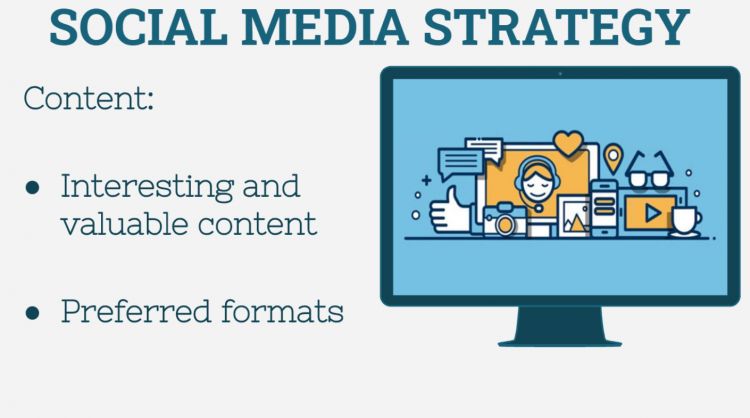
To ensure the viability and lifespan of your Social Media project, it is vital to understand the importance behind a Social Media audit, the elements behind a Social Media strategy, how to engage with customers, understand GDPR, collaborate with stakeholders & influencers, effectively manage events & online reputation, learn how to work with a Social Media calendar and navigate through a Social Media crisis.

This training was delivered in English.


Philippe Schifflers began with an introduction explaining the role of the Social Media Manager. Next, he explained the different social networks such as Twitter, LinkedIn, YouTube, Facebook, Instagram, Pinterest, etc. and the different strategies of these.

He also talked about how to create a calendar to manage and organize social networks.

blank


He mentioned the importance of “Stakeholders” and “Influencers” in the world of networks, the employee advocacy in social media, the value of having a good reputation, how to manage a crisis and about the General Data Protection Regulation.

Finally, the different necessary tools that someone dedicated to the Management of Social Networks should know were also detailed. Such as Canva, Get Emoji, Feedly, RSS Feeds, Google Alerts, Slack, Buffer, Hootsuite, Bitly, etc.


During the conference, the participants were able to raise their doubts about the exposed information.

From the Official Spanish Chamber of Commerce of in Belgium and Luxembourg we want to thank Philippe Schifflers for their presentation and dedication, as well as the participants for their presence.
Covid-19 bonus for companies in Brussels

COVID-19 premium

The measures taken to counter the spread of the coronavirus are having unprecedented consequences for the economic activity. The Region supports companies that have temporarily closed their doors and are work in certain sectors of activity. Under certain conditions, you can benefit from a bonus of 4,000 € per establishment in the Region. Your application for a voucher must be submitted by June 1st at the latest.

All about the COVID-19 voucher

Who can benefit from this bonus?

Any company (self-employed or business) with fewer than 50 full-time employees (FTE) with at least one operational site in the Brussels-Capital Region and active in an eligible sector of activity: shop-keeper, establishments, … (including bookshops, estate agents, car wash and DVD rental companies). Please check on the Banque Carrefour des Entreprises website that your NACE VAT 2008 codes correspond to your actual activity.

The business must have an economic and commercial purpose. Public companies (or companies considered as such) cannot benefit from this bonus. A different voucher is available for social integration companies.

Reminder: A company can only receive a maximum of 200,000 € of “de minimis” aid during the current fiscal year and the two previous years, according to the Commission Regulation (EU) No. 1407/2013 of 18 December 2013.

The application for the voucher must be submitted before June 1st 2020.

What is the procedure?

Amount of the bond: 4,000 € per operational site located in the Brussels-Capital Region, with a maximum of 20,000 € per company.

Maximum number of requests: Only one request per company.

Who can ask for the bonus?

1. Check with your company number to see if you meet the criteria.

Tip: Make sure that your NACE VAT codes in the Crossroads Business Bank reflect your actual activity.

2. If you meet the criteria, fill out a bonus application form. The deadline is June 1st 2020. The form must include the following attachments:

  • a bank certificate of your company’s account (company name and account number)
  • your last monthly or quarterly VAT return
  • a photo of the bank card linked to the company’s current account (jpeg format)
  • a double-sided photo of the identity card of the person signing the application (jpeg format)

Attention

In the event that the subsidy is granted: the company will notify Bruxelles Economie et Emploi immediately if it is subsequently sold or if it ceases to operate.


Contact

Bruxelles Economie et Emploi
Direction des Aides aux entreprises

Bd du Jardin Botanique, 20

1035 Ixelles


For more information about this bonus or any other business assistance, please contact 1819 (the Regional Business Information Service hosted at hub.brussels).

E  info@1819.brussels
T  Call 1819


SOURCE: Bruxelles Économie et Emploi

Webinar LaLiga on “With the development of society through football”

On May 13th, the Official Spanish Chamber of Commerce in Belgium and Luxembourg hosted a webinar on “With the development of society through football”, in collaboration with its member company LaLiga.

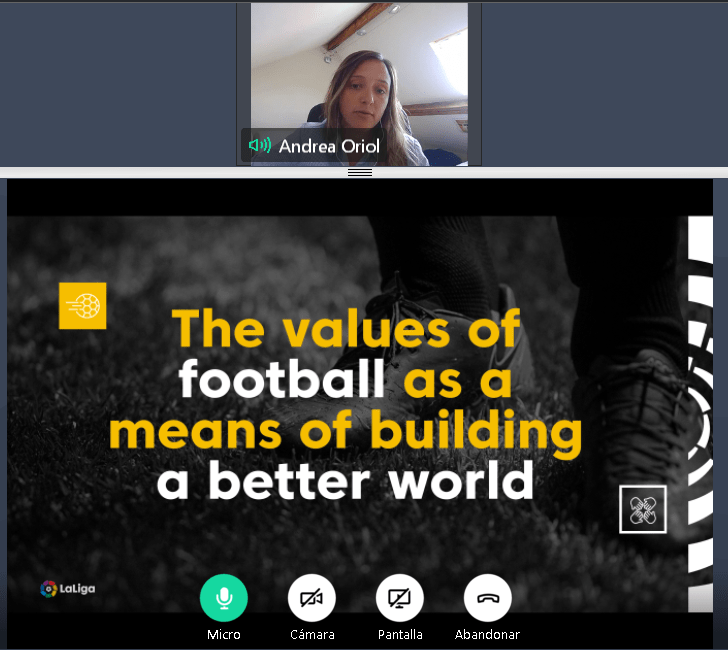
The aim of this webinar was to present and explain the different social, educational and sportive projects of LaLiga, as well as the new initiatives they have been organizing during the COVID-19 crisis to support society and get closer to their fans all over the world. The webinar, which was taught in English, aimed to explain how through these projects the values of football are the vehicle to build a better world.

blank


Andrea Oriol, LaLiga’s delegate in Benelux, started by informing about the important place these projects have in the company’s activity and explained that it is more than just about football and competition. “Giving back to society what society has given us” is the guiding theme of all these projects.

During the conference it was explained how due to the pandemic LaLiga has organized various activities under the subject of #LaLigaSeJuegaEnCasa. Among other examples, the association has organized its own initiatives such as “LaLiga Santander Festival” in which they managed to raise more than 1M € in donations from all over the world. At the same time, they have also participated in other initiatives run by other organisations such as the Red Cross in which they worked with their partner companies in China to donate medical supplies to Spain.


blank

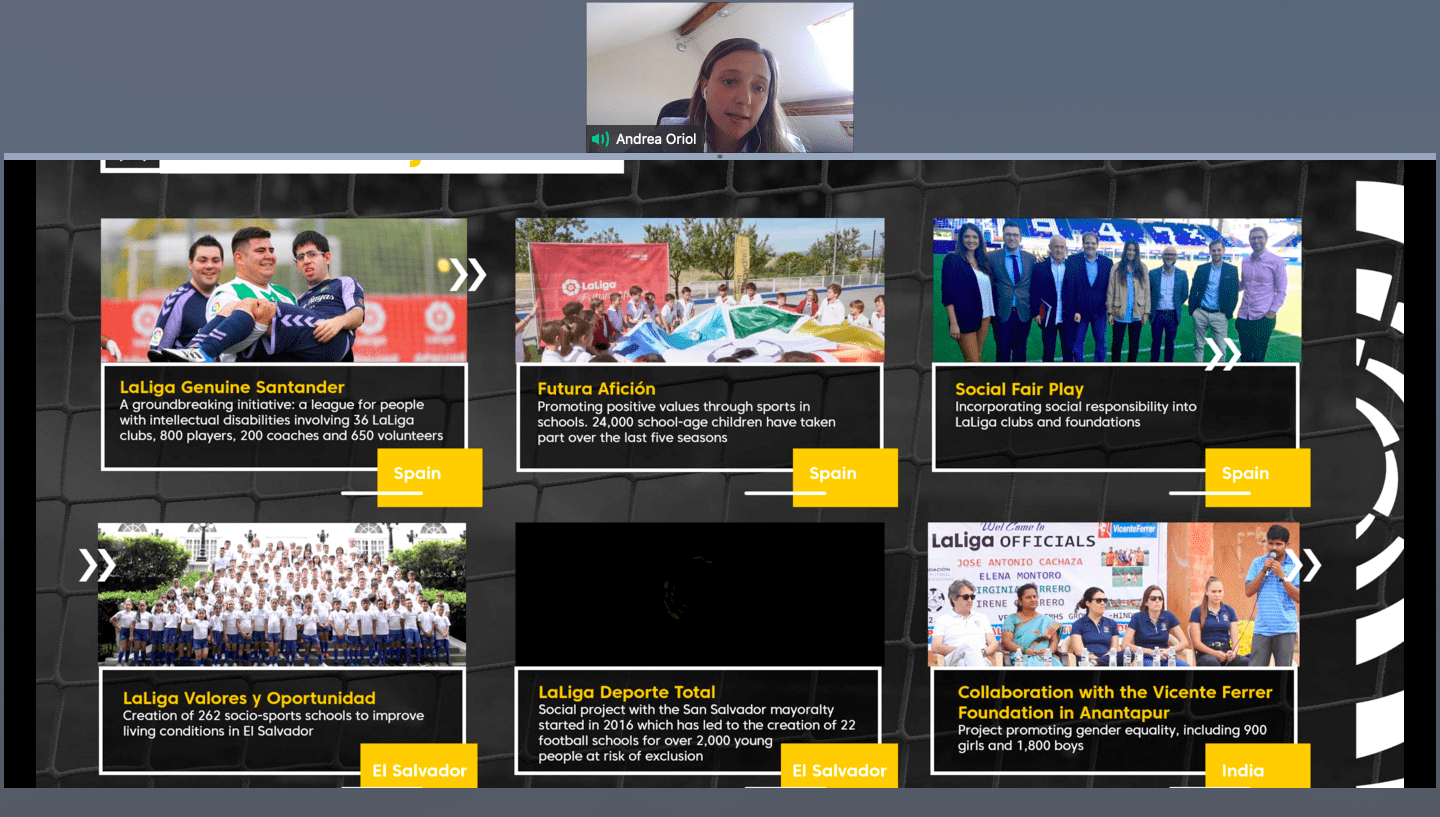
In addition, she reported the digital transformation of all LaLiga Foundation’s sports programs due to the pandemic but stressed the importance, more than ever, of keeping these programs active. Social and sports projects around the world have been maintained thanks to the social work of LaLiga. These projects are spread all over the globe, for example in India to promote gender equality, or in Brazil to promote youth telent’s visibility. They also have social projects developed through programs as well known as LaLiga Genuine Santander, Social Fair Play or LaLiga Valores y Oportunidad.

To conclude, the speaker presented the objectives achieved so far in figures as a general balance and highlighted the three future objectives in this social work: giving continuity and monitoring all its projects, continue to generate opportunities and empowerment among its participants and continue to expand horizons to new projects and countries.

At the end, a Q&A round was held in which the participants were able to raise their doubts about the information presented.

From the Chamber we want to thank Andrea Oriol and LaLiga for their presentation and dedication, as well as all participants for their presence.

ERTEs are extended until July and are dissociated from the state of alarm

The management bodies of the employers and of the main unions ratified the agreement that their managers had reached at the last minute with the Ministry of Labor, according to which the ERTE designed by the Government after the declaration of the state of alarm are extended until the June 30th.

In this way, they are disconnected from the political decision to extend this exceptional situation and both the Ministry of Labor and the social agents undertake to evaluate its expansion beyond that date based on the economic conditions of the sectors and companies affected, according to the text to which the Government also gave the approval and approved in the Council of Ministers.

This is a balanced agreement based on the value of social dialogue in which we all committed”, said the Minister of Labor, Yolanda Díaz, at the press conference after the extraordinary Council of Ministers, in which she also recognized the negotiating effort of the social partners. “They have demonstrated their commitment and that they are at the height of their country’s history at a time as difficult as this”, Díaz praised.

Along the same lines, the President of the CEOE, Antonio Garamendi, acknowledged that all the parties had to be flexible, and put social dialogue as an example of the effort that the country needs at all times in all its spheres.

It was not easy for the president of the businessmen to convince the CEOE leadership to sign the agreement. The stumbling block to the condition of maintaining employment during the six months after the end of the ERTE continues to be difficult in sectors especially affected by this crisis.


The CEOE wanted to erase the condition of maintaining employment the following six months

In the official statement issued by the employers following the meeting of its management committee, it is recognized that “a longer-term agreement would have been desired that would have given security and certainty to companies and workers, to accompany them in the process of full recovery of the activity”. But it also recognizes that “within the Government’s time and budget margins, the agreement improves the initial proposal”.

The truth is that the CEOE negotiating team has managed to initiate not inconsiderable changes for its interests. On the controversial issue of job maintenance, although the requirement to keep jobs for the six months after returning to activity remains, the employers have achieve an exception. Companies that demonstrate the risk of entering bankruptcy will not have this obligation.

On the other hand, Labor maintains the requirement that companies that have activity in tax havens or distribute dividends cannot access the advantages of ERTE due to force majeure, but at this point it has also made concessions. The requirement is maintained only for those who on February 29th, 2020 had more than 50 employees. In other words, it frees SMEs from this obligation and also establishes that large companies will be able to distribute dividends if they return the Social Security contributions from which they had been exempted, compared to the initial requirement that they intended to also return the benefits they would have received. your workers.


A commission is created to evaluate sectors that can continue in ERTE from July

Another novelty agreed by Labor and social agents is the possibility that ERTEs can be extended beyond June 30th depending on the sanitary conditions of economic opening of companies and territories.

To channel this possibility, a tripartite commission has been created in which Labor, unions and employers will work to define which sectors and companies meet the conditions that allow them to expand the ERTE.

Even so, the agreement contemplates incentives to return to business activity by lowering the exoneration of contributions and quotas for workers during the months of May and June for employees who remain in ERTE and expanding it for those who return to work.


Source: LaVanguardia.com

Luxembourg City waives three months rent

Faced with the economic difficulties faced by merchants and hoteliers, Luxembourg City has decided to postpone the resumption of rent collection until June 1st, Serge Wilmes (CSV) announced.

The first councilor confirmed that the city renounces not only the income collected during the period of confinement, but also the resumption of activities, at least for companies. Restaurants are currently closed across the country, but some offer a takeaway or home delivery service.

In total, “the income that the City of Luxembourg renounces, to help companies and hoteliers, amounts to about 80,000 euros per month“, indicates the first councilman in charge of trade, that is, a total of 240,000 euros for the period of March to June 2020.

Serge Wilmes clarified that the resumption of rent collection only concerns tenants who can reopen their doors. Therefore, hoteliers can still breathe a little.


Source: Paperjam.lu

The SFF defines its structure with the appointment of several coordinators to lead the areas of Banking, Asset Management, Insurance and Tax

A few weeks after the launch of the Spanish Financial Forum (SFF), the forum keeps progressing in defining its operating structure in Luxembourg.

After the end of the period of reception of candidacies presented by the members of the SFF to lead the different sub-sectors, it has been decided to appoint the following coordinators for this first stage of the project:

  • Banking: Paloma García (Banca March Luxembourg Branch)
  • Asset Management: Jesús Orozco (EY)
  • Tax: Eduardo Trancho (Van Campen Liem Luxembourg)
  • Insurance: Antonio Corpas (The OneLife Company)

Several members of the Chamber’s Board of Directors have participated in the candidate selection process, taking into account previously established objective criteria such as experience in the corresponding sector and the proposal of initiatives within the framework of the SFF.

The four sub-sectors will be coordinated in turn by the Vice President of the Chamber in Luxembourg, José Luis Rodriguez Álvarez.


blank


This functional structure will last twelve months, counting from the month of May 2020. After this period, an internal selection process will be established among the members of the SFF for the appointment of the next coordinators.

To date, more than 20 companies and 40 professionals linked to the financial services industry in Luxembourg and Spain have applied to join the SFF.

For more information on the objectives of the SFF and the application for membership, see HERE.

Interview to Angie Rueda (Comedia en Bruselas)

Webinar on “Writing for the web”

On May 8th, the Official Chamber of Commerce of Spain in Belgium and Luxembourg organized a webinar on “Writing for the web”, in collaboration with Manuel Pueyo of the company Bigkids, member of the EmprendeBelux program. The webinar had more than 40 participants.

Nowadays, the web pages offer the opportunity to reach out to more people. The objective of this webinar was to present and explain to the participants the different tools necessary to adapt their messages and content to the reading habits of network users. This requires becoming a content designer.

The training was aimed at a huge variety of organizations such as law firms, NGOs or professional services that decide to invest in digital content as a way to promote and improve their messages to all potential stakeholders. Also for web publishers who want to update their strategy or for anyone who writes on a website and seeks to improve their productivity, creativity and efficiency.

This training was given in English.

Manuel Pueyo, content strategy consultant, started with an introduction to digital content in which he showed the different tools to digitize work and to reach out his clients through different adapted methodologies. The different techniques used in the writing of web pages were also exposed through a practical case. In addition, concepts such as “inbound marketing” or “outbound marketing” were seen, as well as content marketing being a good opportunity to prioritize users.

Finally, the different methods for writing in the context of the web, which are based on the planning of texts and some principles of web writing, were also detailed.

During the conference, the participants were able to raise their doubts about the exposed information.

From the Official Chamber of Commerce of Spain in Belgium and Luxembourg we want to thank Manuel Pueyo and Bigkids for their presentation and dedication, as well as the participants for their presence.
Breakfast-debate with MEPs Isabel Benjumea and Jonas Fernandez: Priorities of the Committee on Economic and Monetary Affairs (ECON) in the context of the Coronavirus

On May 6th, the Spanish Chamber of Commerce in Belgium and Luxembourg hosted an event as part of the “Breakfasts with the European Parliament” cycle, a platform for meetings between Spanish companies and the European Parliament, on the “Priorities of the Committee on Economic and Monetary Affairs (ECON) in the context of the Coronavirus: A new recovery and reconstruction package for Europe?”. Members of the European Parliament (MEPs) Isabel Benjumea, Vice-Chair of the Working Group on Budgetary and Structural Policies and member of the Group of the European People’s Party (EPP), and Jonás Fernández, member of the ECON and also a member of the Group of the Progressive Alliance of Socialists and Democrats (S&D) in the European Parliament attended to the session. Given the exceptional circumstances of the expansion of COVID-19 in Belgium, this Breakfast-debate was held telematically and there were also representatives of member companies of the Spanish Chamber, managers of companies, multinational and, European and Spanish associations.

blank


Pablo López Álvarez, Vice President of the Chamber and moderator of the event, introduced the speakers, thanked them for their participation and also acknowledged that of all other attendees. Before moving on to the speeches, the Vice President briefly referred to the current historical circumstances we are experiencing, and explained that this situation has undoubtedly compromised the short-term priorities and activity of the Eurogroup.


blankMEP Isabel Benjumea made a deep historical and geopolitical reflection on the current moment, which seems to announce a new crisis in economic and social terms. She remarked that this health crisis has highlighted the different social tensions that already existed and which generate a confrontation between northern and southern Europe. Isabel Benjumea also pointed out that the European Parliament was right to provide a solid response by providing immediate funding to meet the initial needs arising from this health crisis. In these circumstances, MP Benjumea added, the Parliament will discuss with the Commission and the Council the form and volume of the Community budget and the recovery fund for Europe. In addition, the parliamentary groups are facing the challenge of reflecting on and rethinking the European Union’s priorities in this new environment and accordingly proposing a budget.


blankNext, MEP Jonas Fernandez reflected on the lack of coordination between member countries at the beginning of the decision-making process. Herein, he noted that the Eurogroup succeeded in giving a series of common economic measures, and observed that each member state individually assumed the costs. Additionally, MP Fernández claimed that thanks to the second response of the European Central Bank (ECB), it has been possible to provide guarantees and resources to deal with the crisis and to avoid the massive closure of companies during the period of confinement. He emphasized that it is also necessary a broad economic recovery plan, preferably to be undertaken by European funds through Community transfers, to minimize the credit route. In the upcoming weeks, the MEP specified that the Commission must obtain a clear view of the size of the fund and the extent to which this debt could be backed by the markets, favoring the mechanism of grants over loans. Furthermore, it will continue to discuss the conditionality of the measures and the possibility of debt mutualization.


During the time for questions, the participants were able to inquire the speakers on many issues of their interest. Thereby, they covered topics such as the perception that different parliamentary groups have on political consensus, the expected characteristics of the recovery fund (volume, sectoral distribution and modalities) and other issues related to the possible inclusion or exclusion of the recovery fund within the multiannual budget of the European Parliament.

The Spanish Official Chamber of Commerce in Belgium and Luxembourg would like to thank the MEPs, Spanish companies and representatives of the European Parliament who participated in this Breakfast.

blank

Webinar on “Covid-19: How EU Programmes and Projects are affected?”


Last May 5th, the Official Spanish Chamber of Commerce of in Belgium and Luxembourg, organized a webinar on “Covid-19: How EU Programmes and Projects are affected?”, in collaboration with our member Zabala Innovation Consulting.

The aim of this webinar was to present and explain the companies the different measures announced by the European Commission after the crisis caused by COVID-19 and to detail the new deadlines for presenting already established projects.

Marie Latour, Head of Zabala Brussels Office, began by informing that the Commission has extended the timeframe for projects to allow Member States to accelerate research, testing and production of products relevant to the coronavirus and thus protect jobs and to further support the economy during this crisis.

During the conference, Latour explained that, due to the global pandemic, the European budget will be affected and this could lead to the modification of the next Multiannual Financial Framework. She also detailed the measures taken by the European Investment Bank and the European Investment Fund. Then she described the European programs which have suffered some modifications due to the coronavirus and explained the changes in the existing calls. At the same time, the speaker reported on other interesting calls that are still open, such as EUREKA, the AMABLE project or SmartEEs2 project, among others.

Finally, Latour explained other aspects of the projects that have been affected by this crisis, such as evaluations, their execution, or their financing.

At the end, a round of questions was featured where the participants could ask their doubts about the information explained.

The Chamber wants to sincerely thank Marie Latour and Zavala Innovation Consulting once again for her presentation and her dedication, as well as to the participants for their attendance.

In collaboration with:

blank