
Luncheon-debate held with Ana Gallego, Director General for Justice and Consumers of the European Commission
Last Tuesday 28th February, the Official Spanish Chamber of Commerce in Belgium held a new luncheon-debate in the framework of its “Business Circle” tribune, in which the Director General for Justice and Consumers, Ana Gallego, spoke about “Priorities of DG JUST for 2023: Justice, Consumer Rights and Gender Equality”.
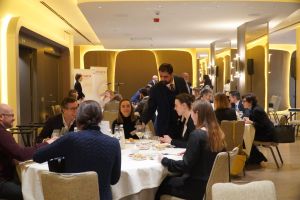
After the welcome cocktail, the President of the Chamber, Pablo López-Álvarez, introduced the speaker reviewing her excellent curriculum and highlighting her incorporation to the European Commission directly as Director General, a sign of her wide experience.
Gallego then took the floor and began her speech by emphasizing the opportunity for Spain to hold the last full presidency before the start of the next election campaign for the European Parliament in May 2024.
“2022 was an intense year in which DG JUST took forward numerous legislative proposals”, the Director General reviewed, mentioning directives such as the sustainability due diligence directive, the insolvency directive or the digitalisation of justice directive.
Rule of law
Among the main priorities of the Directorate, Gallego underlined the extensive evaluation on the rule of law in the EU Member States that is currently underway: “We are doing intense coordination work because we cannot afford to have weak democracies in the European Union“.
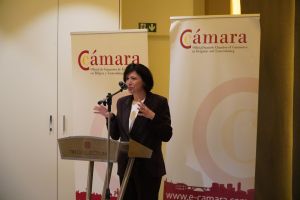
The speaker also spoke about the two events that have disrupted the Commission’s agenda in the last mandate: the COVID crisis and the war in Ukraine. Regarding the latter, Gallego explained that DG JUST is coordinating international efforts to hold Russia accountable for crimes committed in Ukraine.
At the end of the presentation, there was a Q&A in which issues such as the possibility of interconnecting the property registers of the different Member States or data protection in commercial matters were raised.
From the Chamber, we would like to express our special thanks to all the participants for having contributed to the success of this luncheon-debate.
Luncheon-debate held with John Berrigan, Director General for Financial Services, Financial Stability and Capital Markets Union
Last Tuesday 24th of January, the Official Spanish Chamber of Commerce in Belgium held a new luncheon-debate with John Berrigan, Director General for Financial Services, Financial Stability and Capital Markets Union, in the framework of its “Business Circle” tribune. The speaker talked about the priorities of DG FISMA for 2023.
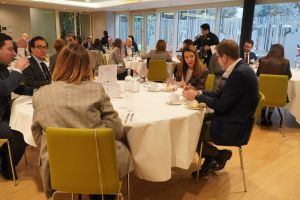 The President of the Chamber, Pablo López-Álvarez, started the event with a brief introduction in which he highlighted the importance of the current year for Spain, as it will chair the Council of the European Union in the second half of the year.
Berrigan then began by stating that the world has changed a great deal since the beginning of the mandate, considering technological advances, the climate crisis, the COVID pandemic and the invasion of Ukraine. These circumstances have made sanctions one of DG FISMA’s main priorities for 2023.
In this regard, the director general stressed during his speech the need to focus on the implementation of sanctions, although he warned that it will be necessary to be careful. “We have to counter the narrative that sanctions negatively impact our economy,” Berrigan said. He also warned against overcompliance: “We don’t want sanctions to deny legitimate transactions”.
Energy crisis
The Ukraine crisis has also highlighted the EU’s dependence on fossil fuels. 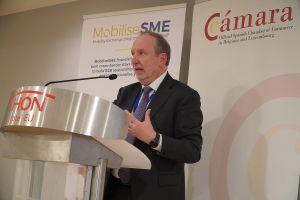 Berrigan recalled that the G7 and the EU agreed in December to put a cap on oil prices, a measure that, he said, “will mainly benefit third world countries”.
In addition to sanctions, Berrigan spoke during his speech of priorities such as sustainable finance and the regulation of the banking system to make it more stable. On capital markets, he spoke of the need to simplify access to markets for retail investors by rebuilding the investing ecosystem.
At the end of the presentation, there was a round of Q&A in which topics such as the regulation of crypto-assets or sustainable finance in the aviation sector were raised.
From the Chamber, we would like to express our special thanks to Bodegas Cornelio Dinastía, and to all the attendees for having contributed to the success of this luncheon-debate with John Berrigan.
Luncheon-debate with Jean-Claude Juncker, former President of the European Commission
Last Tuesday 15 November, the Official Spanish Chamber of Commerce in Belgium and Luxembourg held a new luncheon-debate sponsored by the Royal Bank of Canada, in which the former Prime Minister of Luxembourg and former President of the European Commission, Jean-Claude Juncker, spoke on “The future of the EU in the face of tomorrow’s uncertainties”.
The presentation began with the introduction of Pablo López-Álvarez, President of the Chamber, who thanked the participants for their attendance and gave a biographical review of Juncker. Afterwards, after the intervention of Fernando Valenzuela, Chief Financial Officer of RBC, Juncker took the floor. He spoke about the different challenges that the Europe of the future will have to face, where challenges such as climate change, the war in Ukraine and the situation with Putin, inflation, Brexit, or those derived from the pandemic stand out. He also attached great importance to international trade, as well as the treaties with Canada and the Mercosur countries.
The presentation continued with a round of questions and answers, where the participants were able to ask Juncker about issues such as the political and fiscal reforms that the EU will have to face, how the EU will have to position itself in the face of the US-China trade war, or what role Spain will have in its future presidency of the EU vis-à-vis the rest of the world.
From the Chamber, we want to express our special thanks to the winery Pradorey blanco, to RBC, and to all the attendees, who made this lunch-debate a very special one.
Luncheon-debate with Mariya Gabriel, European Commissioner for Innovation, Research, Culture, Education and Youth
Last Tuesday 8th November, the Official Spanish Chamber of Commerce in Belgium held a new luncheon-debate in collaboration with the Government of Navarre, in which the European Commissioner for Innovation, Research, Culture, Education and Youth, Mariya Gabriel, spoke about the new European innovation agenda.
R&D&I should respond to the needs of Europeans and tackle some of the major challenges facing the EU-27, the Commissioner underlined after the introduction of the President of the Chamber, Pablo López-Álvarez. Attracting and retaining talent, developing soft skills and promoting spaces for experimentation are just some of the flagship initiatives in the Commission’s strategy for the next two years: “If there is action in these areas, European lives will be easier”.
Boosting Europe’s competitiveness will require raising investment, good framework conditions and fundamental reforms. “We can only achieve this if we work together,” added Gabriel, who recalled the importance of understanding the specific needs of each region when implementing their own innovative projects and ideas, or the challenges faced by European companies, especially start-ups.
Innovation Fund
The ‘Innovation Fund‘, one of the largest funding programmes in the world, is only the first step in achieving the EU’s strategic objectives. Mariya called on all those attending the debate to be part of the so-called “coalition of the willing”, a union of public and private actors to cooperate in the implementation of the European innovation agenda, to support our talents (and boost female talents), and to move towards a green and digital Europe.
The Commissioner also wanted to highlight the important role of the regions in designing and implementing the EU executive’s action plan. In this regard, the Government and the University of Navarra, represented by its Councillor for Citizen Relations Ana Ollo and its Rector María Iraburu, have been nothing but precursors of this new wave of innovation, in which they will continue to work to be a “European, innovative and green” Navarre, in Ollo’s words.
From the Chamber, we would like to show a special thanks to Bodegas Xaló, and to all the attendees, who made this lunch-debate a very successful one.
Luncheon debate with Didier Reynders, European Commissioner of Justice
On 25 October, the Official Spanish Chamber of Commerce in Belgium and Luxembourg held a new lunch-debate within its “Business Circle” forum, in which the European Commissioner for Justice Didier Reynders spoke about the evolution of consumer rights in the digital transition.
The event was inaugurated by the President of the Chamber, Pablo López-Álvarez, who thanked all those present for their attendance and presented the vast career of Reynders, who held the position of Deputy Prime Minister of Belgium until he assumed the direction of the Department of Consumer Affairs and Justice of the EU Executive in 2019.
As the Commissioner rightly remarked over lunch, achieving effective enforcement of EU consumer policy is one of his top priorities, given that the legislation was adopted nearly twenty years ago, when the electronic market had barely developed.
The arrival of the pandemic has only further highlighted the need to adapt the legislation to the new era, with the aim of assuring 21st century consumers that they will have the same guarantees in their online and offline purchases.
Online purchases
To this end, major online sales platforms such as Amazon and AliExpress have already committed to adopting new practices to make the purchasing process more secure. For its part, the Commission will continue to promote and improve the action plan with China, created to improve the security of the thousands of products that the Asian giant sells every day online.
During its mandate, the Von der Leyen Commission will also promote the manufacture of products framed within the circular economy, work on the effective implementation of the General Data Protection Regulation (GDPR), or continue to cooperate with companies in the due diligence process on sustainability and human rights, among others.
Moreover, from July next year, it will work in close dialogue with Spain, which will hold the presidency of the Council during the second half of 2023.
After the speech, attendees had the opportunity to ask questions and enter into direct conversation with Commissioner Reynders.
From the Chamber, we would like to show a special thanks to Mastercard, sponsor of the event, and to Bodegas Maires, whose wines could be tasted by all the attendees, which made this lunch-debate a very successful one.
Luncheon-debate with Margaritis Schinas, European Commission Vice-President for Promoting our European Way of Life
Last 27th September, the Official Spanish Chamber of Commerce in Belgium and Luxembourg held a new luncheon debate within its tribune “Business Circle”, in which the Vice-President of the European Commission for the Promotion of Our European Way of Life, Margaritis Schinas, spoke about how to manage complexity in an even more complex European Union.
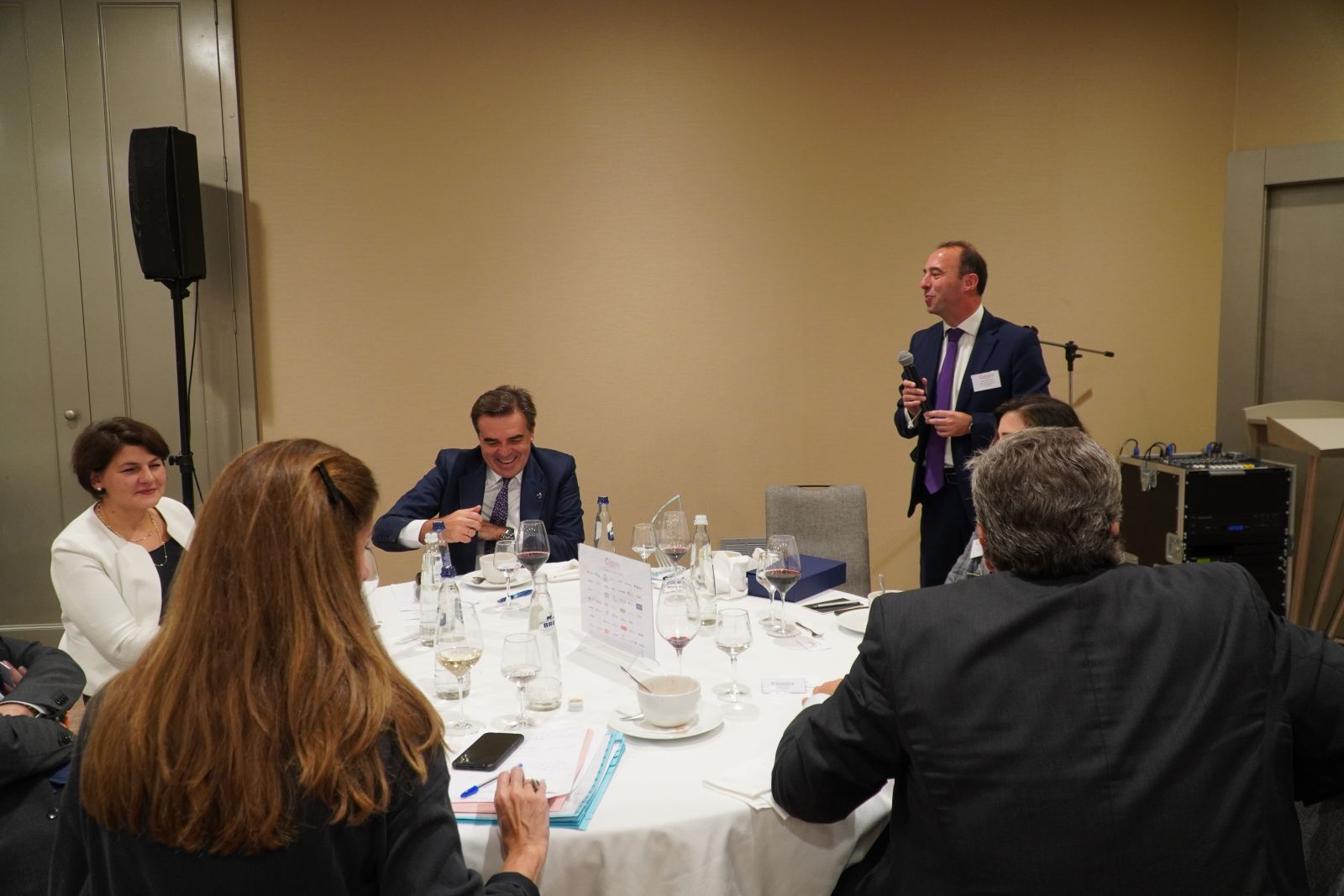 The event was inaugurated by the President of the Chamber, Pablo López-Álvarez, who thanked all those present for their attendance and presented Schinas’ vast career.
“Europe has been fighting crises for more than twelve years“, Schinas reminded the different actors gathered at the event. Since the euro crisis, the EU-27 have faced uncertainty, Brexit, terrorism… and throughout that time they have shown “much more strength and resilience” than their critics expected.
The scenario that has followed the arrival of the coronavirus in our lives is the same, Margaritis explained. Inflation, energy, the food crisis, or disruptions in global supply chains reassure us that Europe’s age of innocence is over. Now, the Commission seeks to lead member states “into the era of trust, of setting an example, of becoming a powerful actor” vis-à-vis third parties.
European recovery fund
Over the past three years, the EU executive has shown that it can act more quickly and has activated mechanisms that were unimaginable until now: temporary protection for Ukrainian refugees, a European recovery fund, and funding for the purchase and delivery of arms to Ukraine. “As Macron said, it is time to be the Europe that protects and empowers”, Schinas highlighted.
After the presentation, the audience had the opportunity to ask questions and engage in a direct dialogue with the Commission Vice-President. During the Q&A, topics such as the lack of qualified staff or digital skills in today’s labour market, the security of investing in certain sectors threatened by political issues, or the integration of mental health in the Commission’s plans for building a European Health Union, among others, were addressed.
On behalf of the sponsor of the debate, Meglena Mihova, Managing Partner of EPPA, thanked the Chamber for the opportunity to bring together different actors to talk about strategies to maintain and attract more innovation and investments to Europe and, to Margaritis, to see how companies are doing in a moment of very complex geopolitical crisis that threatens the fundamental values of the EU.
From CámaraBeLux, we also want to show a special thanks to Bodegas San Valero, whose wines could be tasted by all the attendees, which made this luncheon-debate a very successful one.
Luncheon-debate with Mairead McGuinness, Commissioner for Financial Services and Stability and Capital Markets Union
On the 19th of July, the Official Spanish Chamber of Commerce in Belgium and Luxembourg hosted a new luncheon-debate as part of its “Business Circle” platform, in which the Commissioner for Financial Services, Financial Stability and Capital Markets Union, Mairead McGuinness, spoke about the priorities of the European Commission during the second part of her mandate.
First came the pandemic. Then, the war in Ukraine. Two situations that have shaken the whole world beyond the economic level and that McGuinness wanted to underline to remind that, despite adversity, the EU Member States have learned that only together they could move forward.
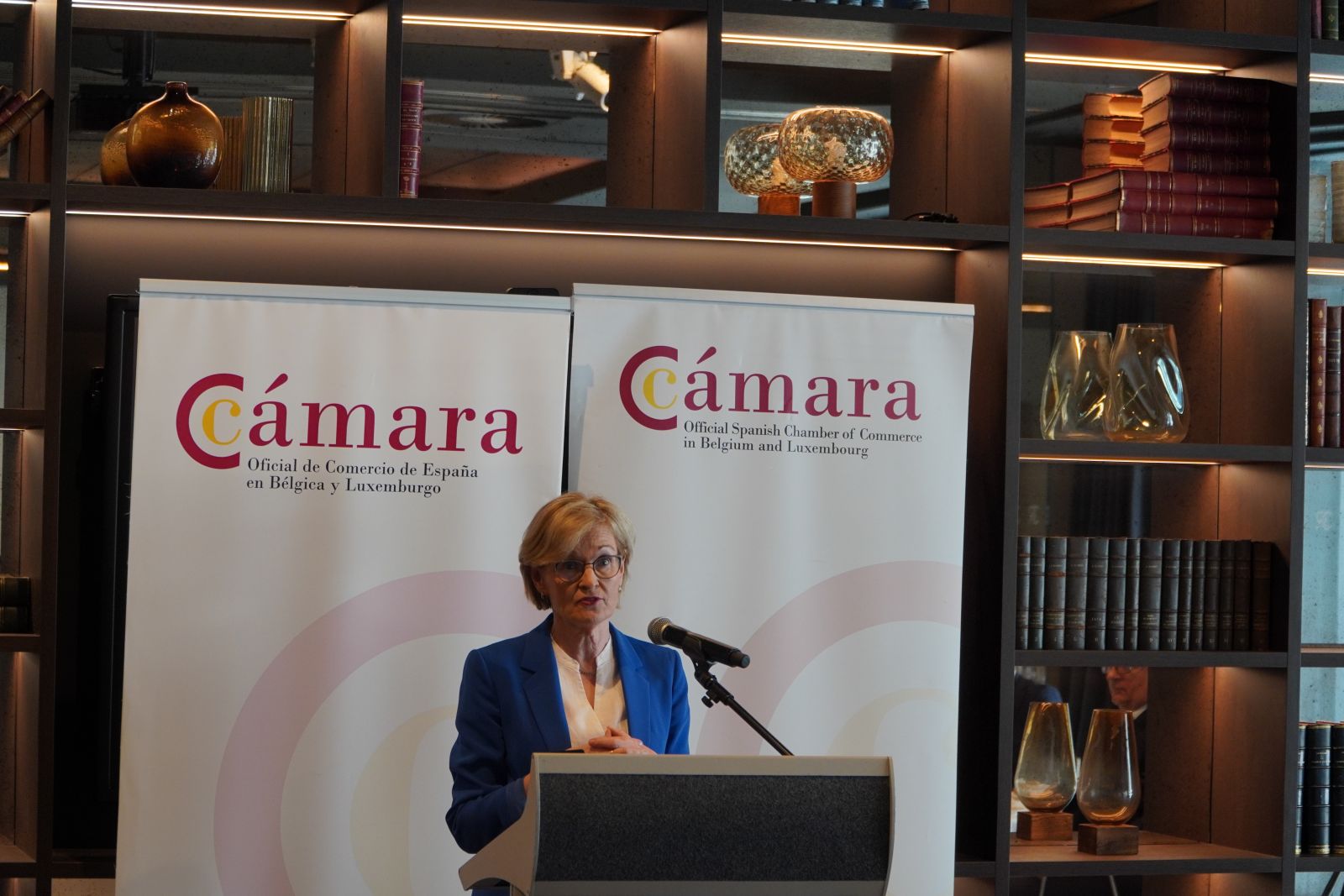
The world is changing faster than expected. Roadmaps drawn up in response to the coronavirus crisis are now being adapted again in the wake of Russia’s invasion of Ukraine and the sanctions imposed. The result? Inflation is increasingly squeezing global economies, especially emerging ones, and central banks and other institutions such as those in the EU are working against the clock to ensure resilience.
During the event, which brought together a good number of company executives, delegates from Spanish regions, representatives of Spanish and European institutions, and representatives of Spanish and international organizations, consultants and partners of the Chamber, the Commissioner has focused precisely on the challenges and opportunities that have become more urgent: energy security, the stability of financial markets, the new taxonomy, the European Green Deal or the digital euro.
Regulate for the future
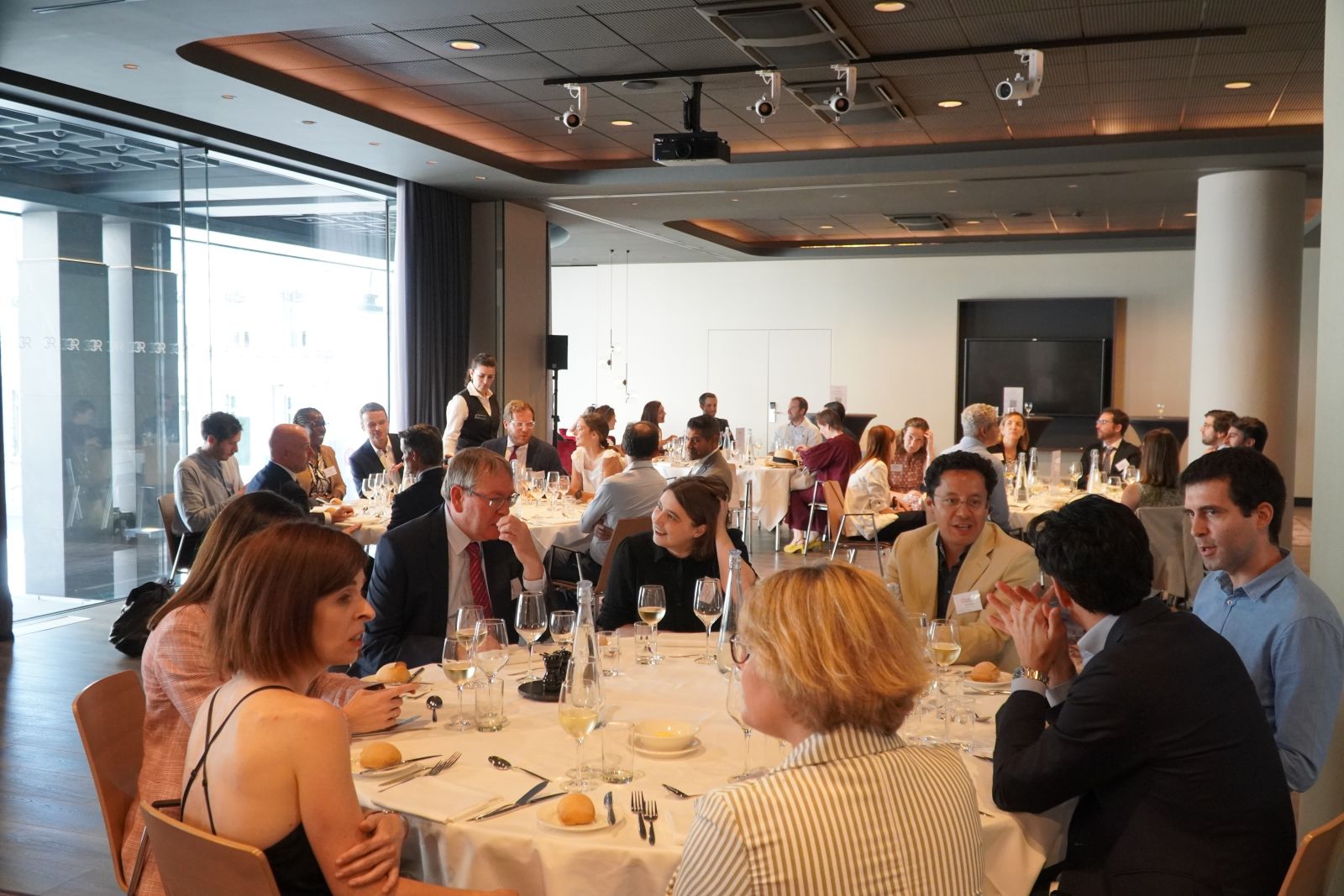
Beneath the opportunities for progress, there is also a challenge: to regulate for the future, not for the past. Open banking, open finance, cryptocurrencies, green transition… these are just some of the terms that still need to be understood and whose regulations or guidelines have to balance innovation with stability in the existing financial systems.
McGuinness concluded the event by reminding that, just the system she lived through during the 1980s and 1990s no longer bears similarities with the current one, neither will the one of the future. Therefore, during her office term, it is important that the long-term vision is preserved.
As part of the debate, the Finance Commissioner answered questions from the attendees, who took the opportunity to express their willingness to the implementation of the European green taxonomy, as well as pondered the possible role of traditional banking in the digital euro project.
The Chamber would like to thank the Commissioner for her participation, as well as to show a particular gratitude to Bodegas Carpe Diem, whose wines “Gadea Syrah Tinto” and “Montespejo Blanco” were tasted by all the attendees, which made this luncheon-debate a very successful one.
With the support and recognition of