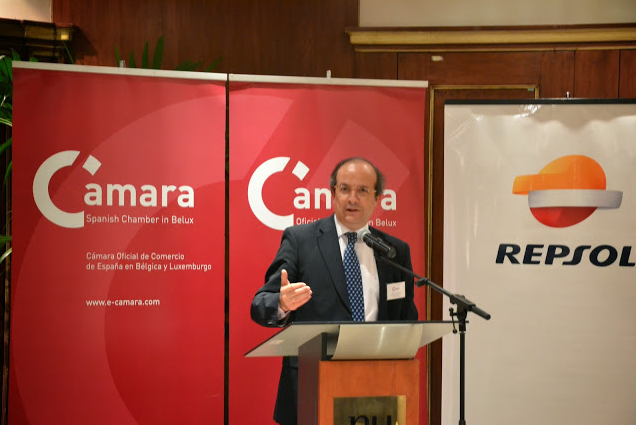
Luncheon-Debate with Andris Piebalgs, European Commissioner for Development

On July 16th the Official Spanish Chamber of Commerce in Belgium and Luxembourg organized a luncheon-debate with the Commissioner of Development, Andris Piebalgs, who talked about the new EU approaches to support SME development and the role of intermediary organizations.
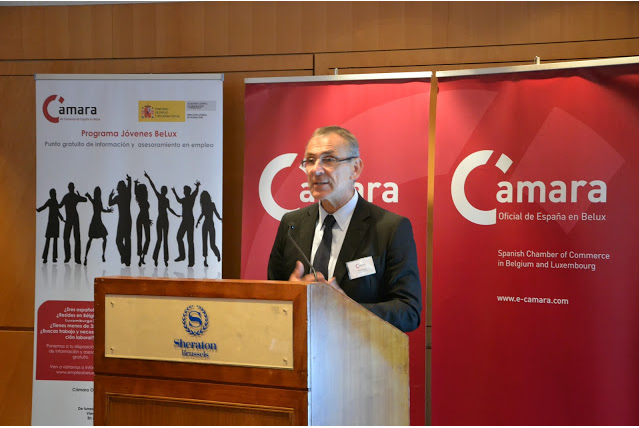
0andris_piebalgsThe Vicepresident, Pablo López Álvarez wanted to thank the representatives of the institutions and international professionals and commend the figure of the Commissioner who has focused on boosting the role of the private sector in developing countries.

In his exposition, the Commissioner underlined that the activity of the European Commission has concentrated on transmitting the necessity of implementing policies that push through the growth of the private sector with the aim of faciliting the access to the finance for micro, small and medium-sized enterprises towards the governments of developing countries.

The lack of access to capital and appropriate financial services is a major constraint in particular on the development of micro, small and medium-sized enterprises. In this sense, the Commissioner has emphasized the implementation of programs that focus on the use of information and communication technologies, specifically in Africa and Central America, and private and institutional support where we can cite the example of the Inter-American Development Bank. Besides, these initiatives come together with the creation of financial structures which are subject to regulations to ensure customer protection and the stability of the financial system.
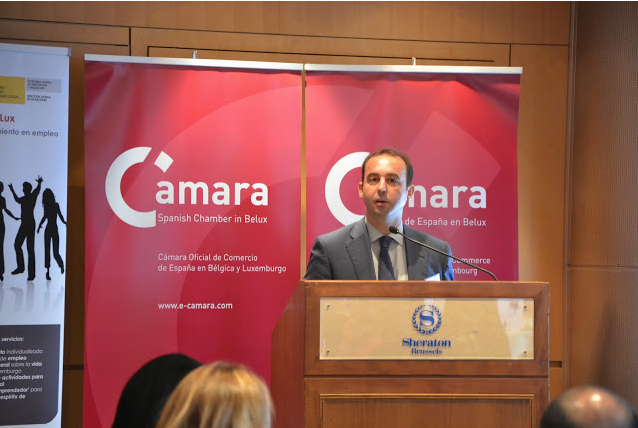
0pablo_andrisOne of the main barriers of development is reflected in the access to energy where the costs are unmanagable and where it becomes necessary to provide the States with technical experts and financial grants, as well as a transformation of the system, particularly in the rural zones which demand a boost for increasing its capacity to maintain sustainable growth in the agribusiness.

The development strategy has resulted in the identification of improvements such as the creation of jobs with better working conditions, the implementation of the Decent Work Agenda, the employment of women and youth and the communication between the private sector and the governments, which is one of the pillars in the process of the democratization of societies.

Finally, the Commissioner insisted on the necessity of using political dialogue with the partner states to encourage the governments and the local authorities to contact representatives of the private sector.

After a short question and answer period, the Vicepresident took the floor to thank Andris Piebalgs for his exposition and collaboration with the Chamber of Commerce.


[AFG_gallery id=’18’]

Europe needs more Industry and Industry needs more EuropeCommerce

On 9th of July, the Chamber of Commerce of Spain in Belgium and Luxembourg celebrated in Brussels a luncheon-debate with the General Director of DG of Enterprise and Industry of the European Commission, Daniel Calleja, whose presentation referred to “The Industrialisation of Europe”. The event was sponsored by the partner company REPSOL.

The President of the Chamber, Juan Rodríguez-Villa, wished to thank and emphasize the merits of the rapporteur during his long and successful career, with a great variety of activities which demonstrate his service to society in the presence of representatives of SMEs and international institutions.

During his exposition, Daniel Calleja explained the main lines of action in the industrial policy of UE. In this sense, the strategic agenda of the Commission is determined by five priorities which have been stated by Heads of States and Governments:
· Competitiveness, growth and employment.
· Establishment of an internal market of energy
· Immigration Policy
· Political relationships between United Kingdom and UE.
· Transatlantic treaty with EE.UU.

Each of these topics is related to the General of Enterprise and Industry Directorate, whose objective is to reach a significant industrial growth in the EU.

00daniel-calleja-1“Multiple reforms and measures have been adopted in the last years, but these are not sufficient without a realistic and effective growth strategy and promotion of industrial projects. The European Union has to enhance its attractiveness on the investment and this results in optimising the productive activity of the Eurozone”, the General Director pointed out.

The Commission has established as objective that the industry represents the 20% of GDP of Europe in 2020. Daniel Calleja emphasized that the political goal is possible but it is necessary to focus on the special correlation between industrial activity, innovation, internationalization of companies and employment. A reorientation of the activity of Europe is fundamental.

Last March, the European Council confirmed the strategy of the Commission and invited them to define a roadmap based on four main pillars:

In the first place, a better access to internal and external markets. In Europe one out of four companies operates in the European market and only one out of eight develops its activity outside the European borders. The efforts concentrate on abolishing technical and tariff barriers, the consolidation of Internal Market of Services and the adoption of new trade businesses like the agreement with EE.UU that will convert these powers in the strongest commercial area.

00daniel-calleja-2In the second place, facilitate access to resources for companies: the financing (regional financing and Horizon 2020 Program); access to energy, necessity of the transparency of prices, a common policy with third countries and a more efficient interconnection; access to raw materials (improving the economic and political diplomacy) and, besides, access to training, with the leading of dual models.

Innovation is the third pillar. Through the Horizon 2020 Program, innovation should be promoted and a solution will be provided for the main problems of EU: high levels of social spending. This challenge results in transforming the Welfare State without setting aside our social model.

The last pillar is focused on the creation of an excellent business atmosphere. In this sense reducing bureaucracy, facilities to create companies and business transfers are demanded.

Finally, the General Director wished to transmit a message:  “Europe needs more Industry and the Industry needs Europe”.  The European Union, business associations and the Chambers of Commerce must cooperate in order to favour industrial growth.

After a short question and answer period, the President took the floor to thank Daniel Calleja for his presentation and collaboration with the Chamber of Commerce as well as REPSOL for sponsoring the event.


[AFG_gallery id=’16’]