• Link to LinkedIn
  • Link to X
  • Chamber
    • About us
    • Board of Directors
    • Committees
  • Calendar
  • News and events
  • Contact
  • CAMACOES Network
    • FEDECOM
    • FECECA
  • Intranet
  • Español
  • Shopping Cart Shopping Cart
    0Shopping Cart
Cámara Oficial de Comercio de España en Bélgica y Luxemburgo
  • Home
  • Members
    • Fees and Membership
    • Advantages for members
    • List of members
    • Members’ interviews
  • Trade services
    • Trade Mission
    • Accompaniment and commercial fairs
    • Listings of Companies
    • Establishment of companies in BeLux
    • Legal Assistance and translations
    • Promotion
  • Activities
    • Platform “Business Circle”
    • Afterworks with members
    • Tailored events
    • “Company of the Year” Award
    • Day of Spain
    • Tastings
  • Trainings
    • Advocacy strategies in the EU
    • Introduction to the Luxembourg Financial Market
    • Specialised training courses
  • Programs
    • EmpleoBeLux
    • EmprendeBeLux
    • Erasmus for Young Entrepreneurs
    • Young Talent Mobility Programme
    • SOFTIMPROVE
    • Spain Means Innovation
    • TEX4.0
    • W4TEX
    • Completed programs and projects
  • Business centre
    • Domiciliation
    • Spaces for rent
    • Co-working space
  • Click to open the search input field Click to open the search input field Search
  • Menu Menu

Federal government votes in favor of comprehensive socio-economic support plan

09/11/2020

The coronavirus crisis is not just a health crisis. It is also a serious socio-economic crisis that is hiting hard people and businesses. The federal government cannot and does not want to remain indifferent to all these people and businesses that are on the brink. They need help today: concrete support that is significant enough to get them through this second difficult period in less than a year.

This is why the government chooses not only to extend the support measures that were in force during the confinement imposed in the spring (until the first quarter of 2021 included), but also announces a whole new series of measures. The cost of this aid could be seen as a one-time expense, but it is much more than that: it is an investment in people and businesses that before the crisis were self-sufficient and economically sound, but they are no longer because of the difficult circumstances.

With these support measures, the federal government focuses on four main objectives:

1.support people who had a job but who, due to the difficult situation caused by the coronavirus, lost it or had to close their business. We want to support them both in their income and in maintaining their social rights;

2. Save healthy companies by supporting them both in terms of their liquidity (cash flow) and their solvency;

3. Support people living in poverty or at increased risk of poverty. As they are often disproportionately affected by the coronavirus crisis;

4. Strengthen crucial sectors which have been particularly affected by the crisis: in particular health care, education and agriculture and horticulture.

  1. Main measures

Extension of existing measures

1. Possibility of individual postponement of payments in the fiscal field without fines or late interest.

2. Tax exemption of subsidies granted by towns, municipalities and federated entities.

3. Reduction of VAT (6%) on hydroalcoholic gel and masks.

4. Extension of free notarial powers of attorney avoiding going to the notary.

Suspension of checks on the residence condition (maximum 29 days abroad per year) under the income guarantee for the elderly (GRAPA).

  • Business support

Extension of existing measures

6. Extension of the increased deduction for investment of 25% until the end of 2022, allowing SMEs, one-person businesses and the liberal professions to deduct a large part of their investments from their taxable income.

7. Extension of the SME guarantee scheme and the credit insurance guarantee scheme until June 30, 2021. Simultaneously with this extension, the Ministry of Finance will extend, in consultation with the financial sector, the current moratorium for loans to companies.

8. Reopening of temporary unemployment due to force majeure to all companies. During this period, the temporarily unemployed salaried worker receives compensation equal to 70% of his gross monthly salary (capped at 2,754.76 euros). In addition, the salaried worker receives an allowance from the ONEM of 5.63 euros per day of temporary unemployment. This measure will apply until March 31, 2021, with the possibility of extension.

New measures

9. Implementation of the agreement of the social partners by which the State partially intervenes in the financing of the holiday pay for the temporarily unemployed. In the calculation of this holiday pay, the days of temporary unemployment are assimilated to days worked.

10. Broadening of the scope of the exemption from social security contributions for the third quarter of 2020 to other sectors (than the hotel and catering industry and the events sector) which have been forced to close. Suppliers in sectors that have had to shut down can also resort to this measure if they can provide evidence of a loss of sales of at least 65%. A ceiling will be applied per company with regard to the total amount of this exemption.

  • Support for self-employed workers

Extension of existing measures

11. Extension of the double “droit passerelle” right in force until December 2020 inclusive for all sectors that have had to close. For a self-employed person with no family, this amounts to 2,583.4 euros per month. For a self-employed person with a dependent family, this amounts to 3,228.2 euros per month.

12. A new “droit passerelle” will come into force from 1 January 2021, which can still be invoked in the event of a crisis. It will be based on a significant decrease in turnover. The concrete modalities will soon be developed taking into account the opinions of the General Management Committee.

13. Additional postponement for the payment of the contribution payable by companies until the end of 2020. A postponement was already planned until October 31, 2020; it is now extended until December 31, 2020.

14. Supplementary allowance for incapacity for work so that self-employed cohabitants who are sick also benefit from an allowance as high as the “droit passerelle” (this is already the case for single self-employed workers and self-employed workers with family responsibilities) . Concretely, this is a premium of more than 300 euros per month.

New measures

15. Temporary improvement of traditional “droit passerelle”, in particular through better accessibility for starters and maintenance of the constitution of pensions.

16. Payment plans for self-employed workers who have obtained a deferral of payment of social contributions, while retaining the right to reimbursement of health care costs. Until December 31, 2021.

  • Support for salaried workers

Extension of existing measures

17. Reduction in the withholding tax for temporary unemployment.

18. The Ministry of Finance and the Minister of the Economy will consult with the financial sector in order to extend the current moratorium on mortgage and consumer loans. The consultation will also concern “leasing”.

19. Temporary unemployment due to a child in quarantine. The current measure will be extended to other situations where the child must be placed in quarantine, with a certificate of control.

20. Additional allowances for incapacity for work to reach the level of temporary unemployment benefit. Concretely, this means that, if the incapacity for work allowance is less than 70% of the average gross monthly salary (capped at 2,754.76 euros), it will be accompanied by a supplement of 5.63 euros per day. up to that amount.

Flexible access to unemployment for artists. Artists who can provide proof of at least 10 artistic performances or 20 days of work during the period from March 13, 2019 to March 13, 2020, are granted access to artist unemployment.

22. Additional budget of 13.07 million euros for consumer vouchers in the healthcare sector and extension of the validity of consumer vouchers until the end of 2021.

New measures

23. Payment by the ONEM of a supplement to the end-of-year bonus to workers who have been temporarily unemployed for a long time. Workers who have been temporarily unemployed for at least 52 days in 2020 will receive a supplement to their end-of-year bonus of 10 euros per additional day of temporary unemployment (beyond 52 days). For any worker meeting the conditions, the total supplement will always amount to a minimum of 150 euros.

24. Support plan for (tele) services and teleworking of civil servants. Concretely, this involves providing coaches and training in stress resistance and the fight against burnout for managers in the context of remote management of staff, improving the effectiveness of interviews and selection tests and improvement of digital communication for civil servants.

25. A single envelope of 200 million euro is foreseen for hospital staff (salaried and self-employed workers). The competent minister will consult with the social partners to finalize these support measures for hospital staff. Consultation will also take place with the federated entities in the Interministerial Public Health Conference.

  • Support for the most vulnerable

Extension of existing measures

26. Grant of 50 euros per month for beneficiaries of the integration income, the income guarantee for the elderly (GRAPA) and the income replacement allowance (ARR).

27. Extension on the freeze of the degression of unemployment benefits until the end of 2020. As a result, the unemployed will not experience a reduction in their unemployment benefits from April 1 to December 31, 2020.

28. Continuation of winter plan for homeless people.

29. Increase in the reimbursement percentage (up to 15%) to the CPAS for the payment of integration income.

New measures

30. Entry into action of the Vulnerable Groups Task Force. This task force will develop measures, in collaboration with actors on the ground, to support the most vulnerable. A budget of 75 million euros is foreseen for this purpose.

  • Additional workers in critical sectors

Extension of existing measures

31. Increase in the quota of voluntary overtime up to 220 hours in the healthcare sector, other crucial sectors and essential services. This additional overtime will be tax exempt; no additional salary will be applied.

32. Facilitate the temporary posting of workers to another employer in the healthcare or education sector.

33. Temporarily unemployed people can work in agriculture and horticulture, healthcare and education, with 75% of their benefits maintained.

34. Allow the temporarily unemployed to conclude successive fixed-term contracts of at least 7 days with another employer, in the care and education sectors.

35. Increase in the ceiling for the accumulation of integration income with seasonal work income and student work income with a study grant.

36. Extension of COVID-19 Volunteer Compensation Fund and Authorization for Commercial Hospitals to Engage Volunteers.

37. Extension of measures relating to pensions. The aim is, among other things, that pensioners who have an activity as an employee or self-employed can combine their pension with temporary unemployment compensation or “droit passerelle”. In addition, the constitution of the pension of temporarily unemployed persons will be preserved, including the constitution of the second pillar. It is also necessary to prevent pensioners who temporarily resume an activity, for example in the health care or education sector, from losing part of their pension.

38. Doubling of the seasonal work quota also in 2021 and temporary unemployment for seasonal workers who arrive in Belgium and must be placed in quarantine.

Source: belgium.be

https://e-camara.com/web/wp-content/uploads/2020/07/banderaBelgica.jpg 340 888 Cámara BeLux https://e-camara.com/web/wp-content/uploads/2025/10/Logo-Camara-de-BELUX-es-web.png Cámara BeLux2020-11-09 16:57:572020-11-09 18:16:55Federal government votes in favor of comprehensive socio-economic support plan

Online Breakfast-Debate with Clara Martínez Alberola, Deputy head of the ‘Task Force for Relations with the United Kingdom’ (UKTF)

23/10/2020

Last Friday, October 23rd, the Official Spanish Chamber of Commerce in Belgium and Luxembourg organized a new session of its online Breakfast-Debate in the framework of its Business Circle platform. This event featured Clara Martínez Alberola, Deputy Head of the United Kingdom Task Force (UKTF) of the European Commission. The topic of the debate was “Brexit: where are we heading in the future commercial relationship between the EU and the United Kingdom?“. 

Pablo López Álvarez, vice-president of the Chamber and event moderator, welcomed and thanked the speaker and all the attendees for their participation.
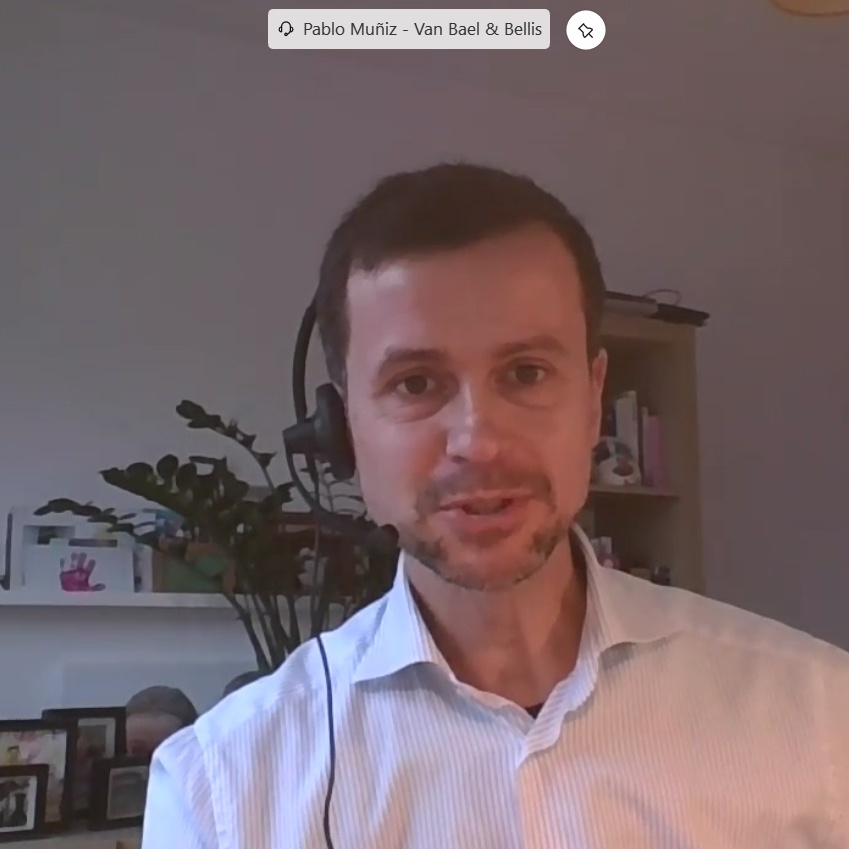
Then, on behalf of the partner and sponsor of the event, Van Bael & Bellis, Pablo Muñiz, partner of the Brussels office, took the floor and thanked the guest speaker for her participation in the Breakfast-Debate despite her busy schedule. Mr. Muñiz highlighted the growing importance regarding many customs law issues, that were thought to be forgotten, because of Brexit but will surely affect the future relationship between the United Kingdom and the European Union.

Clara Martínez Alberola began by thanking the invitation as an ideal opportunity to continue learning first-hand about the concerns of Member States and the various economic sectors in the Brexit negotiations. The speaker admitted that the negotiating teams are at a critical stage to achieve an agreement given that the transition period after the formal withdrawal of the United Kingdom from the European Union ends on 31 December 2020, with the aggravation of the Covid-19 crisis as a background. Despite the tight deadlines, the EU negotiating team is working tirelessly to reach a fair agreement for both parties based in coherent rules and effective mechanisms for dispute resolution. Martínez outlined the various issues that present more difficulties to reach an agreement as well as the issues where there is greater consensus such as British participation in research programs funded by the EU or police cooperation. Finally, the deputy head of the UKTF stressed that the no-deal scenario would not imply the impossibility of reaching such an agreement in the future in different areas, although it is certainly a much worse scenario than reaching a full agreement on time.

During the question time, the attendees were able to present their doubts and comments on many issues of interest such as the controversy surrounding the internal market protocol for Northern Ireland, the rules of origin in the post-Brexit era, the uncertainty regarding standardization and public procurement, financial supervision or the complexity of customs controls in the future relationship between the United Kingdom and the EU.

From the Official Chamber of Commerce of Spain in Belgium and Luxembourg we would like to thank Clara Martínez Alberola for her conference, our partner company Van Bael & Bellis for sponsoring this Breakfast-Debate and all those present for their attendance.

Event sponsored by:

blank

https://e-camara.com/web/wp-content/uploads/2020/10/claraMartinez-1.jpg 340 888 Cámara BeLux https://e-camara.com/web/wp-content/uploads/2025/10/Logo-Camara-de-BELUX-es-web.png Cámara BeLux2020-10-23 14:00:132020-10-23 16:04:33Online Breakfast-Debate with Clara Martínez Alberola, Deputy head of the ‘Task Force for Relations with the United Kingdom’ (UKTF)

Covid-19 Level 4 Alert: Stricter Rules from Monday 19 October

16/10/2020

Following the worrying epidemiological situation, new, stricter measures will come into force from Monday 19 October. As of today, this situation brings the whole country to alert level 4 of the Covid-19 barometer (very high alert level).

The pressure on hospitals and on the continuation of health care not linked to Covid-19 is increasing. Some hospitals are facing numerous absences among their staff. Primary care, especially general medicine, also faces an increasing pressure.

The number of patients with Covid-19 in intensive care is now 2.5 times higher than at the end of March. To prevent hospitals from being further compromised, schools from closing, the economy from grinding to a halt and too many people from being isolated because of widespread containment, the Interinstitutional Concertation Committee has decided to take a number of measures:

  1. Close contacts are limited to a maximum of one person.
  2. Private meetings are limited to four persons for two weeks and always the same persons.
  3. Public meetings are limited to a maximum of four people.
  4. Teleworking becomes the rule, for the activities that allow it and with respect to the continuity of the management of companies and organisations, services and activities.
  5. Small markets and fairs remain open, but the consumption of drinks and food is prohibited. Markets and Christmas markets are prohibited.
  6. Cafes and restaurants are closed. This measure is valid for a period of four weeks and will be reviewed after two weeks. Take-away food can be collected from the establishment until 22h. Receptions and banquets organised by a professional restaurant or catering service are prohibited, except in hotels for guests staying there and funerary receptions (maximum forty people).
  7. Night shops must close at 22h. The sale of alcohol is prohibited after 20h.
  8. It is forbidden to be on the public highway between 24h and 5h, except for essential and non-delayable journeys, such as urgent medical reasons, business trips and travel between home and work.
  9. Indoor activities remain subject to existing protocols until their evaluation next Friday 23 October. The sale of food and drink is prohibited.
  10. Sports competitions: the space reserved for spectators will be halved from 400 to 200 (professionals) or made up solely of members of the same family unit (amateurs). Cafeterias and bars are closed.

The federal government and the governments of the federated entities will do their utmost to provide the best possible support to all those affected financially. Even so that the federal government will double the support it offers as a right of transition for self-employed people who are forced to close down. Existing support measures will be extended. An exemption from the ONSS (National Social Security Office) will also be introduced.

The measures enter into force today, Monday 19 October, and will remain in force for one month before being evaluated.

Source: belgium.be

https://e-camara.com/web/wp-content/uploads/2020/07/banderaBelgica.jpg 340 888 Cámara BeLux https://e-camara.com/web/wp-content/uploads/2025/10/Logo-Camara-de-BELUX-es-web.png Cámara BeLux2020-10-16 16:15:482020-10-19 11:46:36Covid-19 Level 4 Alert: Stricter Rules from Monday 19 October

Webinar on “Spain as remote working destination”

13/10/2020

Last October 13th, the Official Spanish Chamber of Commerce in Belgium and Luxembourg organized a Webinar on “Spain as a destination for teleworking“, in collaboration with Business Cluster, a group of companies formed by Euro Economics, AgioGlobal, MADSkills, Quintessence and with the participation of EPS, IFAS and Modern Nomads. The Webinar was held by Wim Zwaenepoel, lecturer at the IE Business School and consultant at Netexpat, and by Jeroen Oskam, founding partner of Euro Economics.

To begin with, during this Webinar the lecturers presented some general data on the impact of the Covid-19 on Spanish society, and specifically, the impact that the health crisis has had on the economic and labour fields. The trends of telework in Spain before the Covid-19 were explained, as was its evolution until today, in addition to the forecasts that analysts estimate about this modality of work in the future. Additionally, the economic and labour policies adopted by the Spanish authorities to try to mitigate the negative effects of the Covid-19 were reviewed.

Moreover, the speakers focused on analysing, in second place, the so-called “STEM” sector (“Science, Technology, Engineering and Mathematics”), highlighting the growing lack of technical workers in the Benelux countries. On the other end is Spain, where there is a large pool of STEM sector professionals with excellent technical training. In the Webinar, a vision of the possibilities offered by the different modalities of teleworking in Spain was presented as a way to overcome the lack of specialized STEM personnel in the Benelux.

Thirdly, the emerging trend called “new nomads“ was introduced, referring to professionals from the Benelux who are moving their workplace to Spain thanks to the advances in the implementation of teleworking. The speakers highlighted the many benefits of this new way of working and its advantages, such as a lower tax burden or a lower cost of living. An example of this trend is the Canary Islands, where more and more foreigners are choosing to work remotely while having settled in the archipelago. The speakers emphasized the attraction of Spain as a territory from which to work remotely, due to its infrastructure, connectivity, and availability of resources, among others.

Finally, our speakers addressed the legal and tax implications of this practice of teleworking from Spain for workers in the Benelux countries, pointing out several possible alternatives, both for employees and for freelance.

After the presentation, some time was spared for a round of questions, in which the attendees raised several questions to the speakers. These questions dealt with the tax implications for those Benelux workers whose stays in Spain are less than the 183 days established by tax regulations, or everyday issues to take into account when choosing to work remotely from Spain, such as having a private health insurance for greater security.

From the Official Chamber of Commerce of Spain in Belgium and Luxembourg, we would like to thank Business Cluster for its presentation, as well as all the attendees for their presence.

In collaboration with:

blank

https://e-camara.com/web/wp-content/uploads/2020/09/Captura-de-pantalla-2020-10-13-104517.jpg 333 888 Cámara BeLux https://e-camara.com/web/wp-content/uploads/2025/10/Logo-Camara-de-BELUX-es-web.png Cámara BeLux2020-10-13 17:11:122020-10-13 17:11:52Webinar on “Spain as remote working destination”

Meeting of the Forums Committee

30/09/2020

On September 25th the third meeting of the year of the Forums Committee, a working group whose mission is to propose, organize and monitor the events organized by the Chamber, was organized telematically.

During the meeting, which was chaired by Pablo López Álvarez (FTI Consulting), a balance of the latest events organized by the “business circle” platform was made as well as new initiatives were proposed to be developed in the coming months, both locally and with the institutions of the European Union. Likewise, the activities carried out and the events planned within the framework of the Spanish Financial Forum and Competencia España Committees were discussed. Finally, the call for the 2020 Company of the Year Award, which is currently open, was discussed.

About the Chamber’s Committees

The Committees are made up by some of the members, as well as by the person in charge of the area in question in the Chamber.

These working groups have numerous functions: in-depth studies of proposals, problems, projects, and activities. Through them, the members influence the day-to-day life of the Chamber in order to better adapt the Chamber’s activities to the needs of the members.

At any time, a member can request the president of a Commission to join it or request the secretary general to create a new group.

https://e-camara.com/web/wp-content/uploads/2020/09/Foro-2.jpg 333 888 Cámara BeLux https://e-camara.com/web/wp-content/uploads/2025/10/Logo-Camara-de-BELUX-es-web.png Cámara BeLux2020-09-30 11:51:432020-09-30 11:58:40Meeting of the Forums Committee

Webinar on “The tax obligations in Spain for individuals living abroad”

14/09/2020


Last September 14th, the Official Spanish Chamber of Commerce in Belgium and Luxembourg organized a webinar on “The tax obligations in Spain of people who have moved abroad”, in collaboration with its member company B LAW&TAX. The webinar was given by Inmaculada Pineda and Almudena Soler, partner and tax advisor respectively at B LAW&TAX.

During this webinar the different tax obligations that displaced persons abroad can have in Spain were explained. For this purpose, in first place, the criteria used by the Spanish administration to determine tax residence through the personal income tax law or the different double taxation avoidance agreements were explained. The particular case of diplomats and officials of the European institutions was also addressed. In addition, it was presented the different formal requirements for making the change of tax residence effective.

Secondly, they discussed the different implications of tax residence in terms of taxation and profits, income from work for services rendered outside Spain, as well as the requirements for applying any exemptions in these cases. With regard to wealth tax, the applicable regulations were presented according to the residence, the limits and benefits applicable together with their different applicable deadlines. Then, the Model 720 for the declaration of goods and rights abroad was discussed, explaining who is obliged to present this model, the content, the deadlines and possible sanctions.

Finally, participants studied the implications of non-residence for taxation and tax benefits under Spanish law. They determined the possible taxation of income from real estate or movable capital, capital gains as well as the declaration models and deadlines. Lastly, new developments in the taxation of individuals were addressed.

Throughout the different blocks the participants were able to express their different doubts with the speakers. The questions dealt with different cases such as posted workers, the case of taxation of non-work income for officials of the European institutions or the formal obligations when indicating the address of residence.

From the Official Spanish Chamber of Commerce in Belgium and Luxembourg we would like to thank BLAW & TAX for their excellent presentation as well as all the participants for their presence.


blank

https://e-camara.com/web/wp-content/uploads/2020/09/Weebinar.jpg 287 750 Cámara BeLux https://e-camara.com/web/wp-content/uploads/2025/10/Logo-Camara-de-BELUX-es-web.png Cámara BeLux2020-09-14 15:47:312020-09-14 16:26:29Webinar on “The tax obligations in Spain for individuals living abroad”

Webinar on “Spanish scientific diplomacy – successful collaboration between Spain and Belgium in the field of biotechnology”

09/09/2020

Last Wednesday 9 September, the Cultural and Scientific Department of the Spanish Embassy in Belgium, and the Official Spanish Chamber of Commerce in Belgium and Luxembourg, with the collaboration of the Centre for the Development of Industrial Technology (CDTI) and the Spanish Office of Science and Technology (SOST) organised, in a special edition of the “Mediodias de la Embajada”, the second event in the framework of the Spain means Innovation programme. This webinar was entitled “Spanish scientific diplomacy – successful collaboration between Spain and Belgium in the field of biotechnology”.

As part of the programme of scientific diplomacy and dissemination of science, technology and innovation of Spain in Belgium, this webinar examined the innovation and business opportunities between Spain and Belgium in the field of biotechnology, based on the experience of the Spanish company Minoryx Therapeutics, as an example of good practice in collaboration in the biotechnology sector between the two countries.

Minoryx Therapeutics is a biotechnology company focused on the discovery and development of new therapies for severe genetic diseases of the central nervous system, which recently opened a subsidiary in Wallonia near the city of Charleroi (Belgium).

blankThe event began with a welcome speech by H.E. Beatriz Larrotcha Palma, Spanish Ambassador to the Kingdom of Belgium, who summarised the enormous commitment to innovation and scientific research shared by both countries and thanked the speakers and attendees for their presence at this webinar. blankWilly Borsus, Vice-President of Wallonia, Minister for the Economy, Research and Innovation, Digital Technology, Agriculture, Urban and Regional Planning, IFAPME and Competence Centres, then presented the many benefits of the Wallonia region in the field of research for the technology sector.

After the words of welcome, the round table was held, moderated by Frédéric Soumois, a journalist specialising in the health and blankscientific field from the newspaper Le Soir. Marc Martinelli, CEO of Minoryx Therapeutics, began by explaining the basis of their current research into rare diseases of the central nervous system, as well as detailing the benefits of the Belgian market in the sector based on his current experience with the company’s subsidiary opened near the city of Charleroi (Wallonia). He was followed by Josep Samitier, blankdirector of the Biotechnology Institute of Catalonia, and Marc Dechamps, director of international affairs for the BioWin cluster, who both gave their views on the benefits of biotechnology for improving the health sector, emphasising the advantages of Spain and Belgium in the sector.

The round table ended with Marina Martinez, H2020 Programme Officer at the Centre for Technological Development and Industry (CDTI), who briefly presented the numerous support and promotion mechanisms at European (Horizon 2020) and national level for companies in the biotechnology sector.

Finally, throughout the question time, participants had the opportunity to present their comments and questions on numerous issues of interest. From the Spanish Official Chamber of Commerce in Belgium and Luxembourg we would like to thank all the participants and the speakers at the event for their participation.

Organized by:

blank      blank     blank    blank    blank

In collaboration with:
blank      blank      blank
https://e-camara.com/web/wp-content/uploads/2020/08/noticiaMa--anas.jpg 340 888 Cámara BeLux https://e-camara.com/web/wp-content/uploads/2025/10/Logo-Camara-de-BELUX-es-web.png Cámara BeLux2020-09-09 07:50:252020-09-10 12:25:17Webinar on “Spanish scientific diplomacy – successful collaboration between Spain and Belgium in the field of biotechnology”

Control of the sanitary situation, the beginning of the school year for all and future perspectives

21/08/2020

The National Security Council, enlarged to include the Ministers-Presidents, met on Thursday 20 August to assess the epidemiological situation and identify measures that should be expanded and those that could be relaxed.

In addition to stabilizing our health situation, the measures in place in recent weeks were aimed at immunizing the beginning of the school year, that is, ensuring that the circulation of the virus is sufficiently controlled so that all children can return to school.

Therefore, all students will be able to return to school, at all levels of education, based on the “code jaune” established by the communities. As a reminder, the code jaune refers to a situation where the presence of the virus remains active but controlled. This system will allow a normal 5-day school week, provided that certain health measures are observed, such as the compulsory wearing of masks for students over 12 years of age and for teachers, and the suspension of certain extracurricular activities in secondary education.

In addition to this common regime, in communes where contamination peaks are observed, the change to an orange colour code will be decided by the Ministers of Education. This colour coding involves adjustments, such as reducing the number of school days for the second and third levels of secondary education. Parents, children and teachers will be informed by the schools.

At the higher education level, given the late start of the school year, consultations are still ongoing to harmonize the rules that will be applied on student campuses.

From 1 September and for a period of one month:

  • The social bubble of 5 persons, i.e. persons with whom citizens have close contacts, will continue to apply, under the same conditions as in August. Contacts within safe distances are still limited to 10 people at a time.
  • The general measures concerning social contacts are difficult to maintain in the long term. We must be able to move from crisis management to long-term risk management dynamics. We have to be able to reinvent the way we maintain social contacts in a sustainable way. In order to do this as normally as possible, while preserving everyone’s health, the experts at Celeval – with the support of other specialists such as psychologists – have been asked to give priority to this issue.
  • Receptions after funerals can be held with a maximum of 50 people, in accordance with the rules that apply to the hotel and catering sector. The next National Security Council will be interested in the question of a possible relaxation of the rules for receptions in general.
  • Regarding shops, it will now be possible to do shopping in pairs (these two people can be accompanied by minors living under the same roof or by a person who needs assistance) and this without any time limit. It goes without saying that everyone’s sense of responsibility is called upon to avoid the effects of crowds. Unlike the other measures valid from 1 September, this measure will apply from 24 August.
  • Concerning spectators, the maximum number of people admitted to an audience – at sporting events, theatres, cultural activities, places of worship, congress halls or auditoriums – will be increased to 200 people inside and 400 people outside. The use of a mask remains mandatory, as does compliance with safety standards and protocols. In order to give more flexibility – where safety rules are respected – to professionals, it will be possible to derogate from this rule after examination by the mayor and authorisation by the competent ministers.
  • Persons who have become physically separated in recent months because they come from different countries and who provide evidence of a lasting relationship but are not married will be able to cross the border as from 1 September. These persons will be subject to the same testing and quarantine rules as others.

With respect to travel, it was recalled that, since 1 August, any person arriving in Belgian territory after a stay abroad of more than 48 hours must fill in the passenger tracing form, which makes it possible to know where the traveller has been. In addition:

  • Anyone returning from a red zone should be tested and remain in quarantine even if they show no symptoms.
  • If the person returns from an orange zone, this is a recommendation. However, this recommendation should be taken seriously, especially if the person returning from an orange zone has had risky contacts.
  • In addition, citizens are asked to actively participate in tracing contacts with regional call centre managers.

The evolution of the health situation will, as always, be closely monitored and a new National Security Council will be organised next month. The long-term objective is to move from crisis management to a long-term risk management dynamic.

https://e-camara.com/web/wp-content/uploads/2020/07/banderaBelgica.jpg 340 888 Cámara BeLux https://e-camara.com/web/wp-content/uploads/2025/10/Logo-Camara-de-BELUX-es-web.png Cámara BeLux2020-08-21 11:24:332020-08-21 11:43:05Control of the sanitary situation, the beginning of the school year for all and future perspectives

New Board of Directors of the Spanish Charity Assotiation in Belgium

28/07/2020

The SEBB is a charitable institution which, set up at the beginning of the 20th century, serves, as far as it is able, the needs, both material and moral, of the Spanish people in Belgian territory.

The Board of Directors, which governs the activities of the SEBB, is made up of volunteers of Belgian and Spanish nationality.

The Honorary Presidency is held by the Ambassador to the Kingdom of Belgium.

In her capacity as Honorary President, the Ambassador, Beatriz Larrotcha Palma, convened the General Assembly which, meeting on 16 July, dealt, as a matter of priority, with the renewal of the Board of Directors.

For reasons of age, the following resigned from their posts: the President, Carmen Gómez de Olea de Felsenhart, the Treasurer, Nieves Calatayud de Glanard and the Judge, Hubert Preiser.

The Assembly elected María José Cano Alemán as President. Manuel Menéndez Barrero, a member of the Chamber’s CA, continues as Vice President. Our President, Juan Rodríguez-Villa Matons, joins the Board of Directors as Treasurer.

The Chamber of Commerce, as the spokesperson for a significant part of Spanish civil society in Belgium, expresses its admiration and gratitude to the three outgoing members for the dedication, commitment and generosity that, over several decades, have made it possible to alleviate the economic and moral problems of Spaniards in need.

https://e-camara.com/web/wp-content/uploads/2020/07/FOTOBENEFICA.jpg 613 1600 Cámara BeLux https://e-camara.com/web/wp-content/uploads/2025/10/Logo-Camara-de-BELUX-es-web.png Cámara BeLux2020-07-28 14:36:142020-07-28 15:50:16New Board of Directors of the Spanish Charity Assotiation in Belgium

Comercial opportunities in Belgium and Luxembourg after COVID-19

14/07/2020

COVID-19 has had a very different impact in Belgium and Luxembourg marked by a light lockdown and strong determination by public administration to support its business and protect employment. This health crisis has been without any doubt a mayor disruptive factor that highlighted some existing tendencies already putting in place in both markets. That is why, despite the limited uncertainty, some opportunity window seem to be opening in the next months in Belgium and Luxembourg in the upcoming months making them two very interesting destinations for internationalization strategies for Spanish companies.

In this context, the Chamber has developed a series of collaborations with various Spanish territorial chambers to present the Belgian and Luxembourg markets to Spanish companies. In particular, presentations were made for the Chamber of Commerce of Pontevedra, Vigo and Villagarcía de Arousa, Madrid Network and the Chambers of Commerce of Zaragoza and Mallorca. Throughout these webinars, the main sectors of interest in each country were presented and a series of recommendations were given to companies interested in internationalizing their product or service.

The internationalization of companies will be a key element for their survival in the post-Covid situation.

During the months of September and October, the Chamber is planning new presentations.

These are the dates:

  • In collaboration with the Chamber of Commerce of Gran Canaria, 17th September at 11:00
  • In collaboration with the Chamber of Commerce of Huelva, September 29th at 11:00
  • In collaboration with the Chambers of Avilés, Gijón and Oviedo, 30th September at 11:00
  • In collaboration with the Chamber of Commerce of Huesca, October 2st at 9:00
  • In collaboration with the Chamber of Commerce of La Rioja, 6th October at 9.30am.
https://e-camara.com/web/wp-content/uploads/2020/06/11-1.jpg 340 888 Cámara BeLux https://e-camara.com/web/wp-content/uploads/2025/10/Logo-Camara-de-BELUX-es-web.png Cámara BeLux2020-07-14 17:40:322020-10-27 11:46:39Comercial opportunities in Belgium and Luxembourg after COVID-19
Page 3 of 512345

Latest news

  • blank
    21/09 Event on the 40 years of Spain and Portugal in the EU: shaping Europe’s Economic Future23/07/2026 - 11:58
  • blank
    27-28/01 On-site training on “Public speaking and networking: How to understand and connect with your audience”16/07/2026 - 11:20
  • blank
    Henri Piffaut discusses the evolution of the Foreign Subsidies Regulation and the challenges involved in its implementation within the EU14/07/2026 - 15:09
  • blank
    09/09 Breakfast-debate with Pilar Sáenz de Ormijana, Finance Counsellor at the Permanent Representation of Spain to the European Union13/07/2026 - 11:24
  • blank
    25/11 Luncheon-debate with Martin Engell-Rossen, Head of Cabinet of Dan Jørgensen, Commissioner for Energy and Housing06/07/2026 - 12:47

Become a member

Accession form: Spanish

Accession form: English

ABOUT US

The Official Spanish Chamber of Commerce in Belgium and Luxembourg is a non-profit association whose main objective is the development of trade and investments between Spain, Belgium and Luxembourg. The Chamber offers to the companies a wide range of commercial and promotional services as well as professional contacts and facilitates business networking among its partners.

  • Chamber
  • Calendar
  • News
  • Contact
  • FEDECOM
  • FECECA
  • Intranet
  • PRIVATE POLICY
  • Terms and conditions of sale

CONTACT

Belgium
Avenue des Arts 1-2,
1210, Brussels, Belgium
Tel. +32 2 517 17 40
info@e-camara.com

Luxembourg
7 Avenue John F. Kennedy,
L-1855, Luxembourg
Tel. +352 661 404 399
luxemburgo@e-camara.com

With the support and recognition of

blank

blank

blank

© Cámara Oficial de Comercio de España en Bélgica y Luxemburgo
  • Español
Scroll to top Scroll to top Scroll to top
X